
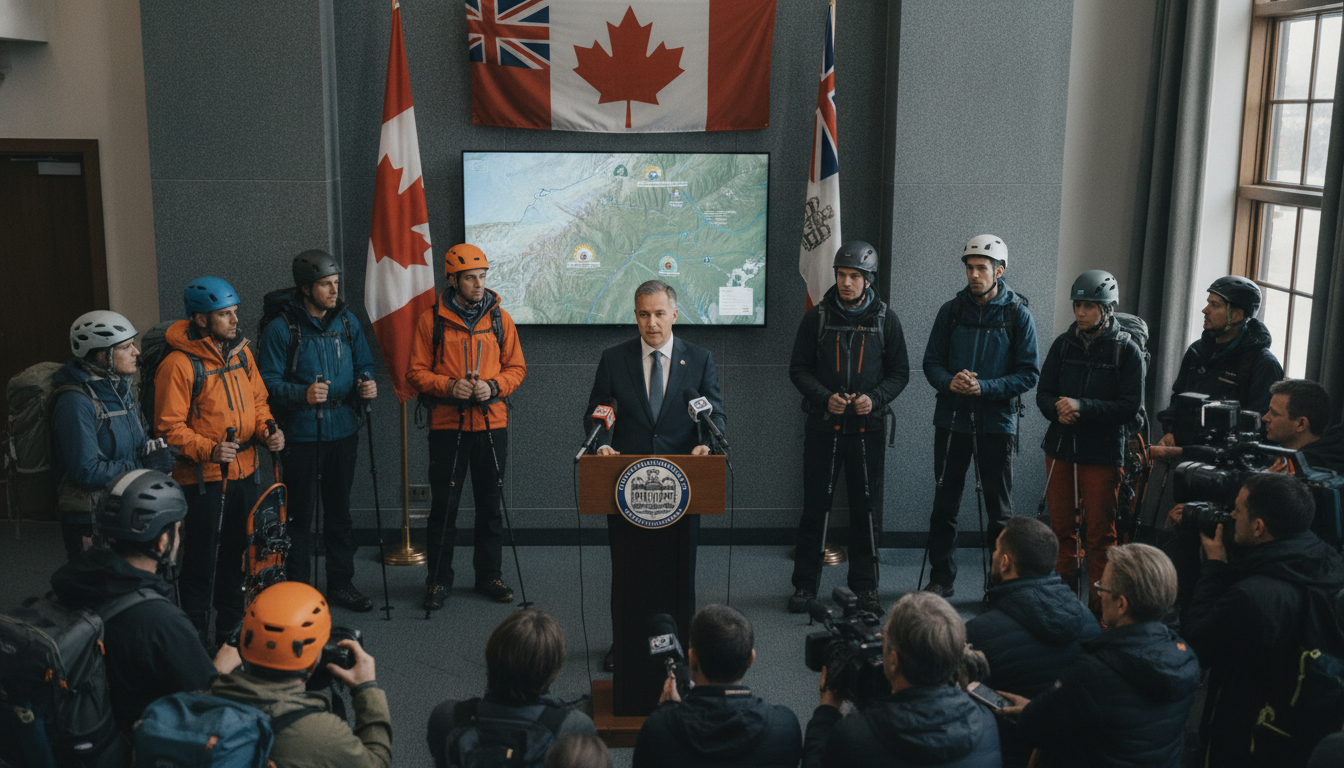
Alberta avalanche forecasting under threat, advocates warn of life‑threatening impacts
Provincial advocates warn that potential cuts to Alberta avalanche forecasting services could endanger backcountry users and strain search‑and‑rescue operations across the province.
An outdoors safety advocate warned this week that if services were reduced to the point where avalanche forecasting no longer took place in Alberta, the consequences could be life‑threatening for a wide range of users. He said the risk would extend beyond snowmobilers to hikers, dog sledders, snowshoers and others who travel into high‑altitude, high‑risk terrain. The warning has prompted calls for urgent clarity from provincial authorities and rescue organizations about any planned service reductions.
Advocate warns of life‑threatening risks
An advocate for mountain safety cautioned that losing regular avalanche forecasting in Alberta would remove a critical layer of public protection. Without daily or regular forecasts, backcountry users would lack timely information on snow stability, increasing the chance of people unknowingly entering dangerous slopes. He stressed that the threat is not limited to winter sport enthusiasts but includes summer and shoulder‑season travelers who venture into alpine areas where unstable snowpack can remain.
The advocate framed the potential cuts as more than an inconvenience, describing them as a change that could turn routine outings into emergencies. He emphasized the interconnected nature of forecasting, rescue readiness and public education, noting that reducing one element degrades the effectiveness of the others. The comments have resonated with community groups that rely on these services for planning and risk mitigation.
Who depends on Alberta avalanche forecasting
Avalanche forecasting serves a broad cross‑section of users who enter mountain environments for work, recreation and tradition. Snowmobilers remain a prominent group, but the network of people affected includes hikers traversing late spring snowfields, dog sled teams on remote routes and recreational snowshoers exploring higher elevations. Indigenous communities, commercial guides and outdoor educators also use forecast information when deciding whether to travel or run programs safely.
Local tourism operators and guide services point out that forecast services underpin commercial risk management and insurance compliance. Even route planners and trail managers in non‑technical areas consult avalanche information before opening or maintaining corridors. The loss or downgrading of forecasting capacity would therefore ripple through multiple sectors that currently depend on reliable snowpack analysis.
Search‑and‑rescue groups warn of operational strain
Search‑and‑rescue volunteers and emergency responders say forecasting plays a preventative role that reduces the number and severity of rescue call‑outs. When accurate forecast bulletins are available, trip leaders can avoid known hazards and emergency services can prioritize resources for true, unpredictable incidents. Without forecasts, responders fear a rise in preventable incidents and secondary rescues, which can stretch already limited personnel and equipment.
Rescue organizations also rely on forecasts for training schedules and planning simulations in realistic conditions. Volunteers, many of whom balance regular jobs with rescue duties, could face greater frequency of deployments into unstable terrain. That, in turn, raises concerns about responder safety and the capacity of small community teams to sustain increased call volumes.
Calls for government and agency clarity
Community groups and safety advocates are calling on provincial authorities to provide immediate clarity about any proposed changes to avalanche forecasting services. They want specifics on whether reductions are being considered, who would make those decisions and what contingency plans exist to protect public safety. Advocates have urged authorities to consult with search‑and‑rescue organizations, outdoor industry stakeholders and Indigenous leaders before any service adjustments are finalized.
Those calling for transparency also request information on funding models and alternative delivery options, including partnerships with non‑profits or regional forecasting hubs. Stakeholders say an open process would allow for constructive solutions, such as targeted funding, volunteer support programs or phased transitions that preserve essential forecast coverage.
Community solutions and funding proposals emerge
In response to the warning, several community groups have proposed local initiatives to buttress forecasting capacity and public education. Ideas put forward include crowdfunding for specific forecast regions, expanded volunteer training and enhanced digital tools that aggregate localized snow observations. Supporters say these measures could supplement professional forecasting but not replace the technical expertise required for accurate, province‑wide analysis.
Advocates emphasize that sustainable funding models are crucial to long‑term safety. They suggest blended approaches that combine provincial support with industry contributions and philanthropic backing to ensure forecasting remains consistent through seasonal demand and economic fluctuations. The conversation about financing is expected to accelerate as stakeholders press for concrete commitments.
The warning that ending avalanche forecasting in Alberta could become life‑threatening has focused attention on an often‑overlooked public safety service. As discussions continue, community groups, rescue teams and outdoor users are urging swift and transparent action to prevent a loss of capacity that many say would leave people vulnerable in the province’s mountainous regions.
