
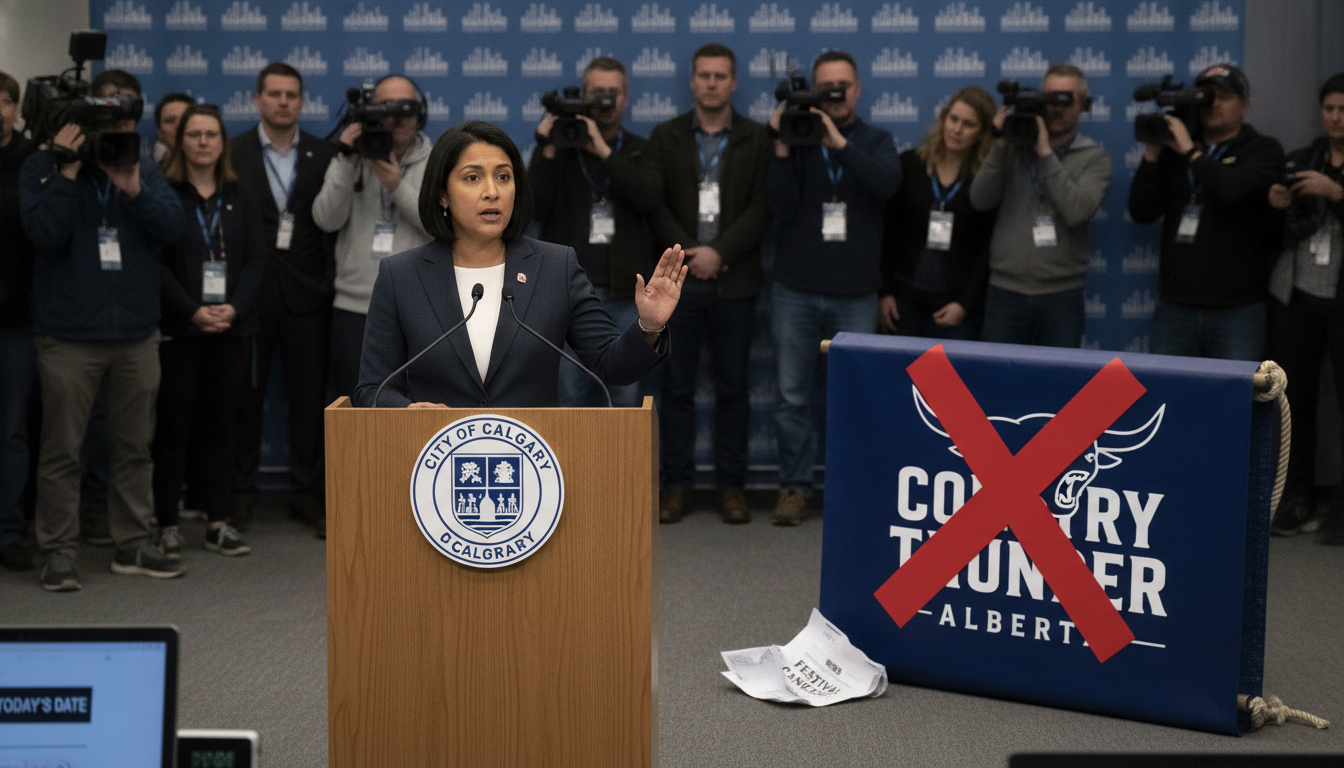
Country Thunder Alberta cancelled days before opening; Mayor Farkas rejects city blame
Country Thunder Alberta cancelled two days before its scheduled Calgary debut on June 26, 2026, prompting a public dispute over whether new city noise rules played any role in the decision. Mayor Jeromy Farkas has pushed back strongly on organizers’ claims that city hall was responsible, saying officials were informed about limits in advance.
Country Thunder Alberta cancels two days before planned opening
The Country Thunder Alberta organiser announced the festival shutdown on Wednesday, June 24, 2026, two days before the event was due to begin at The Confluence. The sudden cancellation was described by city officials as a “bombshell” that arrived without prior warning.
Staging and infrastructure were visible at the site the day before the announcement, underscoring the abruptness of the move. Attendees and local businesses were left scrambling for answers as tickets went on sale and promotional activity accelerated earlier in the week.
City officials say noise limits and curfew were disclosed earlier
Calgary administration says it met with Country Thunder representatives and that noise rules and curfew parameters had been communicated well before the festival period. According to the city, organisers previously acknowledged that large outdoor tents operating during the Stampede nights would face specific time and decibel restrictions.
Officials maintain they heard of the cancellation at the same time as the public and did not receive any formal notice of complaints during recent meetings. The city emphasizes that the announced rules were not tailored to single events but applied citywide to address community concerns.
Mayor Jeromy Farkas rejects blame and accuses organisers of misleading the public
Mayor Jeromy Farkas disputed organiser claims that city noise policies forced the festival to fold, saying the record shows the promoters accepted the limits. Farkas told reporters the narrative shifting blame to city hall was inconsistent with prior communications from the festival’s own team.
He argued organisers may be seeking to recast a commercial decision as a regulatory casualty and urged clarity for Calgarians. The mayor said he remains confident the public will assess the facts and determine whether the city’s actions were mischaracterised.
New tent rules: curfews and a five-decibel reduction
Earlier this month, Calgary city council approved changes affecting large tented venues that operate near residential neighbourhoods during the 11 Stampede nights. Under the new framework, concerts at big tents located away from the Stampede grounds will end at midnight on weeknights and 1:30 a.m. on weekend nights, with sound levels reduced by five decibels compared with last year.
Council members framed the adjustments as a response to repeated complaints from nearby residents who reported sleep disruption and excessive bass across multiple consecutive nights. The policy was intended to balance live entertainment and community livability rather than to eliminate large-scale events.
Political voices weigh in with calls for compromise
The cancellation quickly drew attention from provincial and national political figures, with Premier Danielle Smith’s office urging stakeholders to find a solution that preserves events and addresses community impacts. Federal Conservative Leader Pierre Poilievre and other party-aligned voices also criticized the city’s approach and called for measures to protect festival operations.
Grassroots groups pushed petitions and public campaigns urging the city to reconsider or make exemptions for existing promoters. Those urging change argued the economic and cultural value of tented concerts during Stampede week warrants more flexible treatment.
Organisers point to business reasons and weather as contributing factors
Festival organisers publicly blamed municipal restrictions in their announcement, but the city and local observers noted other possible drivers. Mayor Farkas and city officials pointed to heavy discounting on ticketing platforms and the threat of significant rainfall over the weekend as factors that could have influenced a business decision to cancel.
Promotional activity in the days before the announcement included aggressive price reductions, according to social media and local reports, suggesting sales may have fallen short of targets. City staff said they did not receive formal complaints about noise or operational feasibility during the planning meetings that preceded the vote on tent rules.
Calgary’s event landscape now faces uncertainty as stakeholders debate whether municipal policy, market dynamics or weather led to the abrupt cancellation. As conversations continue between city hall, industry representatives and community groups, residents and would-be concertgoers will watch for any new developments that could affect other scheduled performances.
