
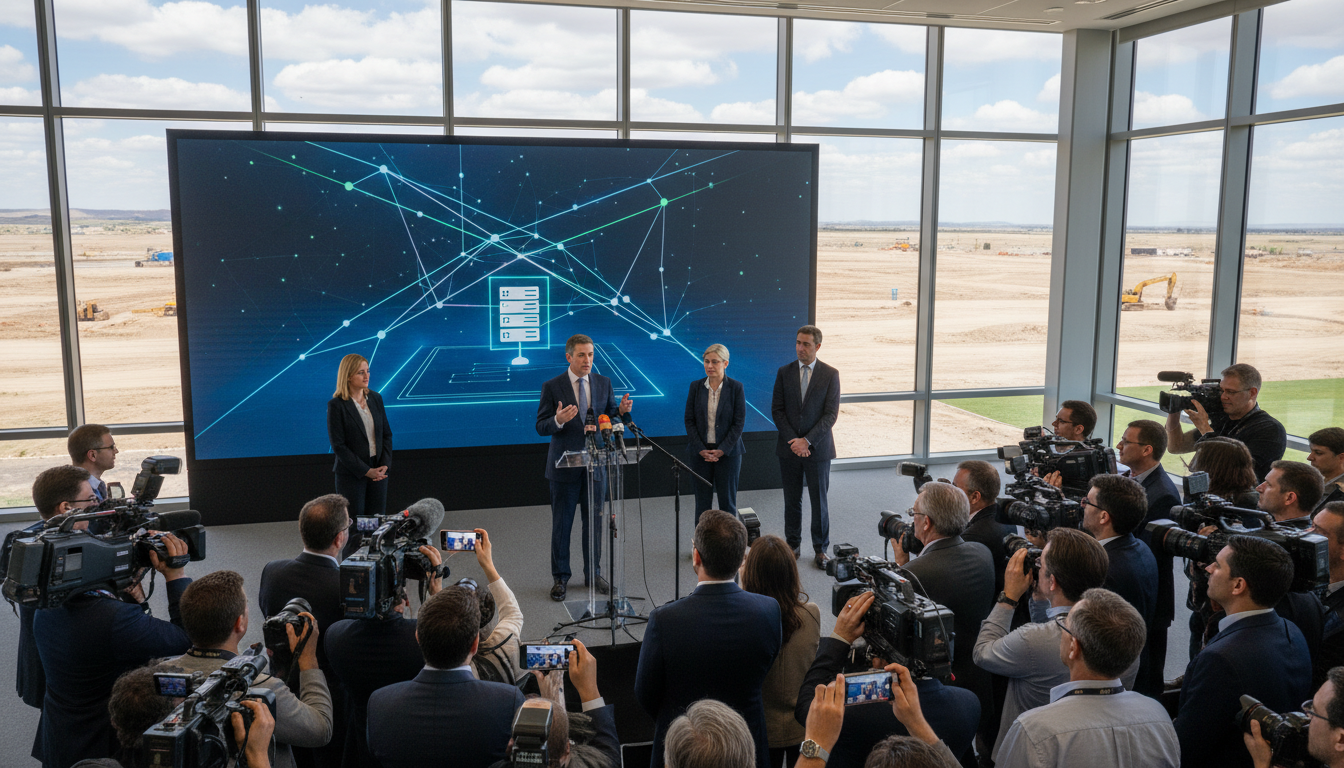
Coatue Launches Next Frontier to Buy Land for AI Data Centers
Coatue’s new Next Frontier venture will buy land near major power sources to develop AI data centers, expanding the firm’s strategy beyond stakes in leading AI companies.
Coatue, the investment firm known for large positions in AI companies, has launched a new real-estate venture called Next Frontier to acquire parcels of land adjacent to major power infrastructure for conversion into data centers. The initiative is designed to capitalize on rising demand for AI compute and to complement Coatue’s existing holdings in companies such as Anthropic, OpenAI and others. According to reports, Next Frontier has already entered a joint venture with cloud infrastructure startup Fluidstack as it pursues build-to-suit sites.
Coatue forms Next Frontier to acquire power-adjacent land
Next Frontier is structured to buy and hold land where grid connection is strong or can be upgraded, then either lease or develop hyperscale and regional data centers. The strategy marks a move by Coatue from equity stakes toward owning the physical sites that house AI compute infrastructure. Observers say owning land near high-capacity transmission lines and generation sources can shorten delivery times for new capacity and reduce dependence on third-party site availability.
Fluidstack joint venture ties Next Frontier to Anthropic deployments
People familiar with the matter tell reporters that the new venture reached an agreement with Fluidstack, a startup that has been linked to large-scale data center projects for AI firms. Fluidstack, which has been reported to be involved in buildouts for Anthropic, would supply infrastructure and operational expertise for sites purchased by Next Frontier. Coatue did not issue a public comment on the arrangement, but industry sources say the pairing speeds up the path from land purchase to live compute capacity.
Proximity to power drives land strategy
Data centers consume extraordinary amounts of electricity and require ready access to substations, transmission lines and sometimes onsite generation to meet demand spikes. Buying land near existing high-capacity electrical corridors reduces the time and cost of grid interconnection, according to engineers and developers in the sector. The choice of parcels also reflects growing emphasis on energy resiliency, the ability to secure renewable power contracts, and local permitting that accommodates heavy electrical loads.
U.S. data center expansion concentrated in rural areas
The United States already hosts thousands of data centers, but recent analyses show a significant wave of additional projects moving forward, with many sited in rural counties. Analysts estimate more than a thousand new facilities are in planning, permitting or construction phases, and a significant share are planned where land is cheaper and grid upgrades are more feasible. That migration has reshaped local economies, drawing developer interest and spurring competition for suitable plots close to power and fiber.
Major investors and public figures entering land and infrastructure deals
Private equity, real estate firms and individual investors have accelerated funding for data center land purchases and build-to-suit projects. Large financial groups and infrastructure-focused buyers have announced multibillion-dollar financing and development plans, while public personalities and smaller investors are also backing local projects. The surge in capital has intensified land speculation in some regions and encouraged novel financing structures that pair landholdings with long-term tenant commitments from cloud and AI customers.
Regulatory, grid and environmental hurdles ahead
Despite strong investor interest, converting power-adjacent land into operational AI data centers faces multiple obstacles. Projects often require lengthy interconnection studies and upgrades to transmission lines that can take years and demand coordination with utilities and regulators. Environmental reviews, water and cooling resource planning, and community concerns about land use and tax impacts also complicate timelines and costs for would-be developers.
The move by Coatue to buy and hold critical parcels signals a broader shift in how investors seek exposure to the AI compute cycle, extending beyond software and chip bets into the land and infrastructure that underpin large-scale model training and inference. As demand for specialized compute continues to grow, the availability of well-sited land and the pace of grid upgrades will shape where and how quickly new AI data centers can come online.
