
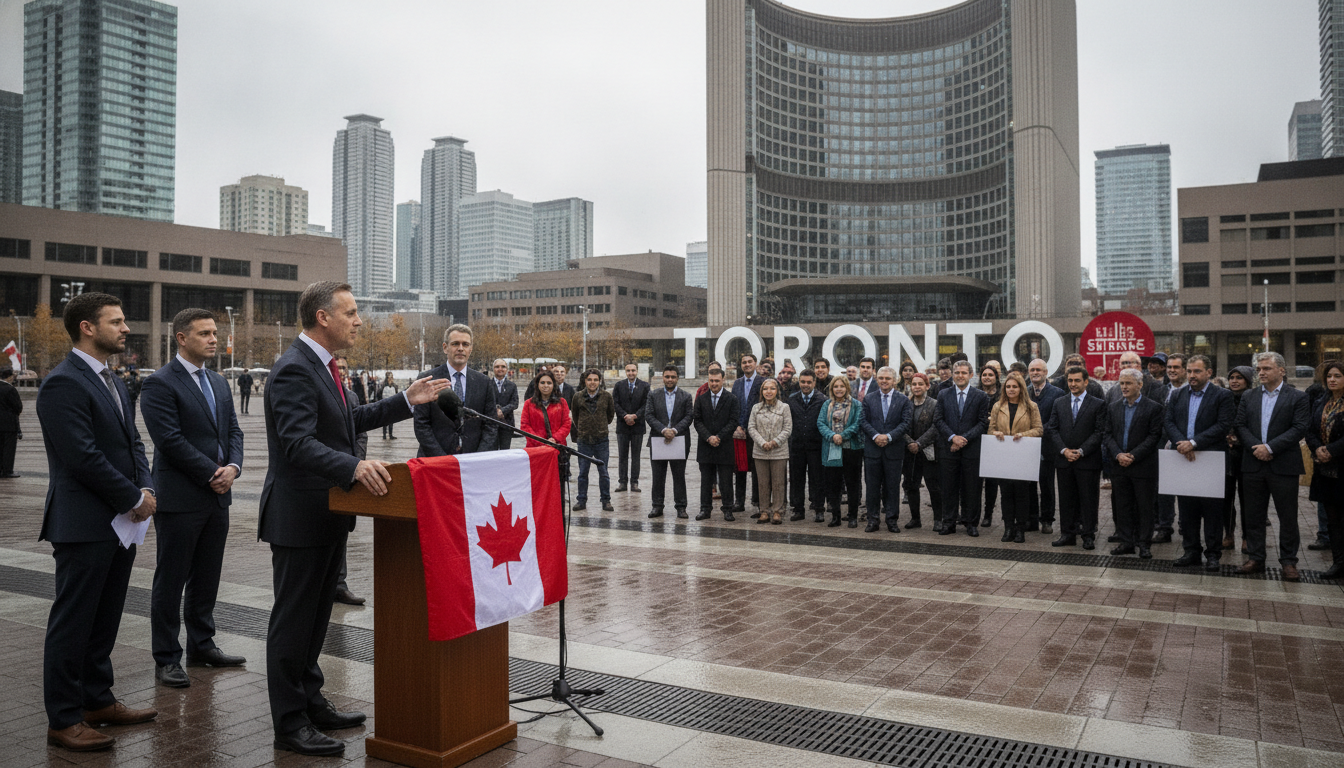
City confirms no protest permits required for individuals under Charter
City cites the Canadian Charter, saying peaceful assembly and freedom of expression are protected and protest permits will not be required for individuals.
The city has told reporters that the Canadian Charter of Rights and Freedoms protects the right to peaceful assembly and freedom of expression, and that it does not require protest permits for individuals gathering in public spaces. The clarification came in a written response to a request from Postmedia seeking to confirm local policy on demonstrations. Municipal officials framed the position as a direct consequence of constitutional protections rather than a change in permitting processes for larger events.
City cites Charter protections
The municipal response emphasized that Charter guarantees form the legal basis for allowing spontaneous and planned individual gatherings without prior municipal approval. City staff said those constitutional rights guide how authorities approach assemblies in parks, sidewalks and other public forums.
Officials noted the city continues to balance Charter rights with obligations to public safety and the orderly use of civic spaces. That balancing act, they said, informs when and why permits may still be applied in specific circumstances.
No permits required for individual gatherings
Under the city’s statement, individuals who come together to demonstrate, protest or express political views in public areas are not required to obtain protest permits. The policy language distinguishes between small-scale assemblies of individuals and larger, organized events that have different impacts on public infrastructure.
City representatives clarified that the absence of a permit requirement applies to gatherings that remain peaceful and do not impede the flow of traffic or access to essential services. When assemblies grow in size or involve road closures, amplified sound, or paid programming, other municipal approvals may still be required.
Limits and conditions for larger demonstrations
Although protest permits for individuals are not mandatory, the city highlighted situations that can trigger regulatory requirements. Organizers aiming to stage large marches, set up stages, or use amplified sound are still expected to coordinate with municipal authorities to ensure permits, road closures and noise regulations are addressed.
The city also pointed to practical constraints such as park capacity, emergency access and scheduled civic events that can affect where and when large demonstrations can take place. Where public safety or significant disruption is a risk, officials said they will work with organizers and law enforcement to manage operations and reduce hazards.
Police and public safety protocols
Police agencies maintain responsibility for public safety during demonstrations and retain the authority to intervene if an assembly becomes violent, blocks emergency routes, or presents a clear risk to public order. The city and police stressed cooperation in managing events, particularly when crowds require traffic control or protective measures for bystanders.
Law enforcement sources say that while peaceful assemblies are protected, officers will monitor protests for activities that cross into criminal conduct. If interventions are necessary, police generally aim for de-escalation while preserving constitutional freedoms wherever possible.
Legal experts outline scope of rights
Constitutional lawyers consulted by local outlets say the Charter robustly protects peaceful expression, but those rights are not unlimited. Experts point out that reasonable limits can be imposed under Section 1 of the Charter where demonstrable harm, safety concerns or competing rights are at stake.
Legal observers also emphasize that municipal bylaws governing noise, traffic and use of public property remain in force and can be upheld if they are applied in a demonstrably reasonable and minimally impairing way. They advise both participants and organizers to be aware of the distinction between individual assemblies and organized events that necessitate additional approvals.
Guidance for protest participants and organizers
City staff encourage anyone planning an assembly that might affect streets, transit routes or large public spaces to contact municipal offices in advance so potential issues can be identified and managed. The city said early communication helps protect participants’ safety and reduces the likelihood of last-minute enforcement actions.
Organizers who anticipate large turnouts should also liaise with police and emergency services to secure necessary traffic plans, first-aid arrangements and contingency measures. The city recommended that groups document their intended route, expected attendance and any equipment needs well before the event.
Rights to peaceful assembly remain central to Canada’s democratic life, and the city’s statement underscores that individuals expressing political views in public spaces are generally free to do so without a protest permit. That freedom coexists with a framework of public-safety rules and municipal processes designed to keep gatherings safe and accessible for everyone.
