
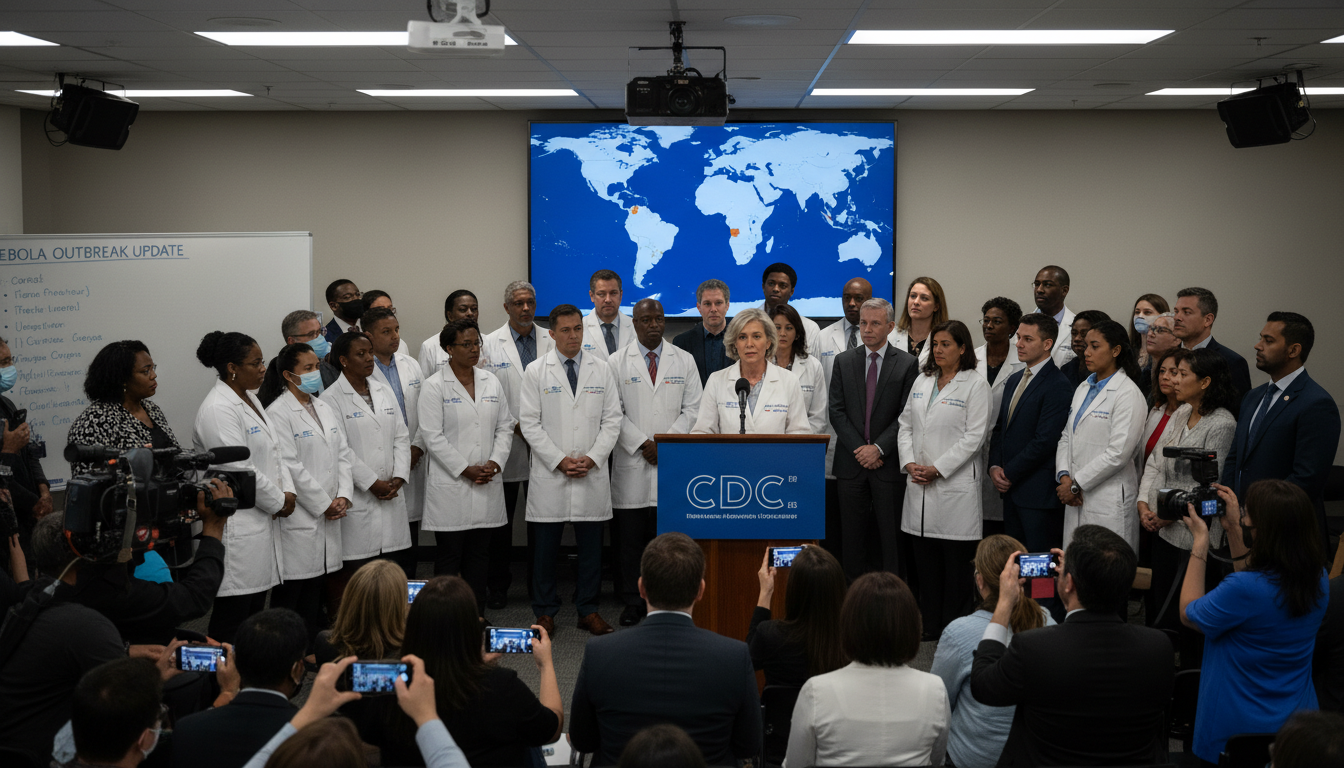
CDC Says Americans Affected in Ebola Outbreak in DRC and Uganda
CDC: Americans affected in Ebola outbreak in the Democratic Republic of Congo and Uganda; officials warn there is no approved vaccine for this virus species.
The U.S. Centers for Disease Control and Prevention confirmed on May 18, 2026, that some Americans have been affected in the Ebola outbreak now spreading in the Democratic Republic of Congo and Uganda. The Ebola outbreak has alarmed health authorities because the species involved does not have an approved vaccine, officials said, and candidate treatments are still being evaluated. Global and regional health agencies are coordinating surveillance and response while stressing that uncertainty remains over the outbreak’s scope.
C.D.C. Confirms Americans Affected
The C.D.C. statement said American citizens have been identified among those affected by the outbreak, but it did not disclose detailed case counts or the individuals’ travel or exposure histories. U.S. public health officials are working with local authorities and partners to trace contacts and assess the risk to communities and returning travelers. The confirmation prompted renewed attention from federal and international agencies monitoring cross-border infectious disease threats.
Vaccine Gap for This Ebola Strain
Public health officials emphasize that the particular species of Ebola now circulating lacks an approved vaccine, unlike previous outbreaks where vaccines had been deployed. That absence complicates efforts to contain transmission and protect frontline health workers, who face high exposure risk in outbreak settings. Experts warn that relying solely on standard containment measures—surveillance, isolation, and infection control—may prolong response times and increase strain on hospitals.
Candidate Vaccines and Treatments Under Evaluation
Researchers and manufacturers have activated efforts to test candidate vaccines and experimental therapeutics against this virus species, with some programs described as expedited or preliminary. Local health authorities indicated that candidate products are being pursued and that clinical evaluation could proceed in the coming weeks, depending on regulatory clearances and supply logistics. International partners have underscored the need for rigorous safety and efficacy assessment even as they seek to accelerate access for high-risk populations.
Coordination between national regulators and emergency response teams will be crucial to manage any emergency use or trial deployment, officials said. Supply chain constraints, cold-chain requirements, and the logistics of conducting trials in outbreak zones could all limit rapid distribution. Nonetheless, the prospect of testing candidate interventions marks a key phase in the wider outbreak response.
Spread Across the Democratic Republic of Congo and Uganda
Health authorities reported cases in both the Democratic Republic of Congo and Uganda, indicating active transmission across national boundaries. Cross-border spread has historically complicated outbreak control, with population movement and porous borders enabling chains of transmission that can be hard to trace. Local hospitals in affected areas are experiencing increased demand for isolation facilities and protective equipment.
Regional ministries of health are scaling up surveillance, contact tracing, and community engagement to identify cases early and limit further spread. International agencies have signaled readiness to provide technical support and supplies, though responders caution that remote areas may remain difficult to reach and monitor.
Impact on Local Health Systems and Response Capacity
The Ebola outbreak has placed new pressure on already strained health systems in parts of central and eastern Africa, where infrastructure and staffing shortages can hamper rapid containment. Health workers, who are essential for patient care and outbreak control, face both infection risk and psychological stress as caseloads rise. Supplies of personal protective equipment and basic medicines are being prioritized for emergency use in treatment centers.
Authorities are also addressing misinformation and fear within communities, which can undermine containment by discouraging early care-seeking and cooperation with contact tracing. Public health teams are working with local leaders to improve communication and bolster trust in response measures.
Guidance for Travelers and the Public
Public health agencies advise travelers to the region to monitor official guidance, register with consular services if applicable, and seek immediate medical care if they develop symptoms after travel. Health officials recommend that returning travelers disclose any potential exposures to their health providers to help guide testing and isolation decisions. For the general public, routine precautions—such as avoiding close contact with symptomatic individuals and following public health updates—remain important.
Authorities emphasize that the risk to countries without direct links to affected areas remains low for the general population, while urging vigilance among travelers and aid workers who may be exposed. Governments are coordinating border and airport health screening protocols consistent with international health regulations.
The situation is evolving and international health bodies, national governments, and researchers continue to monitor case reports and laboratory findings. As candidate medical countermeasures are evaluated, officials say containment efforts and clear communication will be essential to limit the outbreak’s trajectory and protect both local communities and international travelers.
