
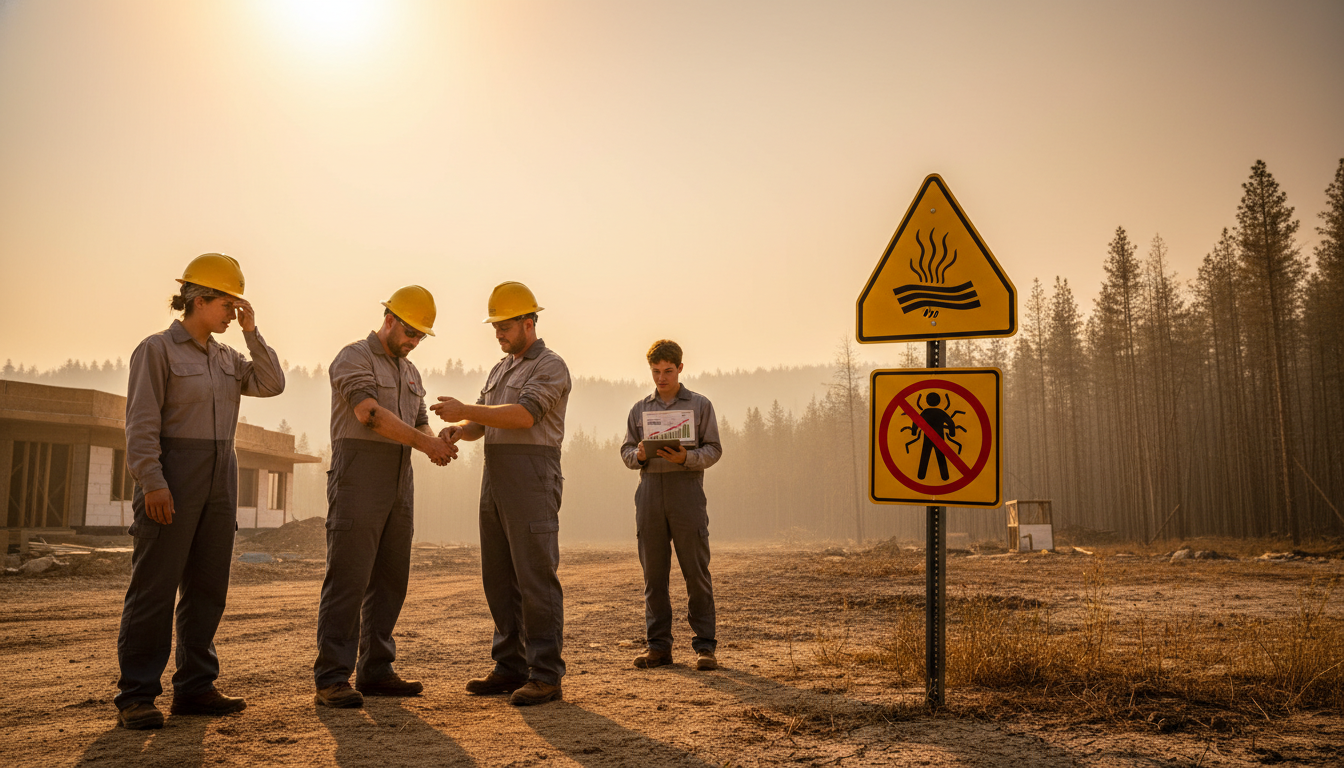
Heat stress and climate hazards threaten Canadian workers as wildfire season begins
Scientists warn heat stress and eco-anxiety will affect Canadian workers this summer; federal Labour Code changes and workplace measures aim to reduce risk.
As wildfire season commences and meteorologists forecast an exceptionally hot summer, scientists are measuring the real-world impacts of climate change and rising heat stress on Canadian workers. Heat stress is emerging as a primary occupational hazard for outdoor and physically demanding jobs, affecting safety, productivity and long-term health. Researchers and safety agencies are also raising alarms about related threats, including vector-borne diseases, declining air quality and mounting psychosocial strain among employees.
Scientists report growing heat-related illness among outdoor workers
A number of studies and field observations show more frequent episodes of extreme heat and prolonged heatwaves across regions of Canada. Health researchers caution that when the body cannot keep its core temperature near 36–37°C, workers face dehydration, muscle strain and reduced concentration that raise the risk of accidents. The trend is particularly acute in urban heat islands and in sectors where protective clothing, heavy lifting or sustained exertion are required.
Ticks and expanding vector-borne disease risk for field crews
Climate-driven changes in habitat have accelerated the northward movement and seasonal survival of ticks and other pests, according to public-health specialists. Experts note that outdoor workers in forestry, agriculture and construction are increasingly likely to encounter infected ticks that transmit Lyme disease and other pathogens. Employers and workers are being urged to adopt preventive practices, from routine tick checks to training on early symptoms.
Agriculture and forestry face new pest pressures and pesticide exposure
Warmer temperatures are also creating opportunities for agricultural pests and invasive species to establish more persistent populations, researchers say. That shift can lead to higher pesticide use and greater chemical exposure for farm labourers and orchard crews, with implications for both acute poisoning and chronic health effects. Industry stakeholders are exploring integrated pest management and protective strategies to reduce reliance on concentrated pesticide applications.
Mental health concerns rise as eco-anxiety affects younger and frontline staff
Occupational health researchers are highlighting a parallel rise in eco-anxiety and climate-related distress among workers, particularly younger staff and those who confront hazards directly. Reports released in April 2026 indicate that concerns about job security, personal safety and the long-term viability of workplaces contribute to elevated stress and morale problems. Workplace mental-health programs, managerial training and peer supports are being recommended to help reduce psychological strain and improve resilience.
Federal Labour Code revisions require stronger protections for extreme temperatures
The federal government has announced updates to the Canada Labour Code that will come into force in February 2027, requiring employers to address risks from both extreme heat and cold. New provisions oblige workplaces covered by federal jurisdiction to implement measures to control exposure and to record incidents related to temperature extremes in workplace registries. Regulators say the changes aim to close gaps in prevention and ensure that record-keeping and response systems reflect the changing climate.
Employers adopting practical adjustments and technology to reduce risk
Workplaces are piloting a range of measures to reduce heat exposure, including altered shift schedules, mandatory rest breaks, hydration protocols and reduced physical demands during peak heat. Occupational-safety researchers also point to emerging technologies, such as physiological sensors integrated into personal protective equipment, that can provide real-time monitoring and early warnings for heat strain. Employers, unions and developers are collaborating on trials to balance privacy concerns with the potential safety benefits of such systems.
Several municipalities and large employers have already implemented pragmatic steps, such as moving heavy tasks to mornings, increasing shaded rest areas and providing cooling products for crews. In Montreal, for example, photographs of construction workers using frozen treats to cool down have become a visible sign of the season’s strain on labourers.
Practical preparedness and clear communication are recurring themes among experts. Training supervisors to recognize early signs of heat illness, ensuring access to water and shade, and creating contingency plans for poor air quality during wildfire smoke events are among recommended actions. Occupational-health authorities stress that these measures not only protect workers but also sustain operational capacity during climate-driven disruptions.
The convergence of physical hazards, expanding disease vectors and rising psychosocial stress underscores that climate change is reshaping workplace risks across many sectors. As federal rules tighten and employers experiment with new controls and technologies, occupational-health officials say the priority is preventing injury while maintaining worker dignity and privacy. With wildfire season underway and warmer conditions expected to persist, experts emphasize that timely adaptation and clear workplace policies will be essential to limit the human and economic costs of heat stress and related climate impacts.
