
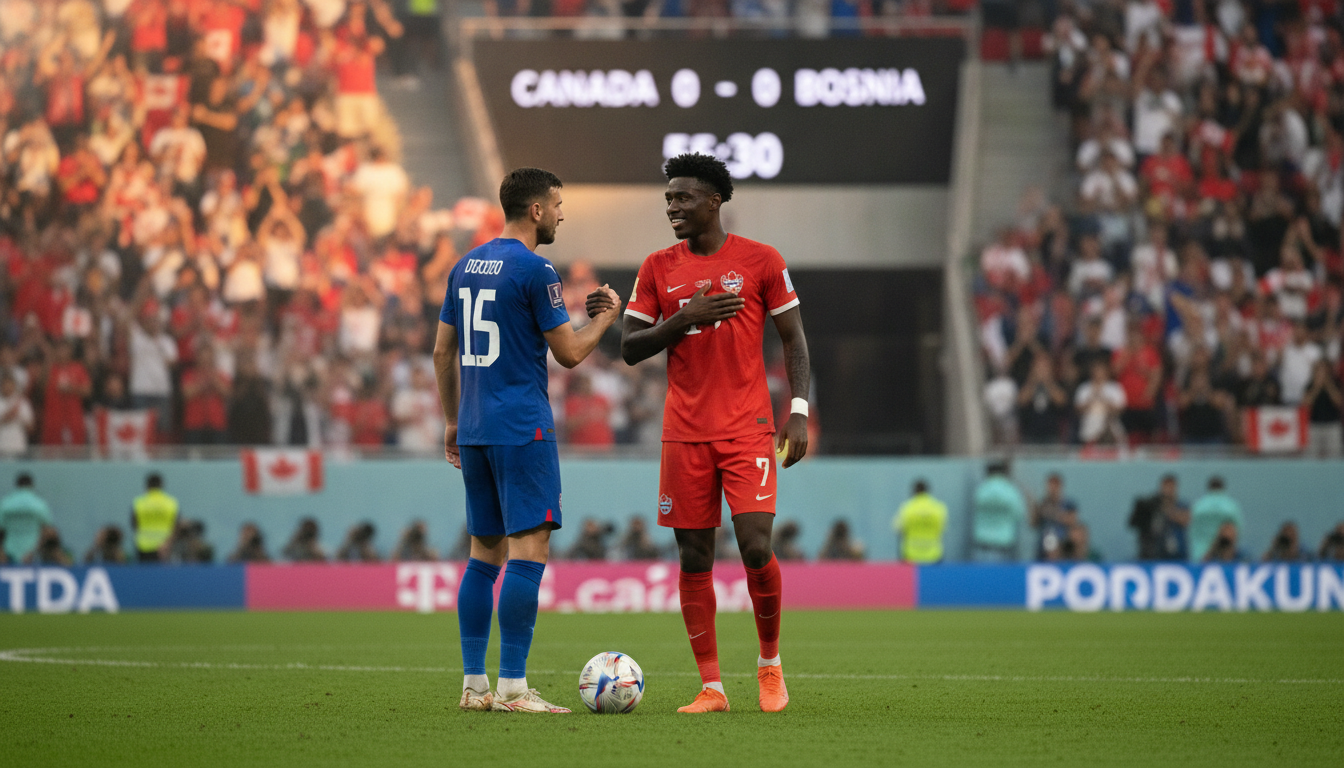
Bosnia World Cup: Canada-based athlete will cheer for Bosnia while still supporting Canada
A Canada-based athlete with Bosnian heritage says he will cheer for Bosnia at the Bosnia World Cup while maintaining support for Canada. He told reporters that representing his ethnicity and country matters deeply to him, and that Bosnia’s return to the tournament after a 12-year absence shaped his feelings. The player added that an ideal result would be a draw, reflecting his wish to celebrate both national ties without choosing one side outright.
Player explains split loyalties
The athlete described his position as one where personal history and national affiliation coexist. He said that wearing both identities proudly does not diminish his bond to either nation, and that the World Cup presents a rare moment to honor family roots.
He emphasized that Bosnia’s qualification after more than a decade away makes this tournament particularly meaningful. The player framed his support as an expression of cultural pride rather than a rejection of his Canadian connection.
Bosnia’s return after 12 years
Bosnia’s reappearance on football’s biggest stage was highlighted by the player as a major emotional milestone. He suggested that supporters in the diaspora view the team’s qualification as a collective achievement that reconnects communities abroad with their homeland.
That return, he said, has layered significance for athletes and fans who grew up outside Bosnia but maintain deep family ties. For many, the tournament serves as both sporting competition and cultural reunion.
Canadian response and teammate perspective
Within Canadian sport circles, the player’s comments drew a largely understanding response from teammates and fans. Several colleagues reportedly acknowledged the complexity of national identity for athletes who come from immigrant families, noting that dual support is common in multicultural locker rooms.
Coaches and officials typically view such expressions of heritage as personal and not indicative of a divided commitment on the field. In training and competition, athletes are expected to perform for whichever team they represent, regardless of public loyalties.
Heritage and representation in international sport
The athlete’s stance touches on a broader conversation about heritage and representation in international athletics. Many players with dual backgrounds confront similar choices during major tournaments, where familial pride and national allegiance can overlap.
Observers say these moments often encourage inclusive discussions about identity and belonging, especially in countries with large immigrant populations. For athletes, wearing multiple cultural hats can become a visible reminder of the global nature of modern sport.
Fan dynamics and viewing choices
The player suggested that a 1-1 draw would be the best outcome from his perspective, illustrating the delicate balance fans may seek during overlapping loyalties. Such a result, he said, would allow celebrations for both sides without one nation’s loss overshadowing the other’s joy.
In practice, diaspora communities frequently organize watch parties that celebrate both teams, and splits in household allegiances are not uncommon. Broadcasters and fan groups have adapted by highlighting dual narratives and profiling players who bridge national identities.
Sporting focus amid personal sentiment
Despite the emotional backdrop, the athlete reiterated his professional focus on representing his team on the pitch when selected. He made clear that personal support during the tournament is separate from competitive responsibilities in training and matches.
He added that the World Cup moment is rare and intensely personal, and that athletes are allowed to embrace their multiple identities without compromising their commitment to teammates.
The player’s remarks reflect how international tournaments often spotlight personal histories as much as athletic performance, prompting conversations about identity that go beyond a single result on the field.
