
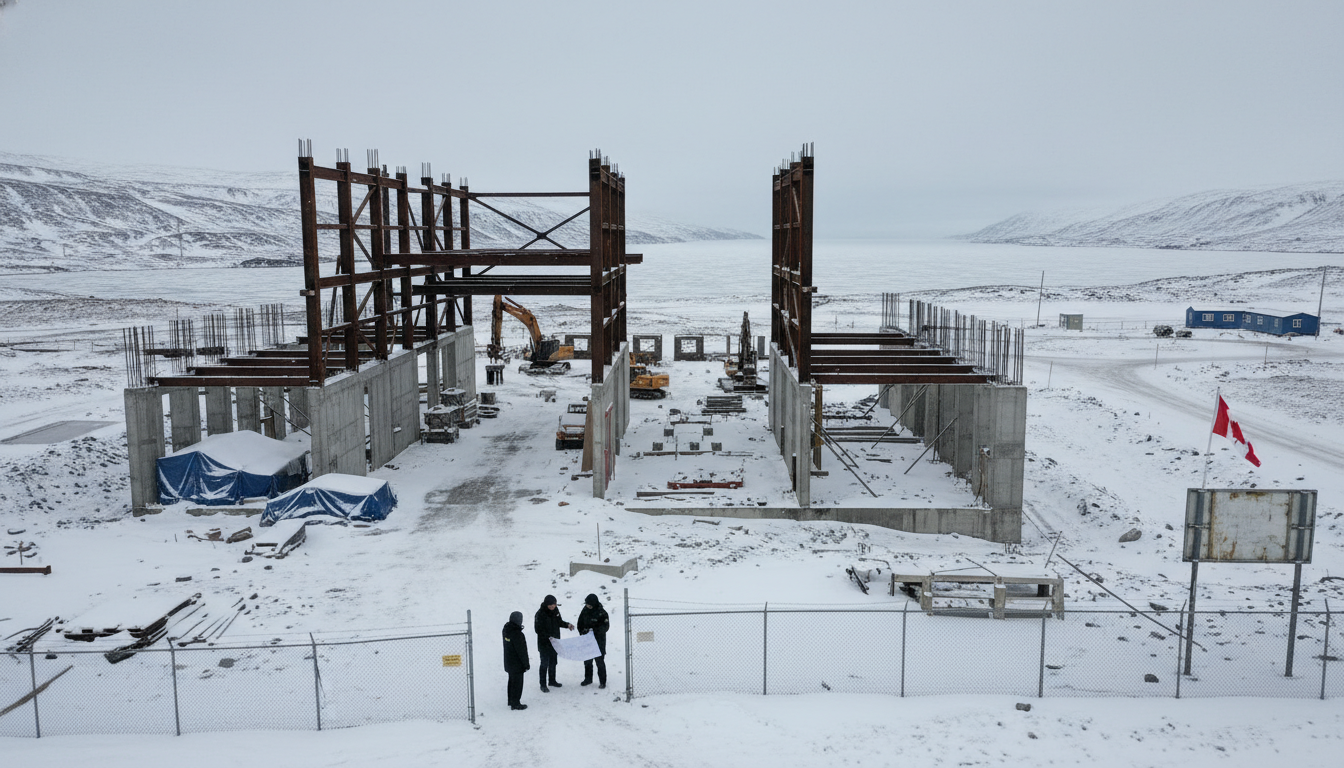
Ottawa abandons Nanisivik naval facility after $110M and years of delays
Canada abandons the Nanisivik naval facility after $110.2M spent and years of delays; Defence says site is unsuitable and will study reuse or other Arctic resupply options.
The federal government has formally terminated the long-stalled Nanisivik naval facility project in the western Nunavut region, ending nearly two decades of construction and planning. The Nanisivik naval facility, launched by Prime Minister Stephen Harper in 2007, will be placed in a caretaker state after the Department of National Defence determined the site is no longer suitable for its intended role. Ottawa says it has spent $110.2 million on the project and will provide a further $610,000 in the current fiscal year before suspending further development.
Project origins and Ottawa’s 2007 announcement
Prime Minister Stephen Harper announced the conversion of the former Nanisivik mine into a deep-water port and resupply base for the Royal Canadian Navy in August 2007. The plan aimed to bolster Canada’s ability to project presence and sustain operations in the Arctic, a region Harper described as central to sovereignty claims. Initial government estimates put the cost at about $100 million, reflecting optimism that existing mine infrastructure would shorten timelines and lower expenses.
Escalating costs and revised financial outlook
Over time the projected cost rose substantially, driven by technical issues, inflation and logistical challenges in the High Arctic. Defence officials now say the project has consumed $110.2 million to date and would require roughly an additional $200 million to achieve full operational capability from its current state. The department has earmarked $610,000 for the present fiscal year to place the facility into a maintained, non-operational condition while future options are assessed.
Technical setbacks and early corrosion problems
Significant problems emerged soon after the project began when microbiologically influenced corrosion was discovered on existing infrastructure in 2008. That corrosion, which affected the jetty and other marine structures, produced delays and prompted repeated reassessments of the site’s viability. Engineers concluded that the extent of damage and the cost to rebuild key components — including a pier that would support resupply operations — undermined the original design and operational assumptions.
Operational assessment and defence assurances
The Department of National Defence has argued the closure of active work on Nanisivik does not compromise the Navy’s current Arctic operations. Officials contend that modern ship endurance and the existing network of support points allow vessels to be refuelled and supplied elsewhere for now. The department also maintains it will “invest in the most effective capabilities available today,” signalling a shift toward alternative approaches to Arctic logistics rather than completing the Nanisivik build as originally conceived.
Lessons from community distance and partnership models
Experts and academics point to the facility’s remote siting as a structural weakness in the project’s design. The Nanisivik site sits roughly 40 kilometres from the nearby community of Arctic Bay, a separation that limited opportunities for shared civilian–military use and broader local benefits. Observers argue future investments would be more sustainable if placed within or adjacent to communities, creating dual-use infrastructure that serves both local needs and defence requirements for longer portions of the year.
Alternatives under consideration for Arctic resupply
Analysts suggest Ottawa could pursue several alternative strategies for Arctic resupply, including constructing port and storage facilities in partnership with northern communities or private operators. Another proposed option is developing an ice-capable replenishment vessel — a resupply ship with strengthened hull and limited icebreaking capability — able to move where required and support both the Royal Canadian Navy and the Canadian Coast Guard. Proponents say such a ship would offer greater operational flexibility and could be employed outside the Arctic when not needed for northern operations.
The decision to suspend active work on the Nanisivik naval facility reflects a reassessment of Arctic priorities and fiscal realities after nearly 20 years of fits and starts. Defence officials will now evaluate reuse, transfer or disposal options for the site while considering investments that deliver more adaptable and community-integrated resupply solutions for Canada’s North.
