
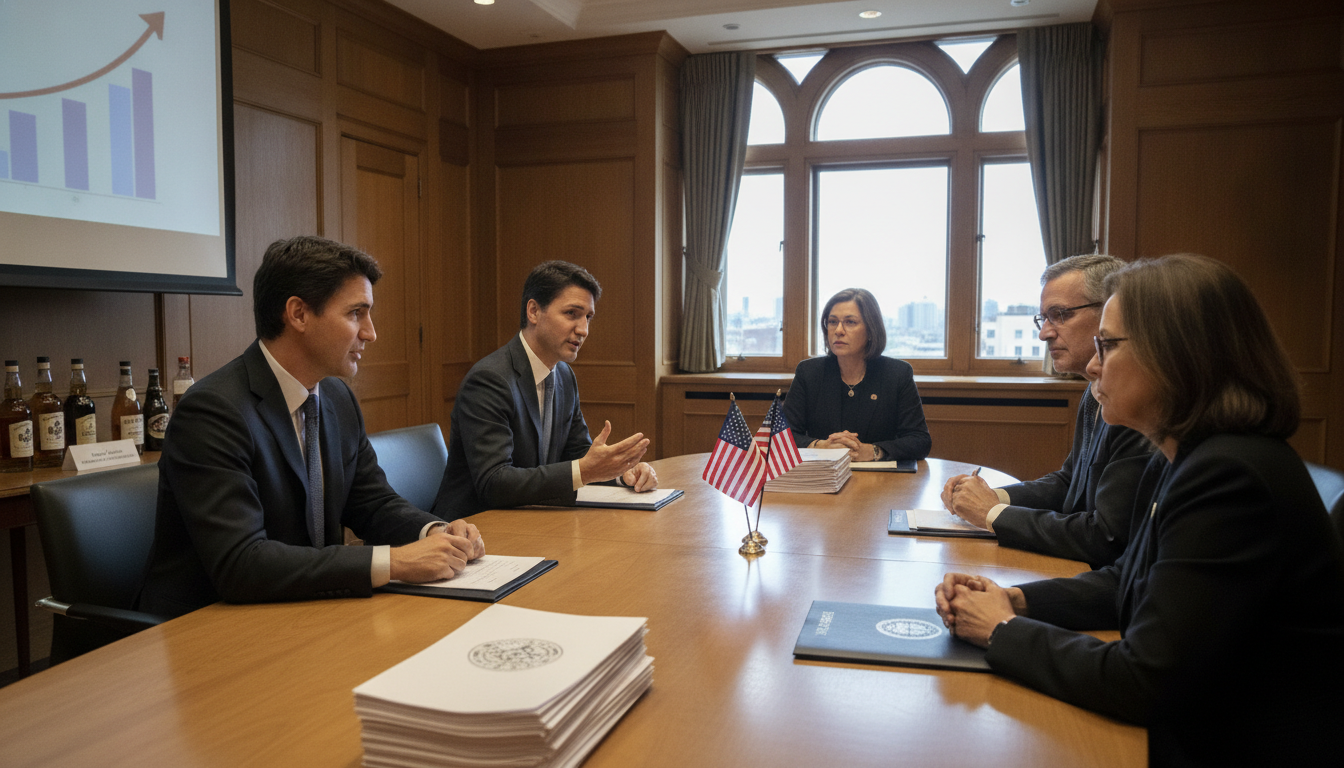
Canada weighing lifting U.S. alcohol sales bans as trade talks intensify ahead of tariff deadline
Ottawa considers lifting U.S. alcohol sales bans and other concessions to avert threatened 50% U.S. tariffs on Canadian goods ahead of an August 19 deadline.
Canada is preparing to offer concessions, including lifting long-standing bans on the sale of certain U.S. alcoholic beverages, as Ottawa seeks to head off threatened 50% tariffs on a wide range of Canadian products ahead of an August 19 deadline. Sources close to the negotiations say the moves form part of a package of trade compromises being discussed with U.S. officials. The potential change to alcohol policy is being weighed alongside proposed adjustments for automobiles and dairy measures under wider Canada–U.S. trade talks.
Trade deadline and U.S. tariff threat
The United States has signalled it may impose additional tariff measures, including a proposed 50% duty on products that had been exempt under the Canada–United States–Mexico Agreement (CUSMA). The August 19 date has been identified by negotiators as the moment by which Washington could enact those duties if a settlement is not reached. Ottawa is urgently assessing its bargaining options in hopes of securing relief from both the blanket tariff threat and sector-specific levies already targeting steel and aluminium firms.
Concessions on alcohol and automobiles
Officials involved in the discussions say Ottawa is prepared to consider reopening provincial retail lists to certain U.S. wines and spirits and lifting regulatory barriers that have effectively kept some American alcohol off Canadian shelves. In parallel, Canada is reported to be discussing the removal or reduction of tariffs on select U.S.-made vehicles as part of reciprocal concessions. Sources emphasise that any federal steps relating to alcohol sales would still have to account for provincial jurisdiction and regulatory frameworks governing liquor distribution and retail.
Products targeted by proposed U.S. duties
Washington’s potential tariff list covers a broad swath of goods, from agricultural items such as honey and down to manufactured products like plywood and hockey sticks. Trade negotiators are also mapping exposure for niche sectors that could face severe disruption if the 50% duty is applied. Industry groups and exporters are watching closely, as such duties would significantly raise costs, distort supply chains, and prompt rapid shifts in sourcing and pricing for Canadian businesses.
Negotiators and recent talks in Washington
Senior Canadian trade officials met with their U.S. counterparts in Washington this week to attempt a de-escalation and to find a path toward a broader agreement on CUSMA implementation. Delegations included the federal minister responsible for Canada–U.S. trade and Canada’s lead trade negotiator, who described the discussions as constructive and detailed. Ottawa is pushing for Washington to drop the immediate tariff threat and to ease sectoral duties while pressing for a commitment to resume formal negotiations on a more durable agreement in the autumn.
Dairy sector and unresolved technical issues
Sources indicate that the dairy file remains one of the most sensitive and unresolved parts of the talks, with Ottawa considering unspecified modifications but not yet detailing their scope. Dairy policy is tightly regulated through provincial systems and supply management structures, complicating federal bargaining positions. Any federal concessions touching dairy would require careful coordination with provincial governments and industry stakeholders to mitigate market and political fallout.
Provincial authority over alcohol sales
Liquor retailing and distribution fall under provincial jurisdiction, which limits the federal government’s ability to unilaterally change how alcoholic beverages enter Canadian markets. Provincial leaders have repeatedly made clear they must be consulted on any measures that would allow new U.S. products onto store shelves or alter existing licensing and distribution frameworks. Ottawa officials say any deal on lifting U.S. alcohol bans would be pursued as part of a comprehensive agreement involving federal and provincial buy-in.
Canada now faces a compressed timetable to reconcile domestic policy constraints with diplomacy aimed at avoiding a sudden and punitive tariff regime. Negotiators are balancing immediate economic risks to exporters with political sensitivities at home, while seeking a clearer timetable from the United States for a negotiated resolution.
Moving forward, Ottawa is pressing for a return to formal talks in the coming months and for concrete assurances that sectoral duties will be eased if concessions are offered. The outcome will shape near-term trade stability for manufacturers, farmers and retailers across the country, and will test federal-provincial coordination on issues that straddle jurisdictional lines.
