
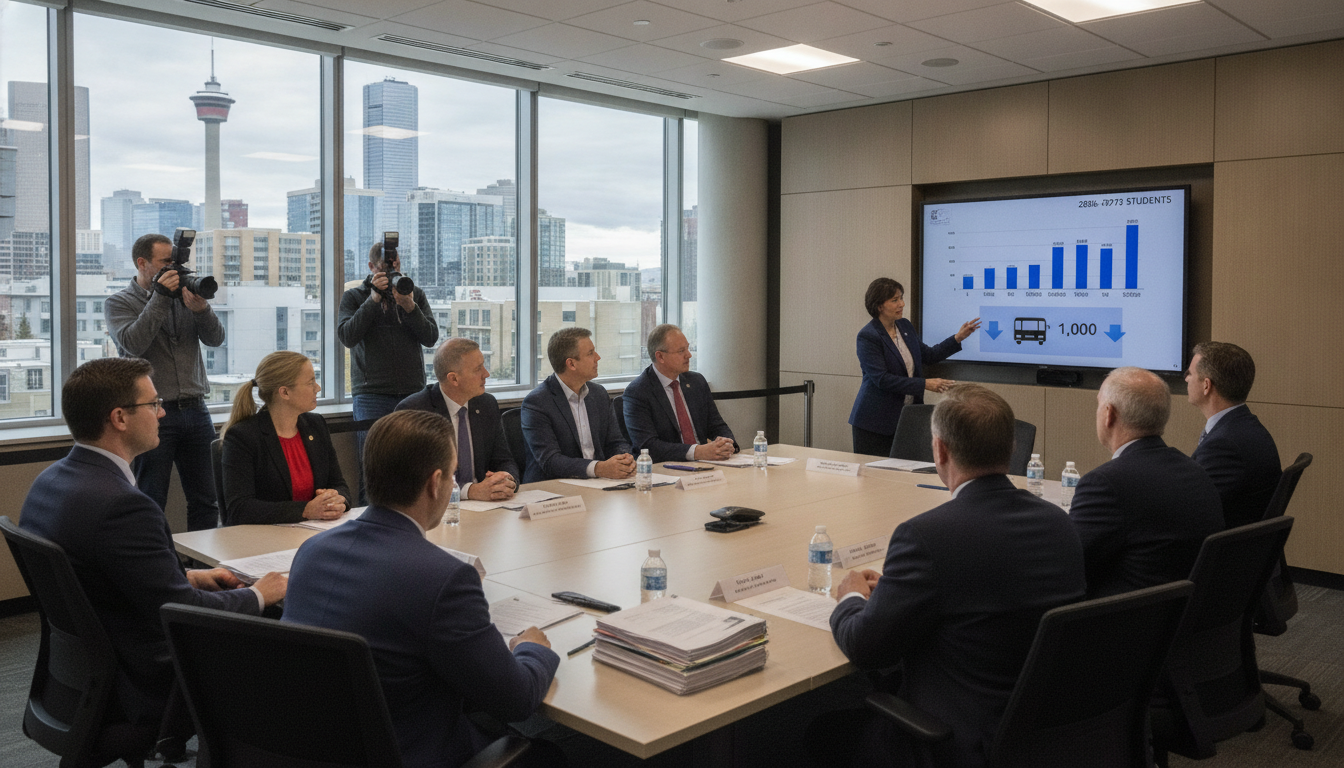
Calgary board enrolment projected at 143,475 for 2026-27 as bus ridership is set to decline
Calgary board enrolment is projected at 143,475 for 2026-27, up about 1,000 students, while school bus ridership is forecast to fall by roughly 1,000.
The Calgary school board is forecasting enrolment of 143,475 students for the 2026-27 school year, an increase of more than 1,000 pupils compared with the current year. The projection accompanies expectations that about 1,000 fewer students will use the board’s transportation services, down from roughly 27,000 riders in the most recent school year. Board officials said the figures will shape planning for classrooms, staffing and bus operations as the district prepares its budget and capital priorities.
Projected numbers and immediate outlook
The board’s enrolment projection signals steady student growth across Calgary heading into 2026-27. An increase of more than 1,000 students will require adjustments to class placements, teacher allocations and facility assignments across multiple schools.
At the same time, transportation planners are anticipating a modest decline in school bus use, estimating about 1,000 fewer riders than the roughly 27,000 who used the service this past year. That combined shift — more students overall but fewer using district transportation — presents a mixed operational picture for administrators.
Operational pressure on schools and staff
Rising enrolment typically translates into higher classroom demand and potential pressure on staff numbers and school space. School boards must balance hiring needs, potential use of portable classrooms and program placement to ensure class sizes remain within policy limits.
The board will also need to review staffing allocations and possibly accelerate recruitment for the fall, particularly in schools serving growing neighbourhoods. Administrators say timely projections are central to avoiding disruptions when the school year begins.
Transportation changes and planning implications
A projected drop in bus ridership of about 1,000 students implies route changes, vehicle redeployment and adjustments to contracted transportation services. Fewer riders can allow the board to consolidate routes, reduce duplication and potentially lower operational costs if changes are implemented efficiently.
Officials will weigh service levels against equity and access, ensuring students who rely on school transportation continue to have safe and reliable options. Any route reductions or schedule shifts would typically be phased in with consultation and notice to families.
Budgetary and capital planning considerations
Enrolment increases influence the board’s revenue forecasts and capital needs, while transportation shifts affect operating expenditures. Higher student numbers can boost provincial funding tied to per-student formulas, but they also raise short-term costs for staffing and facility readiness.
Conversely, reductions in bus ridership could deliver modest savings, though those depend on the board’s ability to realign contracts and vehicle usage. Financial planners within the board will need to reconcile these opposing forces as they finalize budget recommendations for trustees.
Impact on school capacity and facilities
A net gain of over 1,000 students may intensify capacity planning in neighbourhoods experiencing growth. The board must determine whether existing schools can absorb the additional students or if temporary measures such as portables will be required to prevent overcrowding.
Longer-term responses may include accelerated capital submissions for new school construction or boundary adjustments to redistribute enrolment. Trustees and planners will use the projection to inform immediate actions and multi-year facility strategies.
Next steps and stakeholder engagement
The board intends to use the enrolment and transportation forecasts as the basis for decisions this spring and summer, ahead of the 2026-27 school year. Plans for staffing, bus routing and any facility interventions will be developed with input from school leaders and presented to trustees for approval.
Families can expect communications about route assignments, school placements and any school-level adjustments as the board finalizes operational details. The district has indicated it will monitor trends closely and revise plans if actual registrations diverge from the current projection.
The projection of 143,475 students and the anticipated drop in bus ridership underscore the board’s challenge of managing growth and shifting service needs, and officials say they will continue refining plans to ensure students receive stable, safe and equitable access to education and transportation.
