
Calgary mayor warns Alberta referendum will deter investors, threaten city’s economy
Calgary Mayor Jeromy Farkas warns the Alberta referendum on secession will undermine investor confidence and jeopardize jobs, housing and major projects in the city.
Mayor says referendum risks investor flight
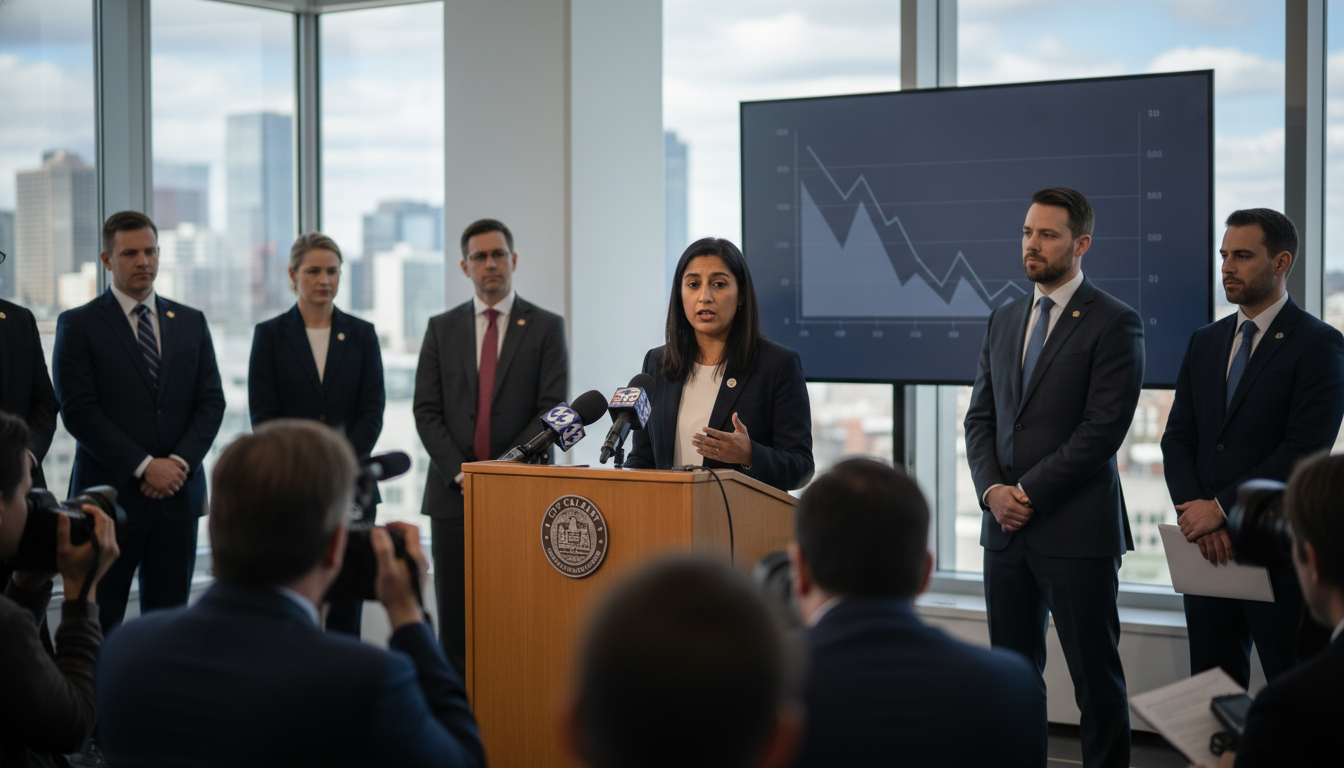
Calgary Mayor Jeromy Farkas told reporters at city hall on Friday that the provincial decision to include an Alberta referendum question in October will damage the city’s attractiveness to investors. He said asking whether Alberta should remain in Canada, or begin legal steps toward a binding secession vote, creates harmful uncertainty for businesses weighing Calgary as a location.
Farkas called the plan “a ridiculous lack of leadership,” arguing that even a preliminary vote sends a signal that the province may face repeated political upheaval. Standing before three Canadian flags, he said his priority is protecting Calgary’s economy and promoting confidence that the city is “stable, ambitious and open for business.”
Comparison drawn to Quebec’s referendums and Montreal’s losses
The mayor explicitly compared the current debate to Quebec’s secession referendums in 1980 and 1995, saying Calgary could suffer similar economic consequences if the Alberta referendum proceeds. He warned that prolonged constitutional uncertainty can force companies to relocate or delay major investments.
Farkas cited the relocation of major financial institutions historically tied to Montreal as an example of how political instability can reshape corporate geography. He said Calgary, as Alberta’s largest city, would likely be one of the hardest-hit communities if investment dries up and employers shift jobs elsewhere.
Concerns about pipeline project and provincial-federal collaboration
While criticizing the referendum, Farkas praised recent cooperation between Premier Danielle Smith and federal Prime Minister Mark Carney on a proposed oil export pipeline to the B.C. coast. He said the pipeline agreement demonstrated progress on a key economic priority but warned that secession talk could derail momentum for the project.
The mayor argued that investors and trading partners need predictability on major infrastructure initiatives, and that repeated or escalating constitutional questions would complicate financing and regulatory approvals. He said municipal leaders must now make a case that Calgary’s future is brightest as part of Canada.
Premier defends referendum wording and public petitions
At a separate news conference, Premier Danielle Smith defended the wording of the Alberta referendum question, saying a more binary formulation might be struck down in court. Smith repeated that her own position, and that of her UCP government and caucus, is for Alberta to remain in Canada while also asserting the province should not accept the federal status quo.
Smith pointed to petition drives that she said reflect public demand for the question, estimating more than 700,000 Albertans had signed petitions related to independence. She placed much of the blame for the current debate on federal policies during the previous decade, saying those years of uncertainty discouraged investment in the province.
Mayor frames referendum as distraction from municipal priorities
Farkas described the Alberta referendum as a “sideshow” that diverts attention and resources from pressing municipal issues such as housing, public safety and infrastructure renewal. He said Calgary cannot afford to let a divisive provincial debate stall work on affordable housing and transportation projects that affect residents daily.
He added that, although the city will have to participate in the referendum process once it is called, his administration will actively campaign for Alberta to remain part of Canada. Farkas said he intends to make a “loud and proud” argument for the city’s role within the country and to protect local jobs and investment.
Calgary faces an immediate political test as municipal and provincial leaders present competing visions for the city’s economic future amid talk of secession. The mayor’s warning underscores the potential costs of heightened constitutional friction for corporate confidence, while the premier insists the referendum process is a legal and democratic response to public petitions.
The October question on the Alberta referendum and any subsequent actions now set the stage for weeks of intense public debate across the province, with business groups, civic leaders and municipalities assessing potential impacts on investment, jobs and long-term planning.
