
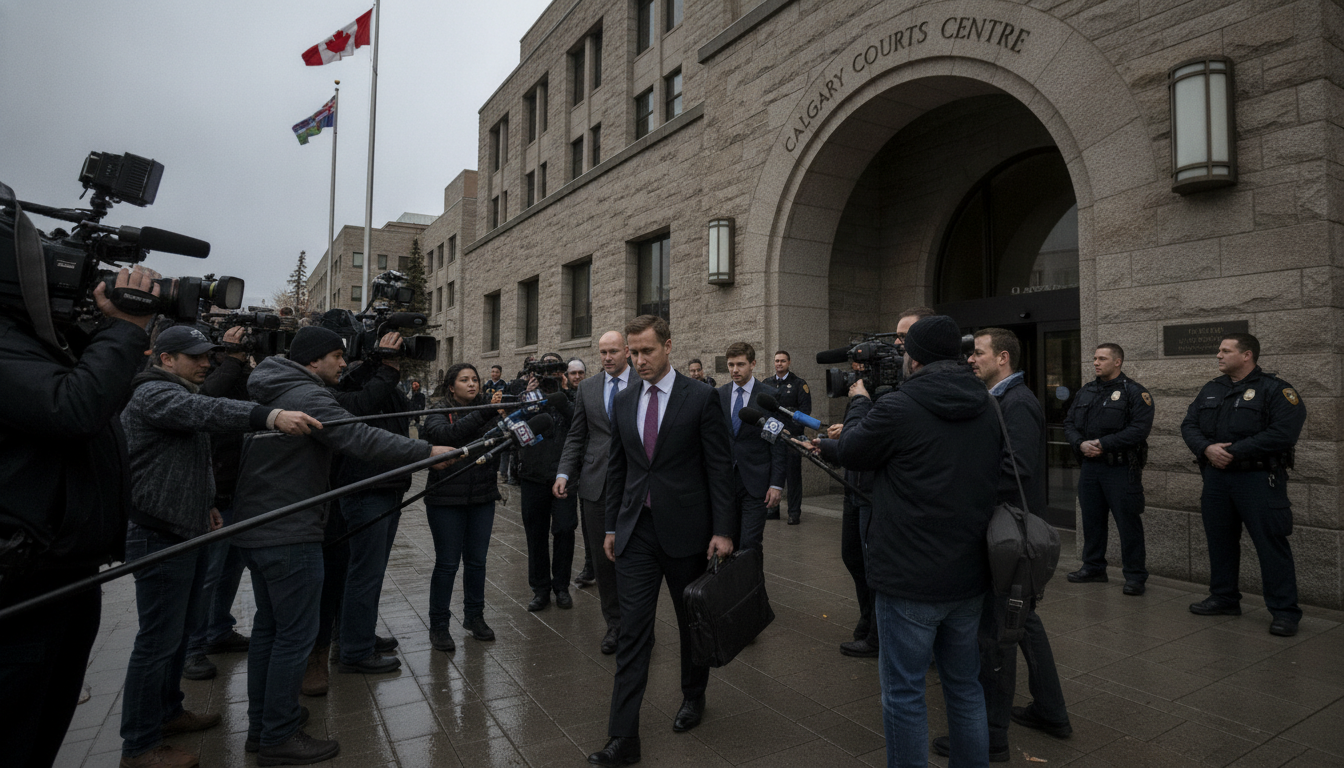
Calgary lawyer acquitted on sexual assault and indecency charges, convicted for harassment by phone
Calgary lawyer acquitted of sexual assault and public indecency after judge questioned witness credibility; convicted of harassment by telecommunications, sentencing pending.
A Calgary lawyer acquitted of sexual assault and public indecency after a judge raised serious concerns about witness reliability was nonetheless convicted of harassment by telecommunications, a ruling delivered May 1 found. The Calgary lawyer acquitted on the substantive sexual offences was identified in court documents as Patrick Higgerty, who also served as a justice of the peace in Alberta. The mixed verdict has prompted calls for clarity about the evidence and lined up a sentencing process focused on the harassment conviction.
Justice Frank Bosscha delivered the written decision that set out the reasoning behind acquitting on the substantive sexual charges while concluding the telephone conduct met the threshold for criminal harassment. The judge stated credibility problems with testimony from multiple witnesses as central to the verdict on the sexual and indecency allegations. The harassment conviction springs from a separate factual sequence of calls made in November 2022 that a judge found were intended to alarm and disturb the recipients.
Judge cites credibility issues in acquittal on sexual charges
Justice Bosscha framed his ruling by emphasizing the court’s obligation to evaluate the reliability of testimony when consent is contested. He noted that on the issue of consent — the pivotal legal question in the sexual-assault allegations — the evidence from the complainant, the accused, and a third-party witness diverged in important and troubling ways. After assessing all of the evidence, the judge concluded the testimony of the three principal witnesses could not be relied upon to prove the offences beyond a reasonable doubt.
The ruling underscores a legal principle central to criminal trials: where witness accounts are inconsistent or suffer from issues that diminish credibility, the Crown bears the burden of establishing guilt to the high standard required. In this case the judge found gaps and contradictions significant enough to prevent conviction on the allegations of sexual assault and public indecency. That finding resulted in an acquittal on those substantive counts even as the court proceeded to decide other charges connected to the same factual matrix.
Employment relationship and disputed incidents beginning in 2017
Court records show the complainant began working at Higgerty’s Calgary-based law office in January 2017, initially as a receptionist and later advancing to a legal assistant role. By late 2017 she was employed as a personal injury paralegal under Higgerty’s direct supervision, a working relationship that the trial explored in detail. The incidents that led to criminal charges were said to have occurred across multiple occasions while the complainant was employed at the firm.
The employment setting and reporting lines featured prominently in cross-examination and submissions, with defence counsel arguing context and consent as central to understanding the interactions at issue. The complainant’s account was that she did not consent to the sexual acts alleged, while the accused maintained that consent had been obtained. A third person who testified said they believed consent had been given, though that witness’s testimony was also characterized by the judge as unreliable in key respects.
Harassment conviction tied to November 2022 telephone calls
Separate from the sexual-assault allegations, Justice Bosscha found that a series of phone calls made in November 2022 amounted to harassment by telecommunications. The judge described the accused as “highly agitated” during those calls and observed that another individual was present on at least some of them. The recorded content, as summarized in the decision, included threats, racial slurs and references to a connection with a local gang.
The judge concluded the intent and effect of the communications were to harass and intimidate both the complainant and a second individual, identified in court as her partner. Higgerty denied intending to harass and told the court he was seeking accountability after believing the two people on the receiving end of the calls were involved in a home invasion against him. The two recipients denied any involvement in such an incident.
Related investigation and third‑party admission over home invasion claim
The trial record contains material surrounding an alleged break‑in that the accused said provided context for his frantic calls. Investigators were told in 2023 that a different man admitted he was one of the intruders in that break‑in and stated he had been offered $1,000 to enter the home and assault Higgerty. That admission was significant to the narrative offered by the defence, supporting the accused’s claim that he believed the two people he phoned were responsible for the home invasion.
Crown counsel countered that even if a break‑in had occurred and third parties had confessed to involvement, it did not justify or excuse the threatening content and racial language used in the November 2022 calls. Justice Bosscha agreed, writing that the recorded exchanges crossed the line into criminal harassment given their threatening tenor. The court’s bifurcated approach treated the two sets of allegations—those relating to sexual conduct and those involving communications—as legally distinct, with different evidentiary touchstones.
Sentencing process and pre‑sentence risk assessment ordered
Following the harassment conviction, the judge scheduled a sentencing hearing for September and ordered the preparation of a pre‑sentence risk assessment report, which is a common step where a court must determine factors such as the likelihood of reoffending and appropriate sentencing options. The report will inform the judge’s approach to sentencing and any ancillary orders the court may impose, including conditions aimed at protecting potential victims. Such assessments typically examine the offender’s criminal history, mental health, and the circumstances of the offence.
The accused’s lawyer, Alain Hepner, told the court his client was “pleased about the result of the substantive offences” but expressed concern about the harassment findings and indicated he was considering an appeal. That potential appeal would focus on the harassment conviction rather than the acquittals, according to defence comments reported by counsel. Until sentencing, the court record will reflect the conviction and the steps ordered by Justice Bosscha as the process moves toward final disposition.
Professional status, public interest and workplace conduct questions
Court filings identify the accused as a former justice of the peace who is not currently practising law in Alberta. That professional background fed public interest in the case and raised questions about standards of conduct for those who have held quasi‑judicial or legal roles. While the criminal court’s determinations apply to individual culpability under the criminal code, professional regulatory bodies retain the authority to review conduct and impose discipline or restrictions on practice where warranted.
The mixed verdict—acquittal on sexual offences and conviction for harassment—illustrates how different types of evidence and legal elements can lead to divergent outcomes in a single matter. Employers, regulators and legal associations often take such outcomes into account when considering workplace policies, complaint procedures and the potential for separate administrative reviews. Observers have noted that cases involving workplace relationships require careful handling to protect complainants and to ensure fair process for accused employees.
In the months ahead the sentencing hearing will offer further public detail on the court’s view of the seriousness of the harassment, and regulatory or civil processes could emerge depending on the parties’ choices. The judge’s written reasons provide a roadmap of the evidence considered and the legal thresholds applied, which may be cited by advocates, professional bodies, and others assessing the case’s broader implications.
The judge’s written decision and the facts recounted in court now form part of the public record, but anyone assessing consequences for professional licensing or employment law will need to consider those separate processes independently. Civil litigation, workplace discipline or complaints to regulatory bodies remain potential avenues for the complainant or others, and each proceeds under its own rules and standards of proof. The criminal acquittals do not preclude administrative or civil actions where lower standards of proof apply.
With sentencing set for September and a pre‑sentence report ordered, the immediate legal focus rests on the harassment conviction and the court’s forthcoming determination of an appropriate sentence. Defence counsel’s signal that an appeal is being considered adds a further procedural layer that could extend the matter beyond the sentencing date. For now, the court’s May 1 decision draws a line between what was not proven on the sexual and indecency counts and what the judge found to be proven on the telecommunications harassment count.
