
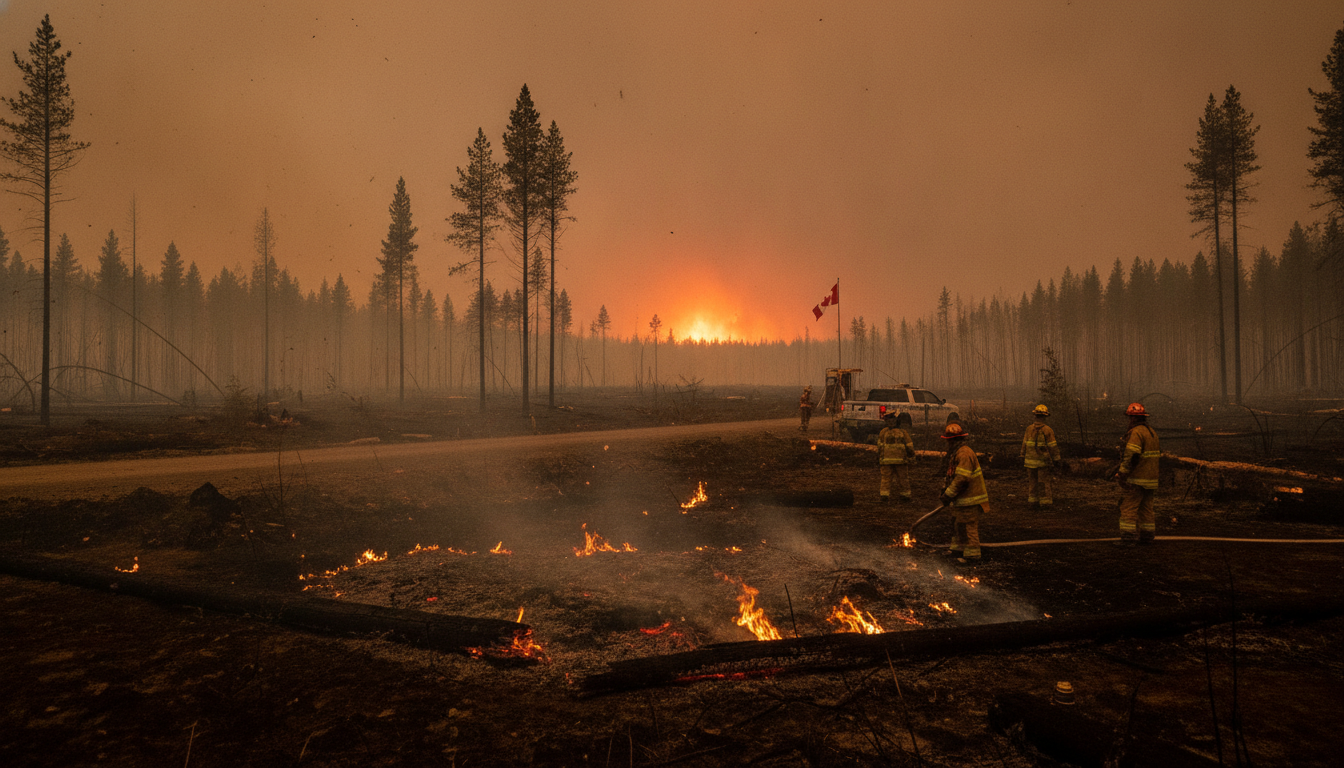
B.C. wildfires: nearly 900 blazes have burned more than 320,000 hectares so far this season
B.C. wildfires have scorched over 320,000 hectares across the province so far this season, with nearly 900 fires reported — well below 2023’s near-3-million-hectare total.
British Columbia’s wildfire season has produced close to 900 separate blazes to date, according to the B.C. Wildfire Service, burning in excess of 320,000 hectares across the province. Those figures stand in stark contrast to the 2023 season, when almost 2,300 fires consumed nearly three million hectares, underscoring both the scale of last year’s destruction and the continuing fire risk this season.
Current wildfire tally from provincial reports
The B.C. Wildfire Service’s public reporting shows the number of incidents and the area burned remain significant this season. Nearly 900 individual fires have been catalogued, and the cumulative burned area has passed 320,000 hectares.
Those totals represent the aggregated footprints of small and large incidents across multiple regions, and they are updated as new fires are discovered or existing blazes are contained.
Comparison with the 2023 emergency season
Last year’s catastrophic season remains the benchmark for recent wildfire activity in B.C., when nearly 2,300 fires burned almost three million hectares. This season’s totals are markedly lower in both incidents and area impacted, but officials caution that totals can change rapidly.
Fire scientists and emergency managers note that wildfire seasons are measured not only by counts and hectares but by the location of fires and their proximity to communities, infrastructure and critical habitat.
Community impacts and air quality concerns
Even with lower aggregate numbers than 2023, local communities continue to feel the effects of active fires and smoke. Residents in affected regions have experienced degraded air quality, visibility issues and disruptions to daily routines as advisories and localized evacuations are issued when conditions warrant.
Public health authorities and health-care providers remain attentive to smoke-related risks, particularly for older adults, children and people with respiratory conditions, and they have issued guidance on limiting outdoor exposure during heavy smoke events.
Firefighting capacity and provincial response efforts
B.C.’s firefighting response has involved deployment of ground crews, aviation assets and support from partner agencies to contain and extinguish wildfires. The B.C. Wildfire Service coordinates those efforts, drawing on municipal fire departments, federal resources and mutual-aid agreements when incidents exceed local capacity.
Resource allocation decisions balance active incidents, fire behaviour forecasts and the availability of crews and aircraft, with priority given to protecting life, critical infrastructure and communities.
Drivers of fire danger and short-term outlook
A combination of seasonal dryness, available fuels and episodic hot, windy weather contributes to elevated fire danger across parts of the province. Lightning, human-caused ignitions and the interplay of local terrain and vegetation continue to be primary drivers of new starts.
Officials monitor weather and fuel conditions closely, acknowledging that a single weather event can quickly change the trajectory of the season and increase the number or size of active fires.
Interprovincial warnings and coordination
Alberta and other neighbouring jurisdictions have issued warnings about similar fire-prone conditions this season, prompting increased interprovincial communication and readiness. Shared concerns have led to coordination on resource sharing and situational awareness to ensure a timely response when incidents cross borders or strain regional capacities.
Such coordination helps streamline requests for assistance and aligns public messaging when smoke and fire impacts extend beyond provincial boundaries.
Final paragraph
The B.C. Wildfire Service continues to update its incident maps and statistics as crews work to contain active blazes, and residents are urged to follow official advisories and preparedness guidance as conditions evolve.
