
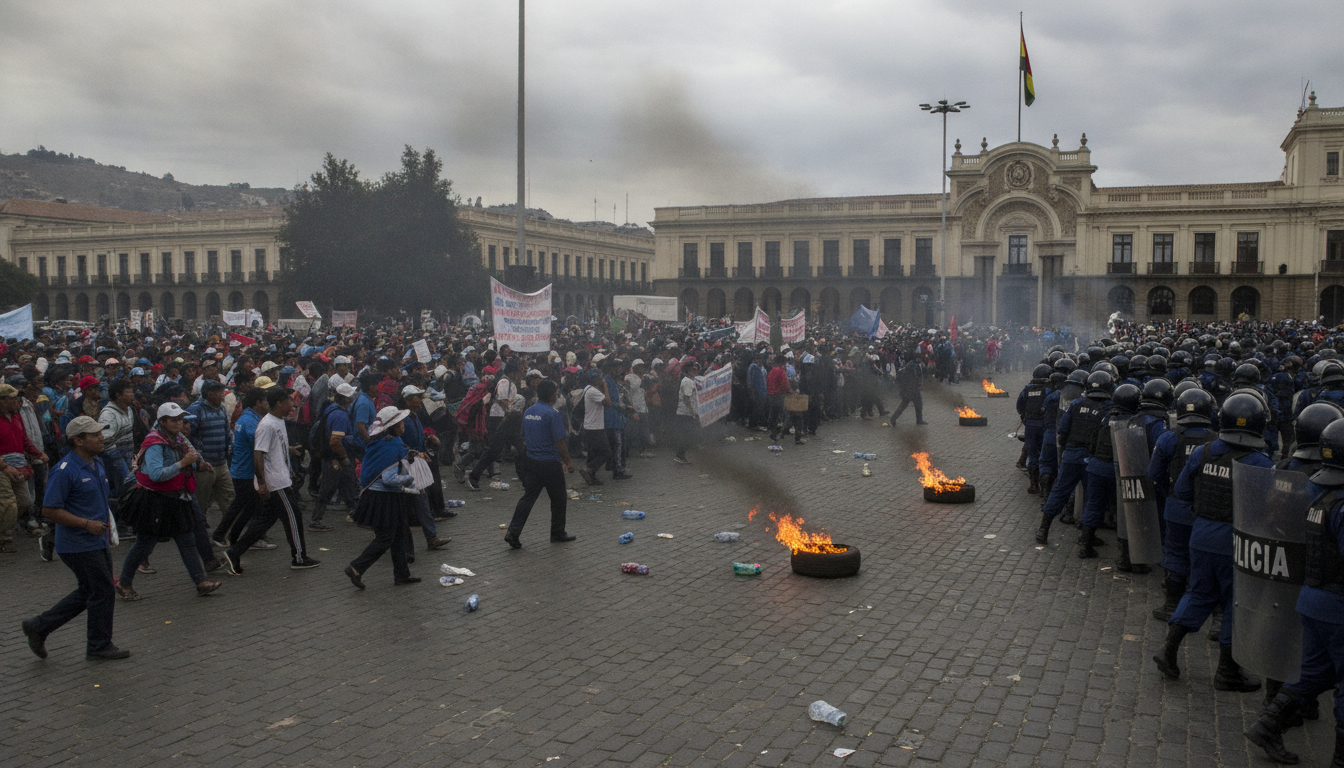
Bolivia state of emergency declared as nationwide protests and road blockades paralyze the country
Bolivia declares a state of emergency after weeks of nationwide protests and road blockades; demonstrators demand fuel subsidies and more education funding.
Bolivia’s president on June 20, 2026, announced a formal state of emergency after weeks of protests and widespread road blockades that have severely disrupted daily life and economic activity across the country. The Bolivia state of emergency declaration follows persistent demonstrations in multiple departments, where protesters have called for the reinstatement of fuel subsidies and a major increase in public spending on education. Authorities said the measure was necessary to restore order and reopen critical transport routes, while protesters warned that a hardline response could inflame tensions further.
President Declares State of Emergency
The presidency issued a statement declaring extraordinary powers to provincial and national authorities to manage the crisis and clear blockades affecting highways and urban arteries. The announcement authorized enhanced coordination between security forces and civil defense agencies to protect critical infrastructure and ensure the movement of essential goods. Government spokespeople framed the move as a temporary measure aimed at re-establishing public order and preventing a prolonged breakdown in services that could hit vulnerable communities hardest.
Road Blockades and Supply Disruptions
Blockades on major roads and border routes have restricted the flow of fuel, food and industrial supplies, creating bottlenecks that traders and logistics operators say are increasingly hard to manage. Long queues at service stations and interrupted deliveries to urban centres have been reported in several regions, contributing to rising concern among businesses and households about basic access to necessities. Transport unions and drivers have been central to the mobility disruptions, using convoys and pickets that have halted freight movement and strained local markets.
Protesters Demand Fuel Subsidies and Education Funding
Demonstrators continue to press two core demands: a return of fuel subsidies they say are essential for low-income families and small farmers, and a significant boost in public investment in education to address chronic underfunding. Protest leaders have argued that recent austerity measures and subsidy cuts have deepened inequality and increased costs for transportation and agricultural producers. For many participants, the mobilization is both an economic protest and a call for broader social reform, putting pressure on policymakers to offer concrete proposals rather than temporary concessions.
Economic Impact and Regional Concerns
Analysts warn that prolonged road closures and business interruptions risk aggravating an already fragile economic situation by slowing exports, reducing retail activity and undermining investor confidence. Small and medium-sized enterprises in affected towns are among the hardest hit, facing lost income and supply shortages that could lead to layoffs if the standstill continues. The broader fiscal implications of meeting protest demands — particularly a large-scale subsidy program or education spending increase — present a complex policy challenge for a government balancing budgets and social pressures.
Security Measures and Civil Liberties Questions
The emergency decree grants security forces expanded authority to remove blockades and limit gatherings where deemed necessary, raising concerns among rights groups about potential restrictions on peaceful assembly and free expression. Observers say the legal framework for emergency powers must be applied with care to avoid unnecessary escalation and to protect the safety of civilians and protesters alike. Government officials have urged restraint by all parties and said operations will prioritise humanitarian corridors for hospitals, food supplies and fuel distribution.
Political Response and Negotiation Prospects
Opposition leaders and civic organizations called for a return to dialogue even as the state of emergency took effect, indicating that political negotiations will be a key determinant of whether the crisis abates. Some lawmakers have urged the executive to present a clear, time-bound plan that addresses the protesters’ economic grievances while preserving fiscal stability. Mediators from regional bodies and local institutions could play a role, but much will depend on whether both sides are willing to accept phased compromises and independent monitoring of any agreement.
The declaration of a Bolivia state of emergency marks a critical juncture for the country as it balances immediate security imperatives with longer-term social demands. Restoration of normal movement and the reopening of supply lines will be an early test of the decree’s effectiveness, even as the deeper questions of subsidies, public spending and equitable development remain unresolved. International and local attention now focuses on whether authorities and protesters can move from confrontation to negotiation before the economic and humanitarian costs deepen.
