
Crowd Attempts Aloha Shirts World Record Under Tight Commercial-Quality Rules
A mass gathering attempted an Aloha shirts world record, with organisers enforcing strict commercial-quality rules that every shirt be short-sleeved, buttoned and open-collared. The attempt centred on meeting detailed judging criteria designed to ensure all participants wore authentic, store-bought tropical shirts.
Record Attempt Draws Large Crowd
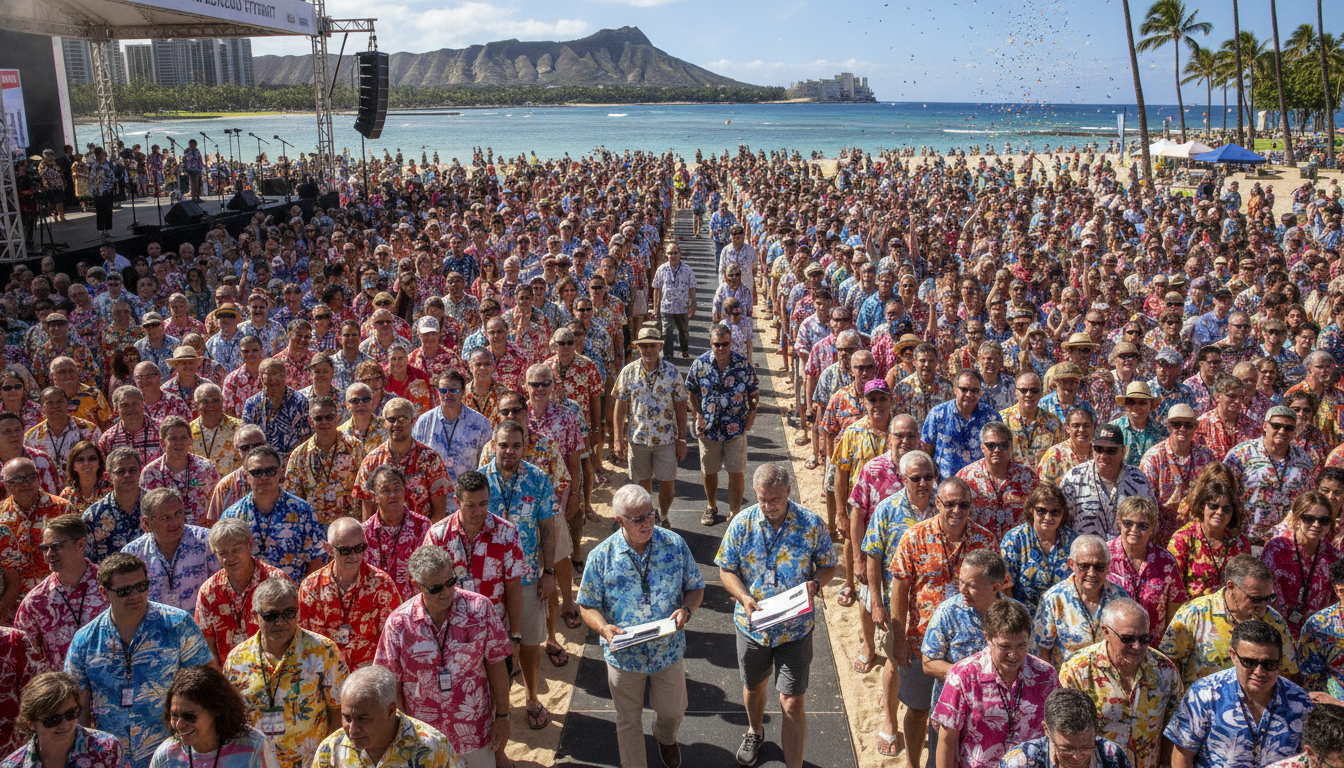
A diverse crowd gathered for the attempt to set the Aloha shirts world record, arriving in patterned shirts and bright colours. Organisers estimated several thousand participants took part in the staged count, lining up for inspection shortly after arrival. The event aimed to combine a festive atmosphere with a precise counting process required for certification.
Strict Aloha Shirt Judging Criteria
To qualify for the world record, officials required that each Aloha shirt meet a strict checklist. Shirts had to be short-sleeved, fastened with buttons from top to bottom, feature an open collar, display at least three distinct colours and present a recognisably tropical pattern. In addition, every garment needed to be commercially available — in other words, store-bought rather than homemade or custom-made for the attempt.
Organisers and Logistics of the Attempt
The event was organised by a coalition of local tourism and cultural groups, who coordinated logistics, volunteer staffing and safety planning. Organisers set up multiple inspection stations and queuing routes to handle the flow of participants while maintaining social distancing and crowd control. Volunteers wore identifiable vests and were trained to apply the judging checklist consistently to each entrant.
Inspection Process and Participant Preparation
Before the formal count, participants passed through a pre-inspection line where volunteers confirmed basic compliance with the shirt rules. Many attendees reported buying new Aloha shirts in the weeks beforehand to ensure they met the commercial-availability requirement. Organisers advised participants to avoid altered or handmade shirts and to bring receipts or tags where possible to expedite the verification process.
Adjudication and Verification Steps
Official adjudicators oversaw the formal counting and photographic documentation required for world-record certification. The process combined manual counts, photographic evidence and spot checks to confirm each shirt met the specified criteria. After the event, organisers will compile the file of evidence and submit it to the record-keeping body for final review before any official title is announced.
Community Reaction and Cultural Notes
Local residents and visitors embraced the event as a lively celebration of tropical fashion and community spirit. Cultural commentators noted that the Aloha shirt, historically rooted in Hawaiian design and island identity, has been widely adopted in casual dress worldwide. Several participants described the gathering as both a playful tribute to that heritage and an opportunity to showcase creative, commercially sourced shirt designs.
Economic and Promotional Implications
Retailers reported a noticeable uptick in sales of commercially available Aloha shirts in the lead-up to the attempt, with small businesses highlighting the boosted foot traffic. Organisers said the effort also served as a promotional platform to attract visitors and spotlight local vendors who stock the required styles. If certified, the record could be used in future tourism marketing to support participating retailers and cultural partners.
The organisers cautioned that final certification can take weeks as adjudicators review documentation and confirm compliance with every element of the judging criteria. Participants and retailers expressed optimism while acknowledging that only an officially confirmed declaration will determine whether the Aloha shirts world record has been achieved.
