
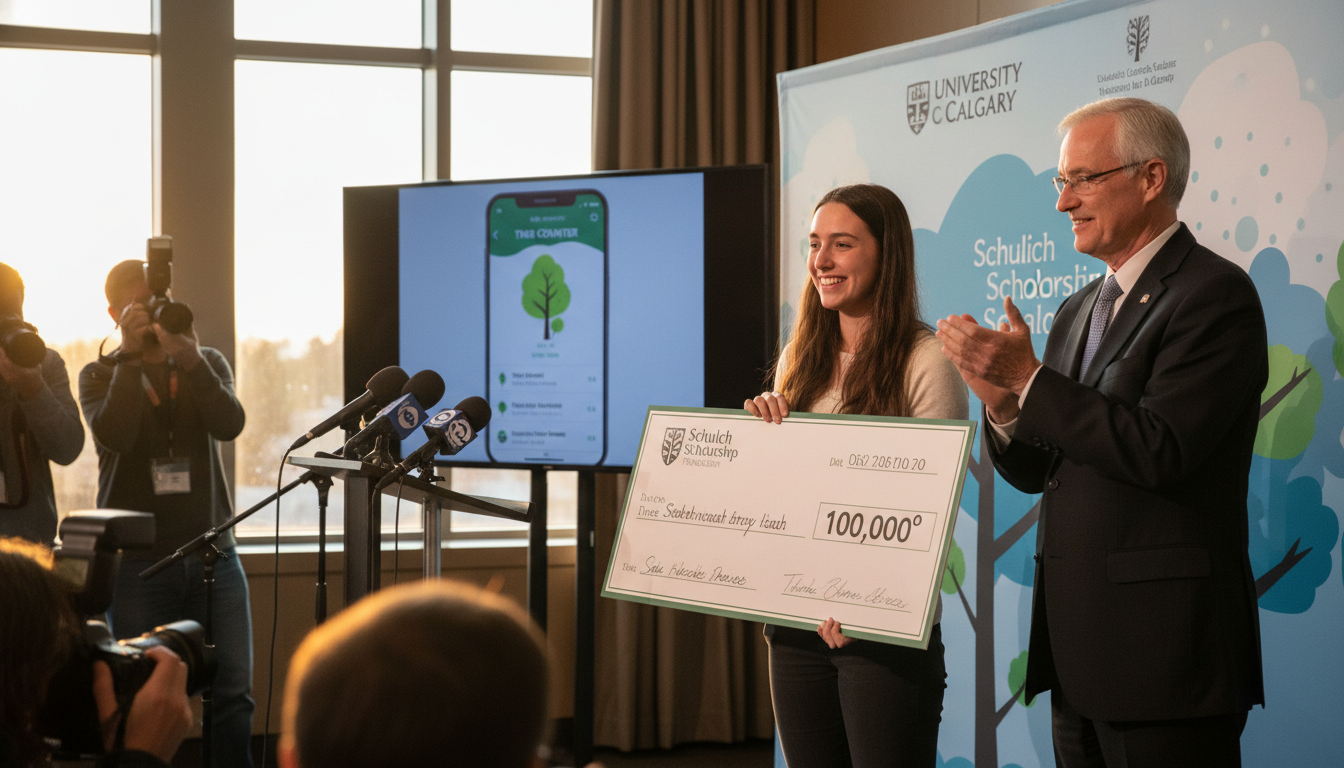
Edmonton teen wins $100,000 Schulich scholarship after creating Alberta tree app
Edmonton teen Joshua Kirsch wins $100,000 Schulich scholarship after creating Ancient Roots, an Alberta tree app mapping 387 heritage trees, now bound for U of A
Joshua Kirsch, an Edmonton high-school senior, has turned a childhood interest in trees into Ancient Roots, an Alberta tree app that catalogs hundreds of the province’s most notable specimens. The project, begun during the pandemic, earned Kirsch a $100,000 Schulich Leader Scholarship and a pathway to study at the University of Alberta. His work combines field research, computer science and public engagement to highlight trees from boulevards to backcountry stands.
Pandemic curiosity becomes a digital project
Kirsch traces the app’s origins to a book he borrowed during COVID-era schooling that described more than 300 heritage trees across Alberta. What began as note-taking and backyard measurements progressed into a Google map in early secondary school and, by the past year, into a self-built website and mobile platform. He taught himself coding and data collection techniques to scale the project beyond a classroom exercise into a public resource.
Kirsch said his family’s outdoor habits and early fascination with species identification propelled the work. He spent weekends exploring river trails, small towns and mountains, compiling measurements and stories for trees he found remarkable. That hands-on fieldwork underpins the digital database and keeps the site rooted in direct observation.
Detailed catalogue of Alberta’s remarkable trees
Ancient Roots currently lists 387 entries sorted into categories such as centurions, champions, native sentinels and trees with unique growth forms. Each entry includes species, measurements, historical context and — where available — municipal identification numbers. The site highlights both urban survivors and remote elders, offering users a structured way to compare trees by height, circumference and age class.
One notable entry is a Siberian elm planted on an Edmonton boulevard between 1910 and 1920, which the app records as the city’s oldest boulevard tree with a canopy exceeding 25 metres. The profile notes the city altered nearby sidewalk infrastructure to accommodate the tree’s root system, demonstrating how urban planning can adapt to preserve significant specimens. Those kinds of stories are central to Kirsch’s goal of showing the living history contained in Alberta’s trees.
How the app works and invites public participation
The platform presents trees on an interactive map and also provides simplified list and gallery views for casual users. Kirsch built submission tools so residents can nominate trees for review, submit measurements and attach photographs. Each nomination is evaluated for species accuracy, measurements and historical relevance before being added to the public map.
Kirsch emphasized accuracy and accessibility: the app includes measurement protocols and species-identification notes so contributors can learn as they participate. The approach aims to democratize natural-history documentation while maintaining scientific rigor through clear data fields and standardized formats.
Scholarship recognition and academic plans
Kirsch’s blending of field biology and computer engineering attracted the attention of his school counselor, who encouraged him to apply for the Schulich Leader Scholarship. The national award provides $100,000 to students entering STEM programs and selects candidates through a one-nominee-per-school process. Jasper Place nominated Kirsch, and he was chosen in the Canada-wide competition this spring.
Winning the scholarship will expand Kirsch’s academic opportunities, offering mentorship connections with university faculty and a network of peers across scientific disciplines. He said the award will deepen his engagement with the University of Alberta and provide resources to further develop the app and its data infrastructure. Kirsch also scaled back extracurriculars such as basketball to focus on schoolwork and the project, a trade-off he described as necessary to reach this point.
Conservation messaging and youth engagement
Beyond mapping, Kirsch sees Ancient Roots as an educational tool to change perceptions about Alberta’s forests and urban trees. He wants young people to recognize that significant and interesting trees are not only found in British Columbia or southern climates, but throughout Alberta’s parks, streets and wildlands. The platform frames trees as ecological assets that clean air, sequester carbon and provide habitat, while also serving as cultural and historical markers.
Kirsch hopes the app will inspire local stewardship and field trips, and he encourages teachers and community groups to use the content for outdoor learning. By engaging residents in data collection, he said, the project can build a grassroots appreciation for urban forestry and conservation practices that preserve mature trees.
Kirsch plans incremental improvements to the platform, including more robust measurement tools, expanded species guides and partnerships with local conservation groups. Those upgrades aim to turn a solitary hobby into a sustainable public service that supports both science and community engagement.
As Ancient Roots gains users and nominations, Kirsch envisions the database becoming a long-term archive for Alberta’s arboreal heritage. He sees the scholarship and university connections as a launching pad for future research that links computer science and ecological monitoring in service of preserving the province’s trees.
