
Iran strikes Kuwait and Bahrain in retaliation for U.S. attacks, escalating regional tensions
Iran strikes Kuwait and Bahrain after U.S. strikes, prompting missile intercepts, diplomatic deadlock over frozen assets and renewed instability around the Strait of Hormuz.
Immediate strikes and targets
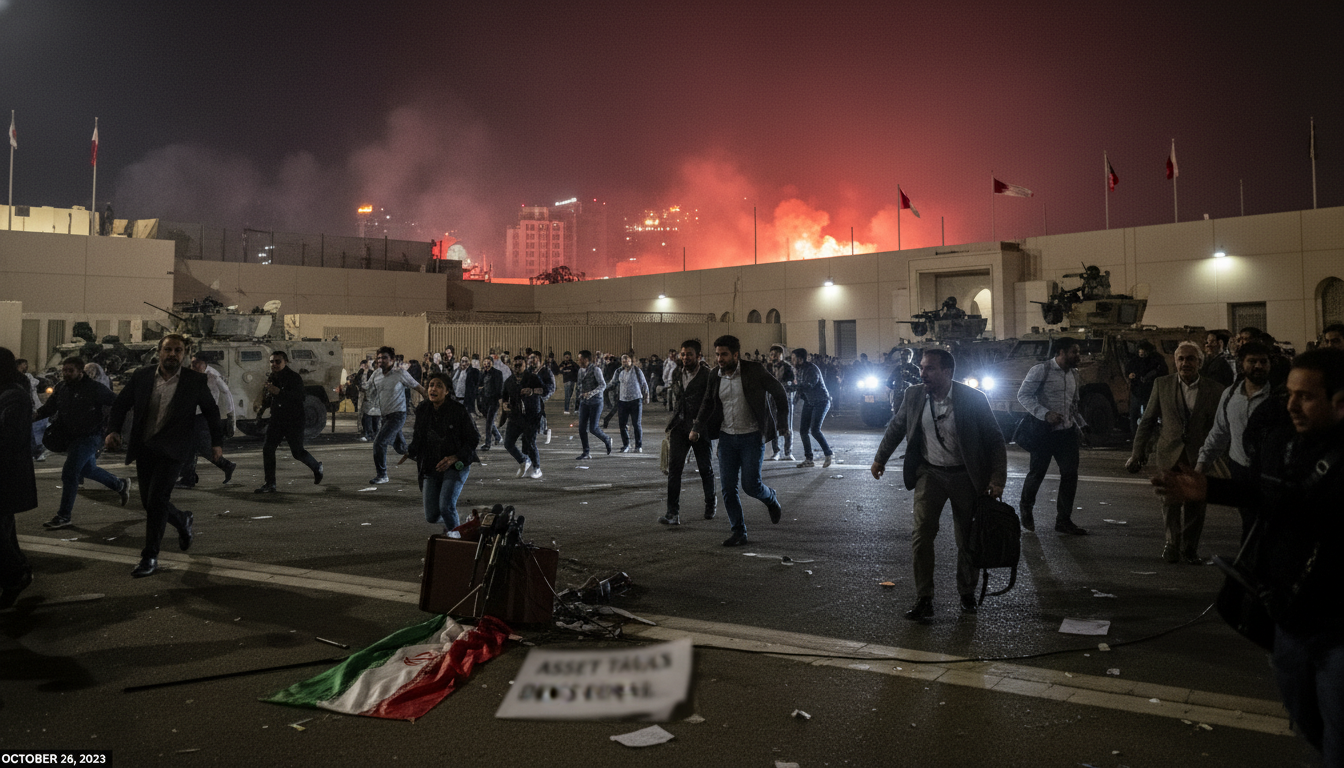
Iran carried out missile and drone strikes on facilities in Kuwait and Bahrain on Saturday, saying the attacks were reprisals for recent U.S. strikes. The strikes hit near the Ali Al‑Salem air base in Kuwait, where U.S. aircraft are stationed, and targeted the area around the U.S. Fifth Fleet headquarters in Bahrain. Regional governments condemned the strikes and called them an unacceptable escalation.
Military response and interceptions
U.S. Central Command reported that multiple ballistic missiles were launched and that most were intercepted or failed to reach their intended targets. According to CENTCOM, six out of seven ballistic missiles were intercepted and one did not hit its target. U.S. forces had earlier struck Iranian coastal radar sites and said they acted to defend against threats posed by Iranian drones and missiles.
Civilians affected in Kuwait and Bahrain
Residents in Kuwait described being awakened by loud explosions as air defenses engaged incoming munitions. Family members told reporters they were frightened and sought shelter after the strikes, and local authorities confirmed reports of damage to infrastructure near the targeted sites. Both Kuwait and Bahrain issued statements condemning the attacks as violations of their sovereignty.
Diplomatic impasse over frozen Iranian assets
The strikes come amid stalled negotiations between Washington and Tehran, with Iranian officials demanding the release of roughly $24 billion in frozen funds as a confidence measure. Tehran’s military and political leaders have framed the release of those assets as a precondition for broader de‑escalation, while U.S. interlocutors have not signaled movement on that specific demand. The financial dispute is now entwined with military exchanges, complicating diplomatic pathways to reduce tensions.
Broader regional flashpoints: Strait of Hormuz and shipping
The exchanges of fire have rekindled concerns about security in the Strait of Hormuz, a strategic chokepoint for global oil shipments that Iran has periodically threatened to close. U.S. officials reported Iranian drones and other aerial activity directed toward the strait, which raised alarms about potential threats to commercial and military vessels. Shipping firms and energy markets closely monitor the situation, as any sustained disruption in the strait could have wide economic consequences.
Lebanon front and linked demands
Separately, Tehran insists that any comprehensive agreement with Washington include cessation of hostilities in Lebanon between Israel and the Iran‑aligned Hezbollah. Tehran has used its influence over Hezbollah as leverage in talks, while Lebanese authorities have pressed for an end to cross‑border strikes. Recent violence in southern Lebanon, including an attack that killed three Lebanese soldiers, has undermined ceasefire efforts and deepened disagreements between Lebanese officials and Tehran.
The United States has maintained that separate regional conflicts should not be bargaining chips in negotiations over frozen funds, but Iran’s negotiating posture links financial and military issues in ways that make a narrow settlement difficult.
Impact on international events and visas
The timing of the strikes overlaps with preparations for international sporting events, as Iranian national players received visas to travel to the United States for the World Cup group stage. Tehran accused U.S. authorities of discriminatory treatment after several members of the team’s support staff were denied visas. The diplomatic friction surrounding visas illustrates the wider collateral effects of the crisis on cultural and sporting exchanges.
New tensions between Washington and Tehran have the potential to complicate routine consular decisions and create public relations problems during high‑visibility events such as the World Cup.
The unfolding exchanges mark a dangerous turn after a partial truce that had largely held since early April, and they threaten to entangle financial disputes, regional conflicts and commercial routes in a widening cycle of retaliation and political bargaining.
