
Alberta to require cities to justify bike lanes as province gathers 13,000 public reports
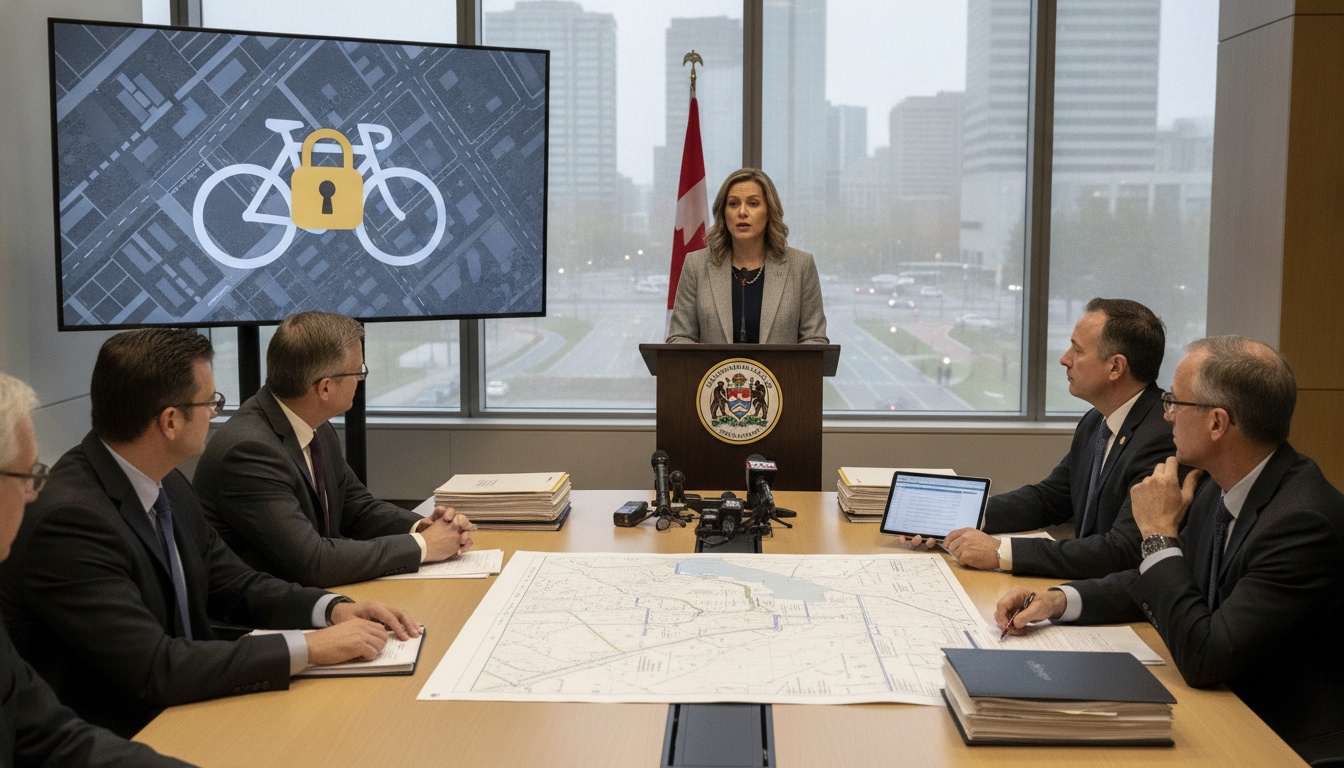
Alberta government collects more than 13,000 online submissions on bike lanes and plans fall legislation requiring cities to supply data before keeping or installing lanes.
Premier Danielle Smith’s government has opened a public reporting tool that collected over 13,000 responses in under a month, feeding a provincial push to require evidence for bike lanes. The transport minister says the submissions — including photos of underused cycle tracks — support plans to demand detailed usage and impact data from municipalities. The province is signalling it may remove existing bike lanes that fail to demonstrate clear community benefits when lawmakers return to Edmonton in late October.
Public response through provincial reporting portal
The province launched a web page inviting Albertans to report bike lanes they believe are underused or problematic, and the response was rapid. More than 13,000 reports came in within weeks, many accompanied by photographs showing near-empty cycle tracks even on warm days. Officials say the volume and content of public submissions will be used to inform a forthcoming legislative proposal.
Government will require data on new and existing bike lanes
Alberta’s transportation minister has said the planned law would obligate cities to produce evidence for any new bike lanes and to justify existing ones. Municipalities would be asked to show ridership counts, traffic modelling, parking impacts, effects on adjacent streets and implications for local businesses. The province frames the measure as holding bike lanes to the same planning standards applied to other transportation projects.
Ministry seeks specific metrics on use, traffic and community impact
The provincial requirement would ask for lane-by-lane data rather than broad network statistics, according to statements from the transportation office. Ministers are focused on granular measures: how many people use each lane, how it affects vehicle flow, spillover on neighbouring routes and whether businesses or residents have been harmed. Officials argue such detail is necessary to determine whether a bike lane produces net community benefits.
Province says cities have not yet provided requested numbers
The transportation minister has publicly noted that municipal governments have not supplied the detailed data the province is seeking. He suggested two possible explanations: either councils did not have comprehensive counts when they approved lanes, or municipalities possess data but have not shared it because it does not support their claims. The minister has urged local officials and bike-lane supporters to release any underlying studies to bolster their positions.
Fall legislative timetable targets debate in Edmonton
The government intends to introduce its bike-lane bill when the legislature resumes in late October, setting up a potential policy clash with city councils and cycling advocates. Officials describe the move as a province-wide standard-setting exercise that would allow ministers to request documentation for any proposed lane and, in some cases, to order the removal of existing lanes. The announcement signals a hard deadline for municipalities to produce the requested evidence before provincial scrutiny intensifies.
Cycling groups, councillors and business owners prepare for contentious debate
Advocates for active transportation have warned they will mobilize if the province moves to limit or remove bike lanes, while some residents and business owners who opposed lane installations have welcomed the government’s demand for more data. Transport planners note the controversy is likely to produce heated public hearings and media attention, with competing claims about safety, mobility and economic impact. Stakeholders on all sides are expected to press councils and the province for clear, verifiable numbers to support their positions.
The province has also encouraged everyday cyclists to demonstrate usage: officials repeatedly urged riders to “use the bike lanes” as a practical way to preserve them. Alberta has published the reporting tool on the government website; the instructions say users can find the page by searching the alberta.ca site for the phrase “Report a bike lane.” The coming months will test whether local data, public submissions and political pressure are sufficient to shape new rules for bike lanes across the province.
