
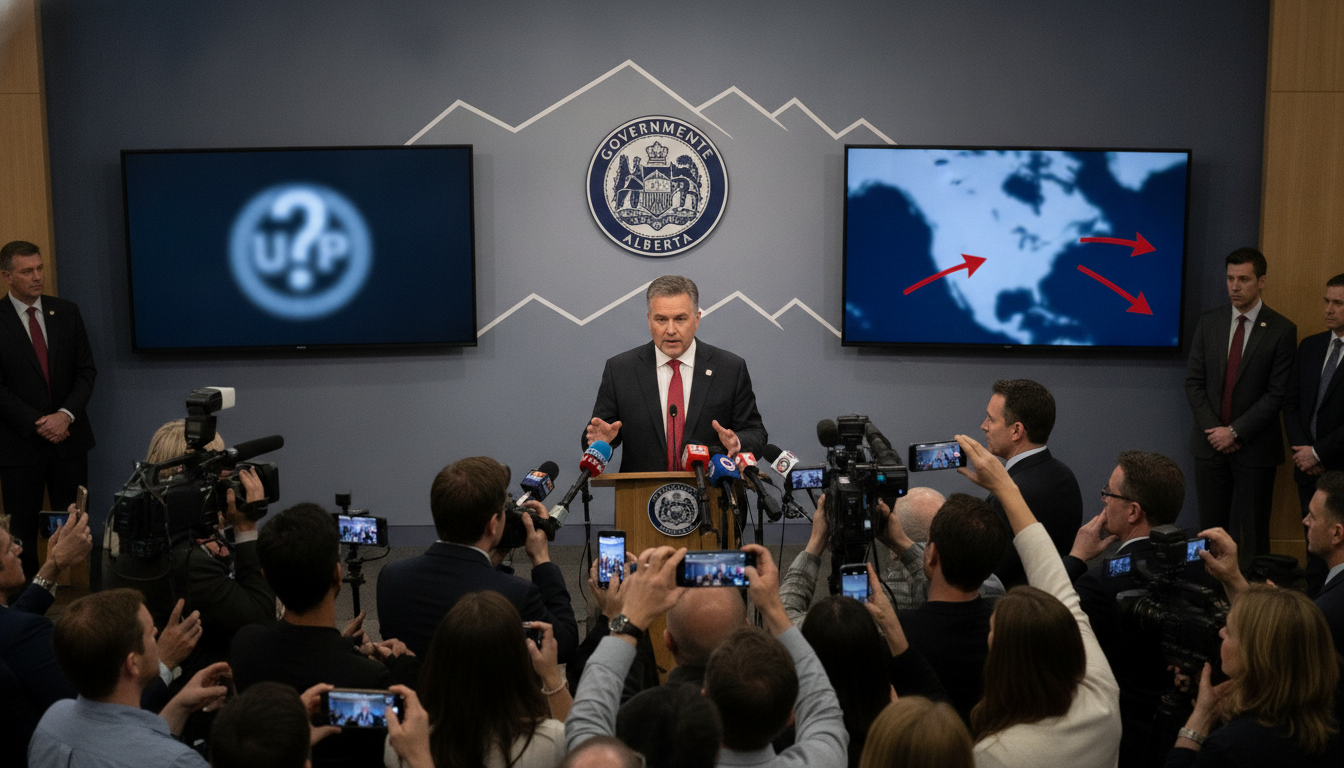
Alberta separatism being amplified by U.S. contacts and social media, Lukaszuk warns
Thomas Lukaszuk tells Canadian Club that Alberta separatism is growing due to U.S. ties, AI-driven platforms and a hesitant provincial government.
Thomas Lukaszuk, the former Alberta deputy premier, told a packed Canadian Club gathering in Edmonton that Alberta separatism is being amplified by external actors and domestic ambivalence. He said the convergence of pandemic-era grievances, targeted online content and high-level U.S. meetings had turned simmering discontent into an organized movement. Lukaszuk urged public vigilance, warning that the trend poses challenges to Canadian sovereignty and democratic stability.
Lukaszuk links U.S. contacts to Alberta separatism
Lukaszuk told the audience at the Chateau Lacombe that meetings in Washington and at Mar‑a‑Lago have given separatist organizers a degree of legitimacy. He said those interactions, which Washington has not denied holding, signalled to some activists that their cause enjoys foreign interest and sympathy. That foreign attention, he argued, has had a galvanizing effect on a movement that was already drawing from local frustrations.
He pointed specifically to encounters between Alberta separatist representatives and U.S. officials as a troubling development for national security. Lukaszuk said the selective access and orchestration of such meetings create the appearance of external endorsement. He called for closer attention from federal security and diplomatic channels to assess the scope and intent of those contacts.
Social media algorithms and AI amplification
Lukaszuk highlighted a technological dimension to the spread of separatist messages, citing algorithm-driven platforms and AI-created content. He warned that certain channels and automated recommendation systems can create echo chambers where unverified narratives proliferate unchecked. He also said monetized content produced outside Canada, sometimes using simulated visuals or voices, can present as domestic news and mislead audiences.
The former deputy premier stressed that manipulation of algorithms accelerates radicalization by confirming users’ biases and isolating them from countervailing information. He called AI-simulated broadcasts and foreign-operated channels a new vector for influence that requires regulatory and platform-level responses. Lukaszuk urged public media literacy efforts alongside policy measures to curb deceptive practices.
Meetings in Washington and Mar‑a‑Lago drew scrutiny
Lukaszuk described a series of meetings between Alberta separatists and U.S.-based figures as a turning point for the movement. He said four meetings in Washington and one at Mar‑a‑Lago gave activists opportunities for networking and visibility, which in turn helped them recruit and fundraise. The former minister argued that such sessions are not casual interactions but part of a pattern that merits scrutiny.
He contrasted those privileged meetings with the likely response an ordinary Canadian would receive if seeking similar access, saying the differential treatment is politically significant. Lukaszuk warned that sustained foreign engagement with domestic secessionist groups risks normalizing their claims and undermining Canadian institutions. He urged federal authorities to monitor foreign contacts that could be aimed at destabilizing provincial-federal relations.
UCP ambivalence creates political space for separatists
Lukaszuk faulted what he described as a lack of clear rejection of separatism by Alberta’s government, saying this has widened the political space for activists. He noted that previous Alberta premiers before recent decades consistently disavowed secession, whereas current signals have been more muted. That reticence, he argued, has allowed separatists to interpret the provincial posture as neutral or even tacitly permissive.
He emphasized that federalism in Canada is continually negotiated but distinguished that from active support for secession. Lukaszuk warned that ambiguity from provincial leaders can be read as acquiescence by well-organized movements. He urged elected officials to reaffirm commitments to national unity while addressing legitimate regional grievances through policy and dialogue.
Referendum risk and turnout dynamics
Referendum scenarios, Lukaszuk said, illustrate the danger posed by a motivated minority with high voter turnout. He cited Brexit as an example of how organized activism can prevail despite broader public ambivalence, noting the slim margin that decided the U.K. referendum. That dynamic is central to his warning about separatist strategy, which relies on highly mobilized supporters turning out at decisive moments.
Lukaszuk underscored that one of the movement’s advantages is its near-guaranteed turnout and organizational discipline. He urged federalists and mainstream parties to mobilize voters and counter misinformation to prevent a small but committed bloc from determining the province’s future. The former minister called voter education and civic engagement essential defenses against a narrowly decided secession vote.
Community ties, civil discourse and national security
Lukaszuk closed by stressing the social costs of the movement, recounting anecdotes of family rifts and public demonstrations that have frayed local relationships. He said that while peaceful protest is a hallmark of Canadian democracy, the combination of foreign influence and domestic polarization threatens civic cohesion. He argued that protecting democratic institutions requires both preserving freedoms and strengthening safeguards against manipulation.
He urged Albertans to reject apathy and to engage in reasoned debate rather than escalating confrontations. Lukaszuk called on governments, civil society and media to work together on resilience measures, including legislation that addresses foreign interference and platform accountability. He cautioned that without proactive steps, separatist momentum—fanned by external actors and technological tools—could pose a persistent risk to Canada’s unity.
The Canadian Club event brought the issue into sharp relief for a province where pride in both Alberta and Canada remains strong, and Lukaszuk said that combination offers the best defence against fragmentation. He concluded by urging citizens and leaders to reaffirm democratic norms, boost voter engagement and confront disinformation to ensure any debate over Alberta’s future occurs openly, fairly and within Canada’s constitutional framework.
