
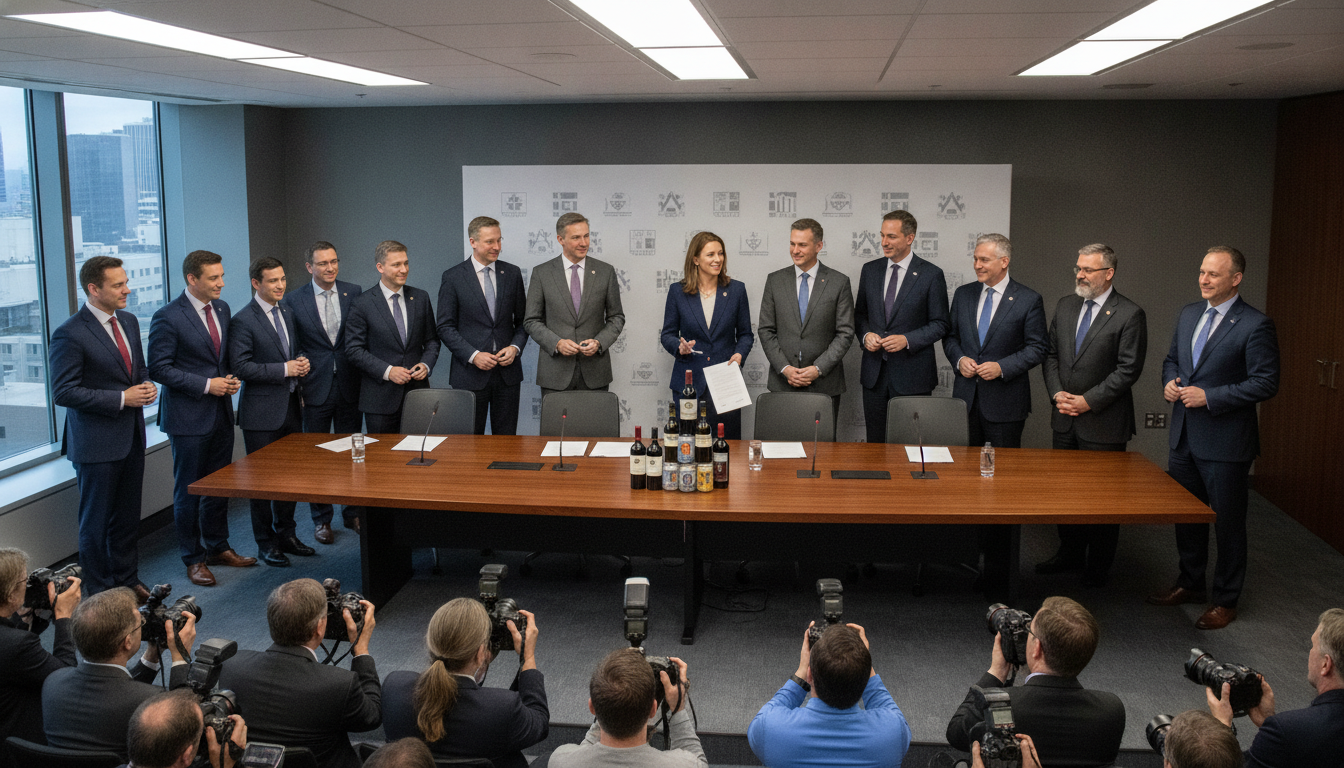
Alberta and eight provinces agree to direct-to-consumer alcohol sales across provincial lines
Alberta and eight provinces have agreed to allow direct-to-consumer alcohol sales across provincial lines, expanding markets for liquor producers and easing interprovincial trade.
Alberta and eight other provinces announced an agreement to permit direct-to-consumer alcohol sales across provincial lines, a move intended to let liquor producers sell beer, wine and spirits directly to consumers beyond their home provinces. The change follows a memorandum of understanding signed in June 2025 that set the framework for cross-jurisdictional sales and included Yukon, and officials said the new pact converts those commitments into a concrete multilateral arrangement. Alberta Premier Danielle Smith praised the development as a way to break down longstanding interprovincial trade barriers and to give producers greater opportunities to reach Canadian customers.
Provinces sign agreement to allow direct-to-consumer alcohol sales
The agreement was signed by Alberta, Saskatchewan, Manitoba, Ontario, New Brunswick, Nova Scotia, Prince Edward Island, Newfoundland and Labrador, and British Columbia, provincial officials confirmed. It establishes a shared intention to permit producers in those jurisdictions to sell and ship alcoholic beverages directly to consumers elsewhere in Canada, subject to each province’s regulatory framework. The step is described by participating governments as a pragmatic approach to harmonizing sales while allowing provinces to retain control over rules governing age verification, taxation and health protections.
Statement from Alberta premier on market access
In a Friday statement, Premier Smith framed the pact as an economic opportunity for Alberta’s liquor sector, saying it will allow distillers, breweries and wineries to expand their customer base and compete for retail shelf space nationwide. She emphasized that producers should have equal opportunity to access markets across Canada, and called the agreement an important reduction in internal trade frictions. Provincial officials noted the change is intended to support small and medium-sized producers who have faced logistical and regulatory hurdles selling outside their home markets.
How cross-border sales are expected to operate
Under the multilateral arrangement, producers will be able to accept orders directly from consumers and arrange shipping to other participating provinces, while complying with destination jurisdiction requirements. Officials said participating provinces will work to align processes for licensing, permits and consumer protections, but that operational details such as carrier responsibilities, reporting and recordkeeping will be set out in follow-up regulations. Governments also signaled that measures for age verification, secure packaging and limits on shipment volumes are likely to be part of implementation to ensure public-safety objectives are met.
Potential benefits for small producers and retailers
Supporters argue direct-to-consumer alcohol sales will create new revenue streams for craft breweries, wineries and distilleries that have been limited by provincial distribution monopolies and complex interprovincial rules. Producers could use online platforms and parcel delivery to reach consumers previously out of reach, potentially boosting tourism-linked sales and regional brands. At the same time, some retailers and provincial liquor agencies have cautioned that expanded direct sales could affect existing distribution networks and retail revenues, prompting calls for transition arrangements to protect local jobs and provincial revenue.
Regulatory safeguards and taxation issues
Officials said participating provinces will need to reconcile tax collection, excise handling and reporting so that revenues flow to the correct jurisdictions and consumers pay applicable duties. Public-safety safeguards will also be a priority, with governments indicating they will require robust proof-of-age checks, tracking of shipments and penalties for non-compliance. Legal experts note that while provinces retain constitutional authority over alcohol regulation, the deal will require detailed intergovernmental protocols to avoid gaps in enforcement and to ensure consistent consumer protections across borders.
Premiers’ meeting and international trade backdrop
The agreement was announced as Canada’s premiers gathered in Prince Edward Island for a first ministers’ meeting, where interprovincial trade topics were on the agenda. The announcement came a day after U.S. President Donald Trump said he planned to impose new tariffs on certain Canadian goods, an international development that premiers discussed as part of a broader trade and economic context. Officials framed the direct-to-consumer pact as one domestic step to strengthen Canadian producers’ access to markets while federal and provincial leaders address trade tensions and other cross-border challenges.
The provinces involved said they will publish timelines and guiding regulations in the months ahead and that they expect a phased implementation to allow businesses and regulators to adapt. Producers, carriers and consumer groups will be watching closely as governments translate the agreement into licensing rules, shipping protocols and taxation arrangements. The coming weeks are likely to determine how quickly Canadians can expect to order alcohol directly from producers in participating provinces and what safeguards will be in place to ensure the change balances market access with public-safety and fiscal considerations.
