
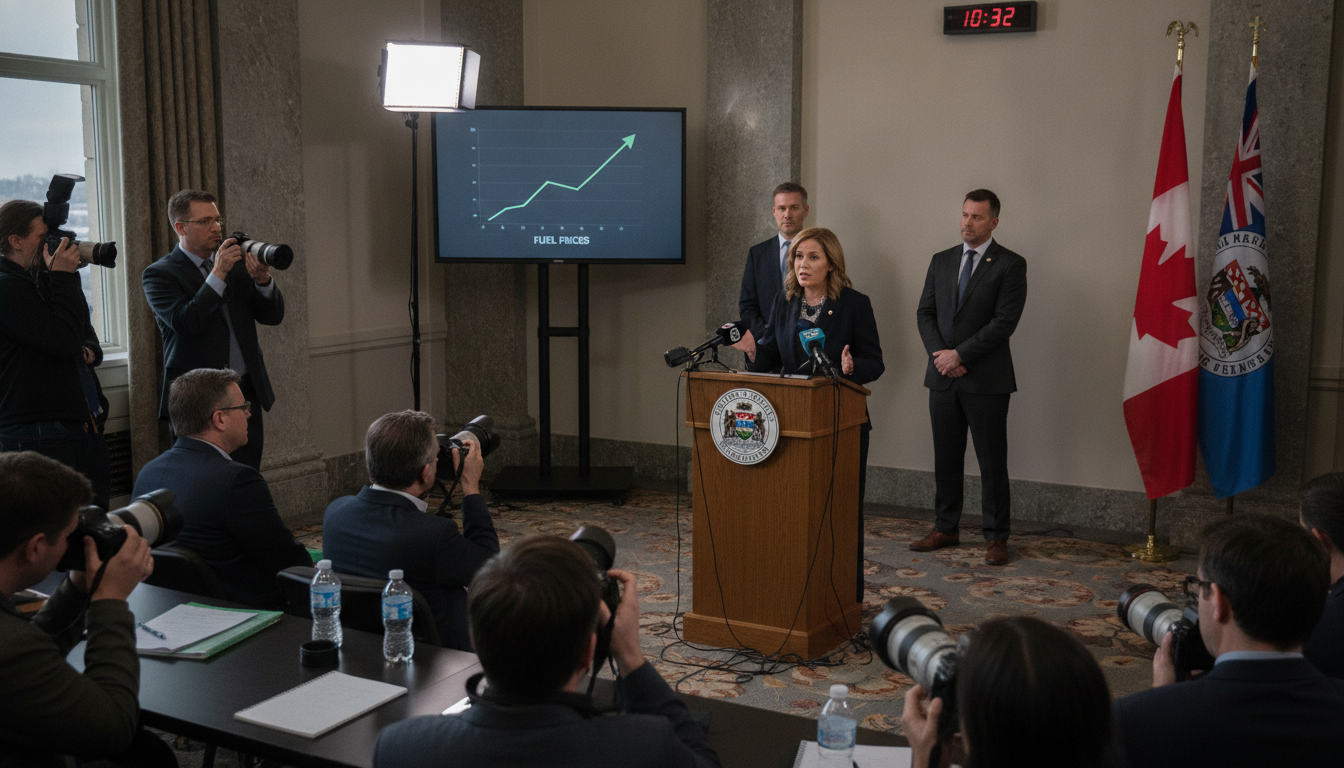
Alberta fuel tax decision remains uncommitted as federal suspension debate continues
Alberta fuel tax: provincial government refuses to commit to removing its levy as Conservatives urge the federal suspension be extended beyond Sept. 8, 2026.
Alberta government declines to promise fuel tax removal
Alberta’s government has again refused to commit to removing the provincial fuel tax despite sustained high pump prices and public pressure. The standoff comes after federal Conservative leader Pierre Poilievre called on the prime minister to extend a federal fuel-tax suspension that is due to end on Sept. 8, 2026.
The province’s reluctance leaves motorists uncertain about whether provincial relief will accompany or follow any federal action. Officials say they are monitoring oil markets before deciding on further measures.
Poilievre calls for federal suspension through Canada Day 2027
Speaking in Vancouver, Mr. Poilievre urged the federal government to keep its 10-cent-per-litre excise suspension in place through July 1, 2027, arguing the move would ease cost-of-living pressures. He estimated the extension could save Canadians roughly $1,000 per household between now and that date and said lower fuel costs would help reduce prices for groceries and building materials transported by road.
The Conservative leader repeated earlier demands to suspend other fuel-related levies, framing the proposal as an immediate affordability measure ahead of next year’s summer driving season.
Alberta’s position and its paused relief program
Alberta introduced a graduated fuel tax relief plan in 2022 that adjusted discounts on its 13-cent-per-litre provincial levy based on international oil prices. Under the program, partial relief activated above US$80 per barrel and full suspension occurred above US$90 per barrel, with recalculations every three months.
In June the province paused that program for the July–September quarter and instead rolled out a one-time $100 energy rebate. As of mid‑August 2026, roughly 1.2 million of 3.4 million eligible Albertans had registered for the payment. The office of Finance Minister Jason Nixon acknowledged high oil prices have driven up household costs but did not commit to restoring the fuel-relief scheme or issuing another broad rebate.
Oil prices and fiscal impact on Alberta
Oil prices have trended higher than the provincial budget assumed earlier this year, complicating both fuel pricing and government revenues. West Texas Intermediate averaged about US$101 per barrel in May, US$85 in June and US$80 in July 2026, compared with the province’s budget projection of US$60.50 for the April 2026–April 2027 fiscal year.
University of Calgary economist Trevor Tombe has estimated that every US$1 change in WTI shifts Alberta’s fiscal position by about $680 million, highlighting how volatile oil markets amplify the trade-offs between tax relief and government balance sheets.
Federal measures, parliamentary estimates and the response
The federal government suspended its 10-cent-per-litre gas excise tax last April and said the measure will last until Sept. 8, 2026. Canada’s Parliamentary Budget Officer calculated that the federal suspension between April 20 and Sept. 7 delivered an average tax saving of $124 per household, and Ottawa reported retail fuel prices fell roughly 12 cents per litre after the excise was removed.
In response to the latest Conservative appeal, the prime minister’s office pointed to a suite of federal affordability measures, including a groceries benefit, removal of a consumer carbon charge and expansions to child benefits. The PMO said Ottawa will continue cooperating with provinces to lower costs and respond to the global economic climate.
Political reactions within Alberta
Premier Danielle Smith has acknowledged flaws in the province’s fuel-relief program, saying in July that many residents felt the benefit did not flow directly to them. Opposition Alberta New Democrats have repeatedly called for a suspension of the provincial fuel tax, arguing it would provide immediate relief to households facing rising costs.
Alberta’s government has said it values advocacy on affordability but continues to describe the provincial levy as among the lowest in Canada, leaving the policy debate framed as a choice between targeted rebates and broader tax suspension.
Next fiscal review and timeline for decisions
The next three‑month review that determines the province’s fuel-tax treatment for the Oct. 1–Dec. 31 period opened on Aug. 18 and runs through Sept. 15, 2026. That window will be pivotal for whether Alberta restores its graduated discount, issues further rebates, or holds steady while monitoring oil-market developments.
With the federal excise suspension scheduled to lapse on Sept. 8, 2026, Alberta faces near-term pressure to articulate its approach before motorists see the combined effect of both levies return at the pumps.
Alberta’s decision will hinge on evolving oil prices, fiscal calculations and political judgments about the most effective way to ease household costs while maintaining government services.
