
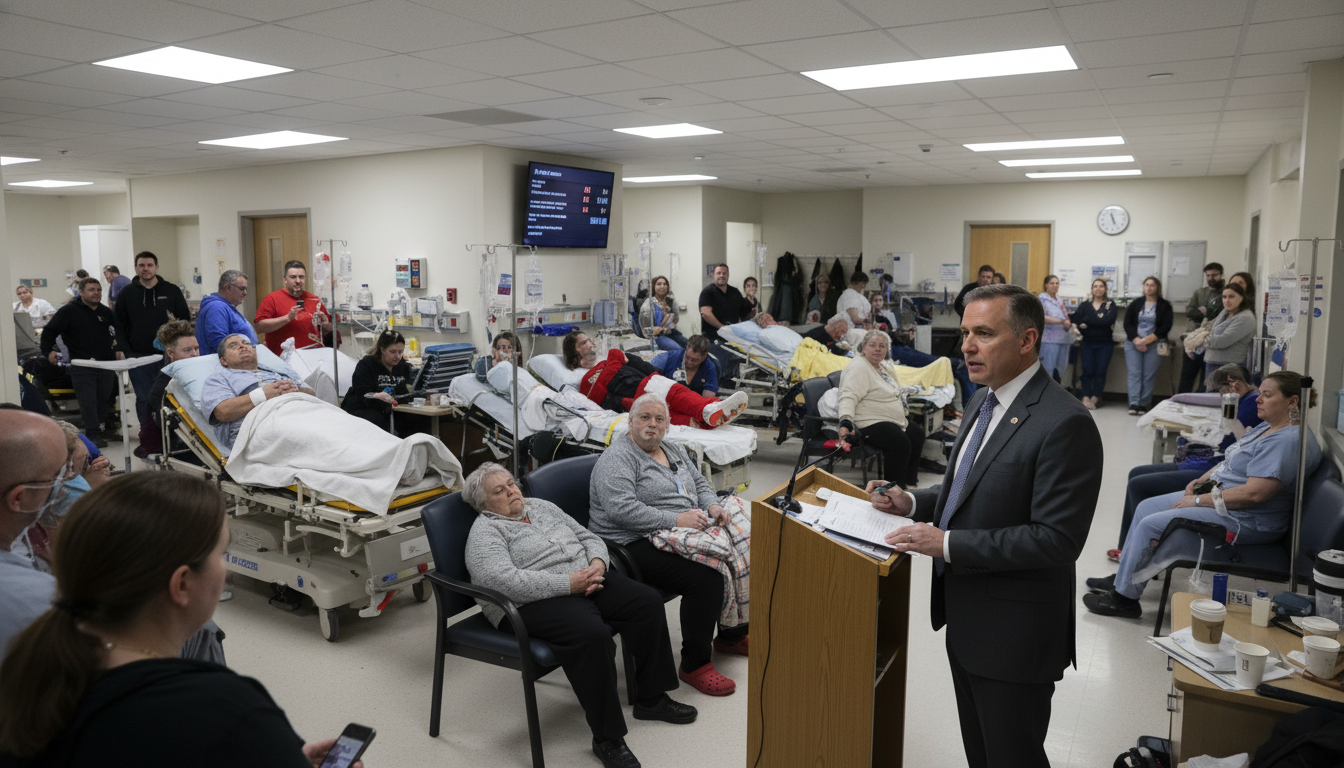
Emergency department overcrowding leaves patient treated but waiting in hallway, Alberta doctor says
Emergency department overcrowding forced a patient who had received initial care to remain in the waiting room, Alberta Medical Association president Dr. Brian Wirzba said on Monday. The incident highlights persistent pressures in emergency care as hospitals struggle to move patients from triage to monitored inpatient settings. Health officials and clinicians are facing renewed scrutiny over how crowding affects patient safety and care continuity.
Patient triaged and considered stable
Dr. Brian Wirzba said the patient received initial assessment and treatments and was judged relatively stable before being left in the waiting area due to space constraints. The decision reflected triage priorities when emergency departments are operating beyond capacity. Clinicians often must balance immediate critical needs against available monitored beds and stretcher space.
Emergency department overcrowding cited as cause
Emergency department overcrowding was identified by Wirzba as the reason the patient remained in the waiting room after initial care. Overcrowding occurs when more patients require emergency-level care than the department can safely accommodate. That mismatch between demand and capacity can lead to extended waits and care delivered outside of standard treatment bays.
Clinical safeguards and monitoring concerns
When patients are held in waiting areas, clinicians rely on triage reassessments and periodic checks to detect clinical deterioration. However, waiting rooms typically lack continuous monitoring equipment and the same staffing ratios as treatment zones. Medical leaders warn that prolonged stays in non-monitored spaces increase the risk of missed changes in condition, delayed interventions, and fragmented handoffs between teams.
System pressures behind hallway care
Hospital capacity constraints, limited inpatient beds and downstream discharge delays all contribute to hallway care in emergency departments. When inpatient wards cannot accept transfers, emergency departments accrue admitted patients who occupy stretchers and spaces meant for acute arrivals. That chain reaction reduces the department’s ability to process new patients and forces staff to adapt workflows to manage both urgent and nonurgent cases.
Staffing and resource challenges amplify the problem
Clinicians and administrators point to staffing shortages, especially in nursing and allied health, as a key factor that magnifies overcrowding. Adequate staffing is required not only to treat patients but to safely monitor those who remain in holding areas. Recruiting and retaining staff, along with flexible allocation of resources during surges, are common recommendations from front-line leaders addressing emergency department strain.
Calls for coordinated policy responses
Health system observers and physician leaders argue that addressing emergency department overcrowding requires coordinated action across hospitals, community care, and provincial health planning. Potential measures include faster discharge planning, enhanced community supports to prevent unnecessary emergency visits, surge bed strategies, and investments in staffing and inpatient capacity. Implementing sustained solutions, officials say, demands both short-term operational changes and long-term system redesign.
Alberta Medical Association underscores patient safety
The Alberta Medical Association, represented by its president, emphasized patient safety concerns when space limitations force care outside monitored treatment areas. The association has previously urged provincial and hospital leaders to prioritize measures that reduce crowding and ensure timely access to appropriate care settings. Physician groups continue to press for transparent reporting and metrics that capture the clinical impact of overcrowded emergency departments.
Triage decisions that balance clinical stability with available resources are a routine part of emergency care, yet experts warn that routine should not become an acceptable norm for extended hallway stays. Ensuring patients receive the right level of monitoring and timely reassessment remains central to reducing risk during periods of high demand.
Longer-term solutions will require collaboration across health system partners to align acute, subacute and community services so that emergency departments can return to functioning primarily as places for immediate, monitored care. Until such changes take hold, clinicians and patients will continue to face the operational and safety challenges posed by emergency department overcrowding.
