
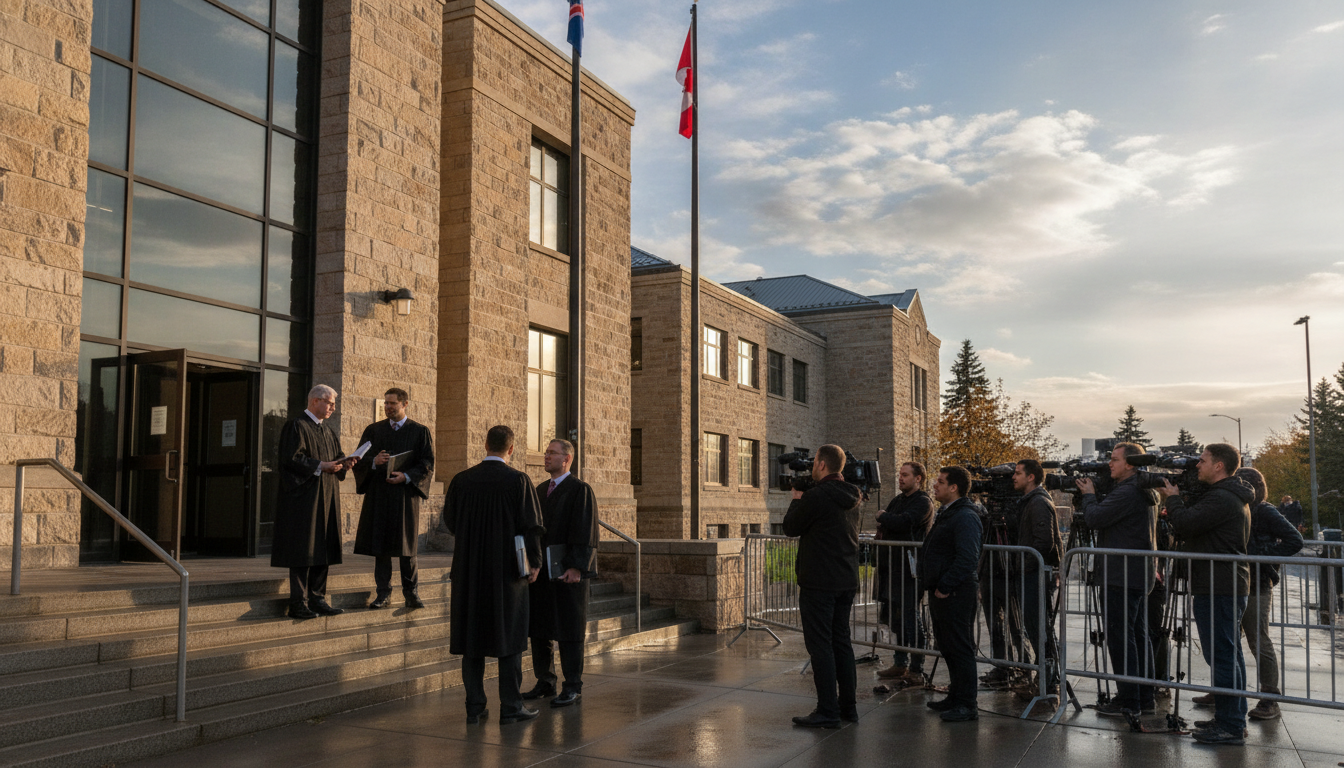
Alberta separatist petition left pending as Court of Appeal reserves decision
Alberta separatist petition stays in limbo after Court of Appeal hearing on a request to pause a lower court order that quashed the bid to trigger a referendum. (aptnnews.ca)
Court action follows judge’s quashing of petition
A provincial judge in May set aside Elections Alberta’s approval of the citizen-led referendum petition, concluding the process should not have proceeded without consultation with Indigenous nations. The ruling halted signature verification and raised immediate constitutional questions about treaty and Charter rights. (aptnnews.ca)
Legal teams for the petitioners and the province have since pursued appeals and procedural relief, moving the dispute quickly to the Alberta Court of Appeal. The petitioners asked the appellate judge to stay the lower-court order so Elections Alberta could resume verifying signatures. (play1037.ca)
The core legal argument in the lower court focused on whether the province owed a duty to consult First Nations before allowing a citizen initiative on secession to advance. The judge found that the process, as approved, could adversely affect treaty rights and therefore required consultation before signature verification. (aptnnews.ca)
Scope of the petition and signature claims
Stay Free Alberta submitted its citizen initiative in early May, announcing it had delivered roughly 301,620 signatures to Elections Alberta, well above the statutory threshold required to trigger review under the Citizen Initiative Act. The group says those signatures demonstrate public support sufficient to justify verification and a potential referendum. (apnews.com)
Elections Alberta’s verification process has been on pause pending the judicial review and the appeals, meaning the reported signature totals remain untested by the province’s sampling and contact procedures. That technical verification is the step that would confirm whether the petition met the threshold to move forward under provincial law. (albertapolitics.ca)
The Stay Free Alberta petition asks whether Albertans want the province to cease being part of Canada, a constitutional and political question that courts have long treated as carrying potential implications for Indigenous rights and the division of powers. The petition’s backers say the measure is a democratic tool; opponents argue the subject matter engages legal obligations the province cannot sidestep. (ckom.com)
Parallel pro-union petition and political calculations
A separate citizen initiative, known as Forever Canadian, previously cleared the verification stage and had more than 404,000 signatures verified by Elections Alberta late last year. That pro-unity petition asked whether Alberta should remain in Canada and has featured in debates about how the government will frame referendum questions and consult elected representatives. (shootinthebreeze.ca)
Premier Danielle Smith has cited the two citizen initiatives and the legal uncertainty around the separatist petition as part of her rationale for scheduling a provincewide referendum on Oct. 19. The government’s announced question asks voters whether Alberta should remain in Canada or begin the process that could lead to a binding vote on separation at a later date. The government says that formulation differs from the citizen petition and, in its view, reduces or eliminates the duty to consult in the same legal way. (globalnews.ca)
Opponents of the provincial government’s strategy have warned that framing and timing decisions carry significant legal and political risk. First Nations legal challenges remain active and constitutional experts say courts are likely to scrutinize any government action that touches treaty rights or constitutional structures. (aptnnews.ca)
Arguments for a stay and the petitioners’ position
Lawyers for Stay Free Alberta contend the chambers judge made legal errors in quashing the petition and say a stay is necessary to prevent the lower-court decision from nullifying hundreds of thousands of citizens’ efforts. Their application asked the Court of Appeal to permit Elections Alberta to resume verification while the appeal is considered. (play1037.ca)
The petitioners argue that delaying verification would render the appeal moot if signature validation were indefinitely blocked, and that the public interest favors allowing the democratic mechanism to proceed while legal questions are resolved. They maintain the government has alternative avenues to consult or engage Indigenous partners without discarding a citizen-initiated process. (albertapolitics.ca)
Government lawyers, by contrast, told the court that the duties at issue arise necessarily from approving a petition on secession and that allowing verification to continue would risk irreparable harm to Indigenous rights and interests. The provincial position emphasizes the constitutional context and the need for careful legal and political handling. (aptnnews.ca)
Appeals and potential pathways to a referendum
Both the province and Stay Free Alberta have filed appeals of the lower-court ruling, setting up a contested appellate process that could take weeks to months to resolve. The government’s appeal argues the chambers judge misapplied principles governing administrative approval and consultation, while the petitioners’ appeals press for a more expedited return to signature verification. (globalnews.ca)
If the Court of Appeal grants a stay, Elections Alberta would be able to proceed with its statistical verification and contact sampling for the petition. That process tests a random sample of signatures and contacts individuals to confirm authenticity, a step that can rapidly change the legal and political calculus. If the petition is verified, the procedural mechanisms under the Citizen Initiative Act would require further legislative or legislative-adjacent steps. (infonews.ca)
Should the Court of Appeal refuse a stay and ultimately uphold the quashing decision, the immediate path for a citizen-led separation measure would be blocked unless a different procedural route is pursued. At the same time, the provincial government has signaled it may still place a separation question on the Oct. 19 referendum, creating a parallel political track to the citizen initiative process. (globalnews.ca)
Indigenous consultation and constitutional stakes
Central to the litigation is the question of when and how the Crown’s duty to consult Indigenous peoples is triggered. Courts have repeatedly held that the duty arises when government decisions may adversely affect Aboriginal or treaty rights, and the judges hearing this matter framed the petition as a decision with potential effects on treaty interests. The precise legal threshold and timing of consultation remain contested in these proceedings. (aptnnews.ca)
First Nations intervenors have told courts that a binding result on separation would intersect with land, resource and governance arrangements protected by treaties, and that meaningful consultation must occur before a referendum or any action that could alter those rights. Their interventions shaped the chambers judge’s finding and remain likely to shape appellate review. (aptnnews.ca)
Legal scholars note that secession questions are uniquely complex because they mix political choice with entrenched constitutional protections, and because appeals could ultimately involve federal institutions and the Supreme Court depending on outcomes. The appellate judges will weigh precedent, statutory interpretation and constitutional safeguards as they adjudicate whether the petition process properly engaged consultation duties. (aptnnews.ca)
What comes next for voters and officials
For now, Elections Alberta remains constrained from completing verification on the Stay Free Alberta petition while the courts resolve the stay application and appeals. The agency has said it will follow judicial directions and procedural requirements in carrying out any verification if permitted to do so. (infonews.ca)
Political leaders are preparing for the Oct. 19 referendum regardless of the litigation timetable, and public debate over wording, timing and the scope of questions is intensifying. The presence of a verified pro-unity petition with more than 404,000 verified signatures has already shaped the political narrative and will influence how parties and the government present options to voters. (shootinthebreeze.ca)
Observers caution that even a clear result at the ballot box would not automatically deliver constitutional change. Legal experts say a province cannot unilaterally sever its constitutional ties without negotiation and federal involvement, and Indigenous nations would retain avenues to challenge measures in court. The electoral and legal sequences are therefore likely to unfold in parallel for the foreseeable future. (apnews.com)
The Court of Appeal’s reserved decision will determine whether Elections Alberta can proceed with technical verification and whether the lower-court findings on consultation stand. The outcome will shape not only the immediate fate of the Alberta separatist petition but also the broader rules governing citizen-led initiatives on matters that touch constitutional and treaty rights.
