
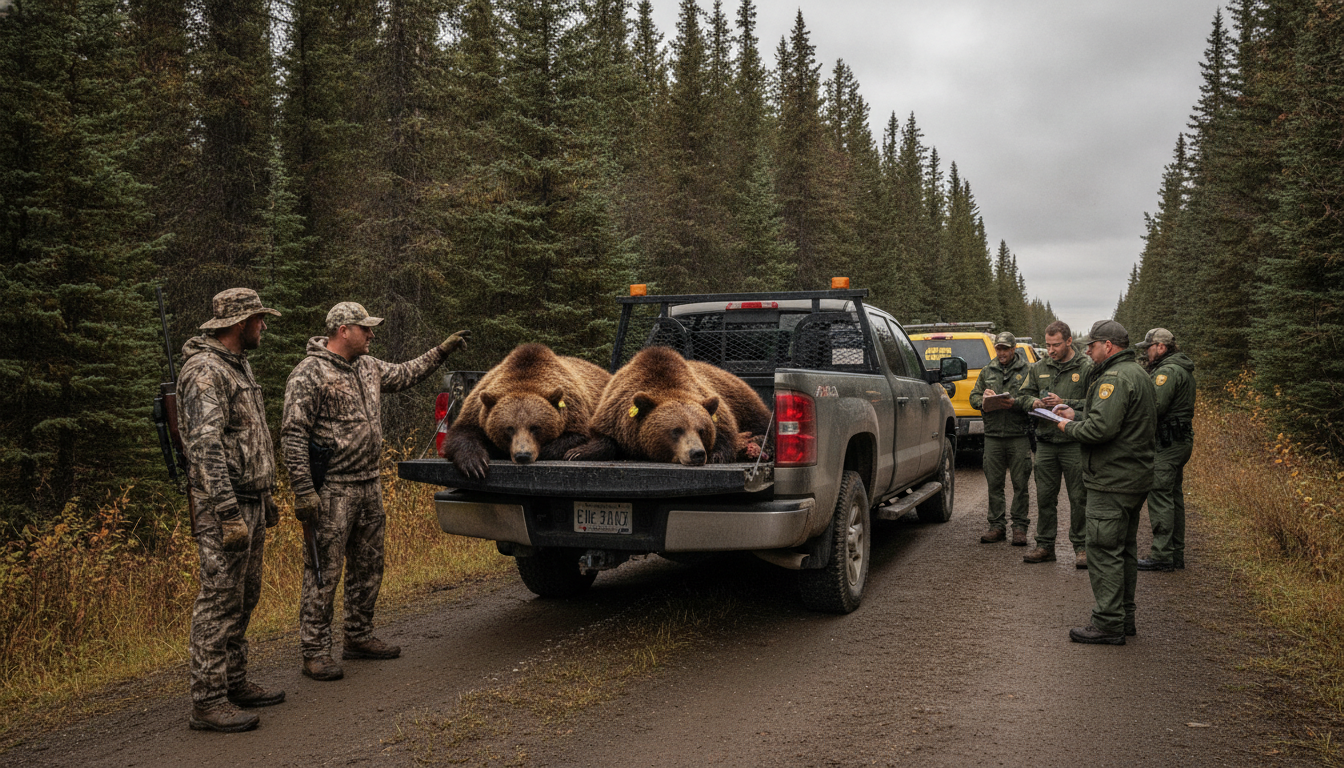
Alberta expands private-hunter program allowing lethal removal of grizzly bears
Alberta’s grizzly bears face a private-hunter program permitting the lethal removal of problem animals despite a 2006 hunting moratorium; at least two have been killed.
Alberta announced a program that permits qualified private hunters to lethally remove grizzly bears classed as problems, a significant change from the province’s long-standing hunting moratorium. Grizzly bears remain designated as a threatened species in Alberta, and the policy shift has already led to at least two known lethal removals under the new arrangement.
Moratorium and policy change
Alberta has maintained a moratorium on grizzly bear hunting since 2006, a protection tied to the species’ threatened status in the province. That protection was intended to limit human-caused mortality and promote recovery of grizzly populations across Alberta’s range.
Two years ago the provincial government introduced a program that authorizes qualified private hunters to shoot grizzly bears identified as threats to public safety or property. The program does not reopen general hunting; it is explicitly framed as a response tool for bears judged to be problematic.
How the private-hunter program functions
Under the program, lethal intervention is allowed only for bears designated as problem animals by authorities, and the removals are carried out by private hunters who meet specified qualifications. The government’s description emphasizes targeted removals rather than a return to open-season hunting.
Officials have characterized the approach as a management tool intended to address immediate threats where non-lethal options are judged impractical. The program’s operation rests on decisions by wildlife managers about when and which animals to remove.
Documented lethal removals
Since the program began, at least two grizzly bears have been killed under its provisions. Those confirmed killings have become focal points in public discussion about both human safety and species conservation.
The small number of documented removals so far underscores that the program has not been used on a wide scale, but those cases are being watched closely by communities, land managers, and those concerned with wildlife recovery.
Conservation status and scientific context
Grizzly bears remain listed as a threatened species in Alberta, a designation that reflects long-term population pressures and habitat challenges. The moratorium on hunting, instituted in 2006, was part of a broader effort to curb human-caused mortality and support population stability.
Balancing individual removals with species-level recovery objectives presents an ongoing management challenge. Wildlife managers must weigh the short-term need to address dangerous encounters against the long-term goal of sustaining viable grizzly populations in the province.
Public safety, land use and stakeholder concerns
The program was justified in part by the need to protect people and property where bears repeatedly come into conflict with human activities. Instances of food-conditioning, habituation, or repeated dangerous encounters often prompt calls for decisive action to reduce immediate risk.
At the same time, the policy change has highlighted tensions between public safety priorities and conservation goals. Some observers argue for stronger preventive measures, including improved attractant management and community education, to reduce the need for lethal intervention.
Oversight, transparency and monitoring questions
The new approach raises questions about oversight, record-keeping and transparent reporting of removals. Clear public information about the criteria used to declare a bear a problem and the number of interventions over time would help communities evaluate whether the program is meeting stated objectives.
Long-term monitoring is also critical to assess how targeted removals affect local population dynamics and whether they are compatible with the province’s recovery plans. Independent review mechanisms and data-sharing can support public confidence in wildlife management decisions.
Alberta’s program sits at the intersection of conservation policy and human safety management, and the known lethal removals so far have intensified debate about how best to reduce conflict while protecting a threatened species. The province’s approach will likely continue to be scrutinized as further cases are documented and as managers report on outcomes and safeguards.
