
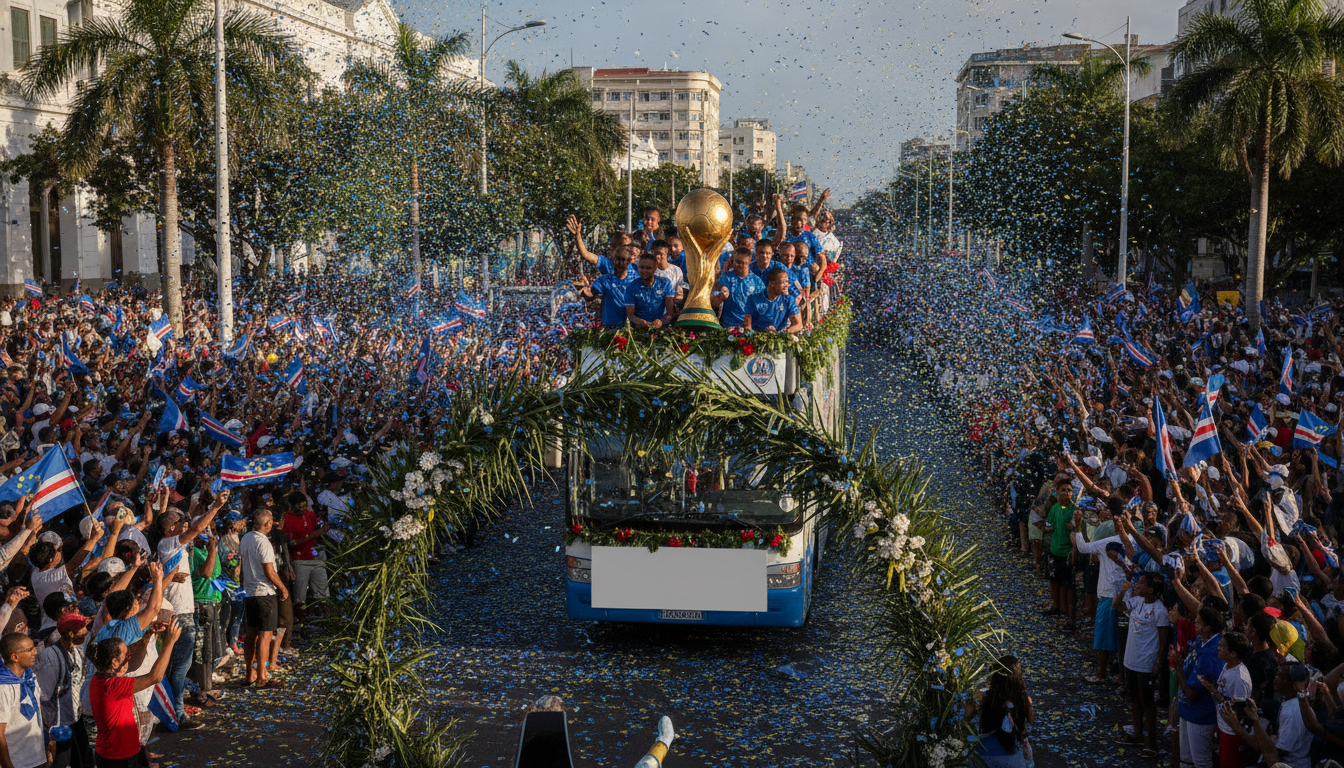
Cape Verde World Cup heroes return home to triumphant welcome after historic knockout run
Cape Verde World Cup heroes returned home on July 5, 2026, to a triumphant welcome after becoming the smallest nation by population to reach the tournament’s knockout stage. The squad’s arrival sparked street celebrations across the islands, with thousands gathering to greet the team and officials at major reception points. The achievement capped a week of global attention and set off national festivities that stretched into the night.
Historic World Cup Milestone
Cape Verde’s qualification to the knockout rounds marked an unprecedented moment in the nation’s sporting history, a milestone widely described as the smallest country by population to advance that far at a World Cup. The run included group-stage results that drew praise from international commentators and gave the team newfound recognition on the global stage. Federation officials said the performance has already begun to reshape expectations for Cape Verdean football.
The squad’s success was built on a compact, disciplined style of play that unsettled several higher-ranked opponents during the tournament. Analysts noted the team combined experienced professionals playing in European leagues with younger talent developed locally. That blend, officials and observers say, was crucial to the island nation’s breakthrough.
Triumphant Homecoming in Praia
On July 5, government sources and local media reported that the team received a hero’s reception on arrival in the capital, Praia, where fans lined roads leading from the airport. Buses carrying players were met with chanting, banners and fireworks as supporters thronged public squares and main streets. Municipal authorities coordinated security and crowd flow to ensure the celebratory events proceeded without major incident.
Local businesses and civic groups also joined the homecoming, organizing impromptu parades and community gatherings in neighborhoods across the islands. Observers described an atmosphere of collective pride and relief after months of anticipation, with many fans calling the team’s performance a unifying national achievement. Officials indicated plans for an official civic ceremony to formally recognize players and staff in the coming days.
Reactions from Players and Officials
Team members expressed gratitude to supporters and described the reception as overwhelming, according to statements released by the national federation. Coaching staff credited the players’ resilience and a clear game plan for the unexpected run, emphasizing that the result belonged to the whole country rather than to any single individual. Federation leaders said the squad’s conduct and success provided a model for future national teams.
Government officials praised the players as ambassadors for the islands and highlighted the wider diplomatic and cultural visibility generated by the World Cup performance. Sporting authorities signaled intentions to channel momentum into expanded youth programs, coaching education and infrastructure improvements. International commentators also noted that the achievement could influence scouting and club interest in Cape Verdean players.
Economic and Social Impact
Local economists and business owners said the World Cup run had immediate economic benefits, from a spike in merchandise sales to increased bookings at tourist accommodations as international attention sharpened. Small retailers reported brisk sales of team jerseys and memorabilia during the welcome events, while digital platforms recorded heightened traffic to Cape Verde-related content. Municipal leaders noted the potential for a longer-term tourism boost tied to the country’s elevated profile.
Beyond commerce, sociologists and community organizers pointed to the social value of the campaign as a source of national cohesion. The tournament provided a shared narrative that crossed regional and generational divides, according to interviews with civic leaders. Education and youth programs are likely to benefit if officials follow through on promises to invest in grassroots football and sporting facilities.
Next Steps for Cape Verdean Football
Officials from the national federation announced plans to convene a review of the World Cup campaign to identify successes and weaknesses, with a view to professionalizing key areas of the sport at home. Potential priorities include expanding scouting networks, improving playing surfaces and offering more competitive match opportunities against higher-ranked national teams. Federation representatives said they would seek increased public and private funding to support these initiatives.
On the international calendar, the team’s performance will affect seeding, scheduling and qualification pathways for tournaments such as the Africa Cup of Nations and FIFA qualifiers. Coaches and analysts noted that sustaining momentum will require careful planning, including off-season training programs and international friendlies to keep the squad sharp. Stakeholders also flagged the importance of converting public enthusiasm into long-term participation among young athletes.
The World Cup campaign has already inspired a generation of young Cape Verdeans who saw their national team compete on football’s biggest stage. Local academies reported a surge in enquiries and enrollments after the tournament, an early indication that the sport’s grassroots could grow rapidly. Community leaders emphasized the need for accessible facilities and trained coaches to turn interest into durable talent pipelines.
The return of Cape Verde’s team on July 5, 2026, signalled more than a sporting victory; it offered a national moment that has drawn global attention and created expectations for sustained development. As officials map out the next steps, the challenge will be to translate celebration into concrete investment and programs that ensure the World Cup run becomes the foundation for lasting progress in Cape Verdean football.
