
Alberta grizzly bear removals under responder network spark debate over livestock losses and conservation
Alberta grizzly bear removal program has led to four lethal removals since June 2024, including a June 8, 2026 kill after confirmed cattle predation, prompting renewed debate. (154 characters)
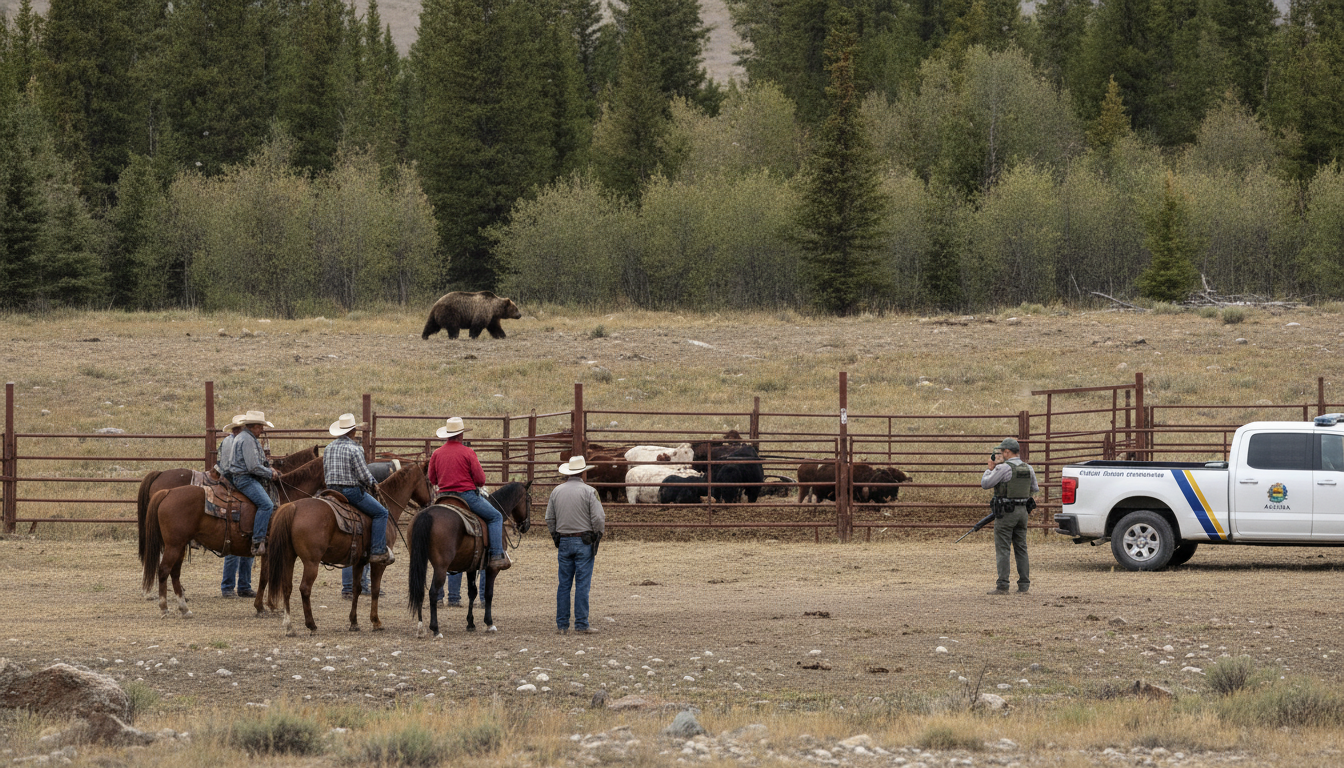
The Alberta government’s Wildlife Management Responder Network has authorized the lethal removal of four grizzly bears since the program began in June 2024, including a June 8, 2026 incident south of Pincher Creek where officers confirmed a bear had killed multiple cattle.
Provincial officials say the responders are qualified Albertan hunters who are called only when other measures fail and when a specific animal is linked to livestock predation or repeated conflict.
The removals have intensified discussion among ranchers, conservation groups and wildlife managers about how to balance public safety, farm livelihoods and grizzly conservation in southwestern Alberta.
Four grizzlies removed under Wildlife Management Responder Network
The Department of Forestry and Parks confirmed that four grizzly bears have been killed under the responder network: one in 2025 and three so far in 2026.
The most recent removal on June 8, 2026, occurred after provincial staff confirmed that a grizzly had killed several cattle near Pincher Creek.
Officials say responders are dispatched only as a last resort and that Alberta Fish and Wildlife Enforcement Services restricts removals to animals not implicated in attacks on people or demonstrated predatory behaviour toward humans.
Livestock predation drives removals in Pincher Creek area
Three of the recent incidents occurred in the Pincher Creek region of southwestern Alberta, an area local researchers identify as having one of the province’s higher grizzly densities.
Local coordinators and ranchers report that sightings and encounters have increased, and many producers describe livestock predation as a significant and recurring economic and emotional burden.
Alberta Fish and Wildlife recorded more than 60 complaints in 2025 involving confirmed cases of grizzly bears killing livestock, highlighting the scale of the challenge on the region’s expansive agricultural landscape.
How the responder network operates and authorizations are granted
The responder pool is made up of vetted Albertan hunters who applied to join the program and were selected by provincial authorities.
When the province determines lethal removal is necessary, these responders are provided with evidence such as photographs and precise locations to ensure the correct animal is targeted.
After a removal, responders are required to submit the carcass to provincial authorities so staff can confirm identity and cause, a step intended to reduce the risk of misidentifying the offending animal.
Legal and historical context for grizzly management in Alberta
Alberta has prohibited sport hunting of grizzly bears since 2006, with exemptions for Indigenous harvesting for cultural and subsistence purposes.
The species has been listed as threatened in the province since 2010, and management decisions must balance population recovery objectives with public safety and agricultural impacts.
Provincial officials stress that removals under the responder network are not treated as hunting seasons; authorizations are issued case-by-case rather than through standard hunting tags.
Conservation advocates question necessity and process
Some wildlife organizations argue that lethal removal is sometimes used because it is expedient and cost-effective, rather than because it is strictly necessary.
Advocates such as the Exposed Wildlife Conservancy have questioned whether bringing external hunters to shoot bears is required when Fish and Wildlife officers on scene can carry out removals.
Critics also point to the difficulty of definitively identifying which bear was responsible for a particular livestock loss, warning that errors in attribution are likely in large, remote landscapes.
Government investments in non-lethal conflict prevention
The provincial government announced in 2024 a five-year, $700,000 investment to reduce conflict between large carnivores and rural properties, targeting southwestern Alberta.
That funding supports measures such as electric fencing, upgrading grain storage to reduce attractants, and removing deadstock to lower the incidence of encounters between bears and livestock or feed.
Despite the funding, wildlife experts note the scale of ranching operations and the area’s geography make widespread electrification impractical and potentially harmful to wildlife movement if applied indiscriminately.
Breakdown of recent human-caused grizzly deaths and annual averages
Provincial data indicate that in 2025 a total of 18 grizzly bears were killed by people for varying reasons, including lethal removal as problem wildlife and treaty-harvested kills.
According to the same figures, seven bears were removed as problem wildlife, seven were taken under treaty rights, three were killed in collisions with vehicles, and one was killed in self-defence.
The province reports an average of about 10 grizzly bears lethally removed per year from 2020 through 2024, a metric officials say informs management planning for population recovery and human safety.
Ranchers describe economic and personal impacts of predation
Ranchers in the affected area describe losses that can be disproportionately damaging, particularly for small producers who may lose a substantial portion of their flocks or herds in a single incident.
Producers report the emotional toll of livestock predation in addition to the financial hit, and many press for swift and effective responses to protect livelihoods.
Local coordinators with community conservation programs say a limited number of bears may be responsible for a disproportionate share of reported conflicts, reinforcing calls for targeted responses.
Challenges in attributing attacks to individual bears
Determining which individual bear is responsible for livestock predation can be complex, especially across rugged and remote territories where multiple bears range.
Wildlife managers acknowledge that misidentification is a risk and that sometimes removals may be based on the best available evidence rather than absolute certainty.
The responder network attempts to reduce error by supplying responders with photographic evidence and GPS locations, and by requiring carcass submission for verification after a removal.
Meat, hide and parts: what responders can keep
Although the responder operation is not considered a hunt, the individual who carries out a lethal removal may retain the bear’s meat, hide and other parts.
The province has specified that certain parts, such as the gallbladder, are restricted and must be handed over to authorities.
This policy mirrors long-standing practices that regulate the disposition of wildlife remains after management removals or subsistence harvests.
Stakeholders call for clearer data and transparency
Conservation groups, researchers and some municipal leaders are calling for improved public reporting on the responder network’s authorizations, outcomes and the evidence used to justify removals.
They argue that transparency would help build public trust and allow independent analysis of whether removals are reducing conflict or addressing population-level conservation goals.
Wildlife managers note that some protections around sensitive wildlife locations and ongoing investigations limit the detail that can be publicly released in every case.
Combining tools: non‑lethal measures, targeted removal and community programs
Experts advocate for a toolbox approach to managing grizzly-human conflict that combines non-lethal deterrents, community education and selective lethal removal when necessary.
Programs that support fencing, carcass management and feed security can reduce attractants and lower encounter rates, but they require sustained funding and local buy-in.
Many stakeholders emphasize that targeted removal of a confirmed problem animal, combined with preventative measures, offers the best chance of reducing repeated losses while minimizing impacts on the broader bear population.
Local research and monitoring needs
A lack of recent provincial population surveys has left some communities and researchers uncertain about long-term trends in grizzly numbers outside of protected areas.
Local biosphere and conservation programs have been monitoring sightings and movements and report an apparent eastward expansion of grizzly presence in some zones.
Officials and researchers say updated, systematic population assessments would strengthen management decisions and clarify how removals affect recovery objectives.
Road collisions and other human-caused mortality factors
Road strikes and vehicle collisions continue to be a notable source of human-caused grizzly deaths in Alberta, contributing to the annual mortality totals.
Reducing wildlife-vehicle collisions requires coordinated approaches such as improved signage, targeted speed management and wildlife crossing mitigation in hotspot areas.
Addressing these and other human-caused mortality factors is part of the larger picture that wildlife managers consider when evaluating sustainable mortality thresholds.
Balancing treaty rights and conservation objectives
Indigenous treaty rights allow for harvesting of grizzly bears for cultural and subsistence purposes, and those harvests are accounted for separately from problem wildlife removals.
Reconciling treaty rights, community safety concerns and provincial conservation obligations requires ongoing consultation and collaborative management.
Some Indigenous communities are actively engaged in stewardship and monitoring efforts, which many stakeholders see as a key component of effective regional management.
Costs and efficiency of using external responders
Critics question whether deploying external responders is an efficient use of provincial resources when Fish and Wildlife officers are often on scene and have the legal authority to remove wildlife.
Proponents of the responder model argue that it expands capacity and brings trained individuals into remote situations where rapid action may be needed.
The debate over efficiency focuses on whether the additional step of engaging private responders materially improves outcomes or simply adds bureaucracy and expense.
Public safety protocols and human-bear interactions
Alberta Fish and Wildlife enforces a policy that responders will not be tasked with killing bears that have attacked humans or shown predatory behaviour toward people.
That distinction is meant to ensure incidents involving threats to human life are handled directly by trained enforcement personnel with appropriate safety protocols.
Public messaging from officials continues to stress prevention measures, awareness and safe practices for people living and working in bear country.
Potential policy adjustments and future review
As removals under the responder network continue, provincial officials may evaluate the program’s effectiveness and consider adjustments to authorization criteria or reporting.
Stakeholders on all sides have urged a formal review that assesses both short-term results and long-term impacts on grizzly conservation and rural communities.
Such a review would ideally include input from municipal governments, Indigenous partners, conservation scientists and the agricultural sector.
Alberta faces the complex task of protecting both rural livelihoods and a species that remains provincially threatened, and the recent responder-authorized removals have sharpened calls for clearer data, coordinated prevention funding and rigorous oversight of lethal control decisions.
The province’s approach will likely continue to evolve as officials weigh the evidence from on-the-ground incidents, community needs and conservation targets.
