
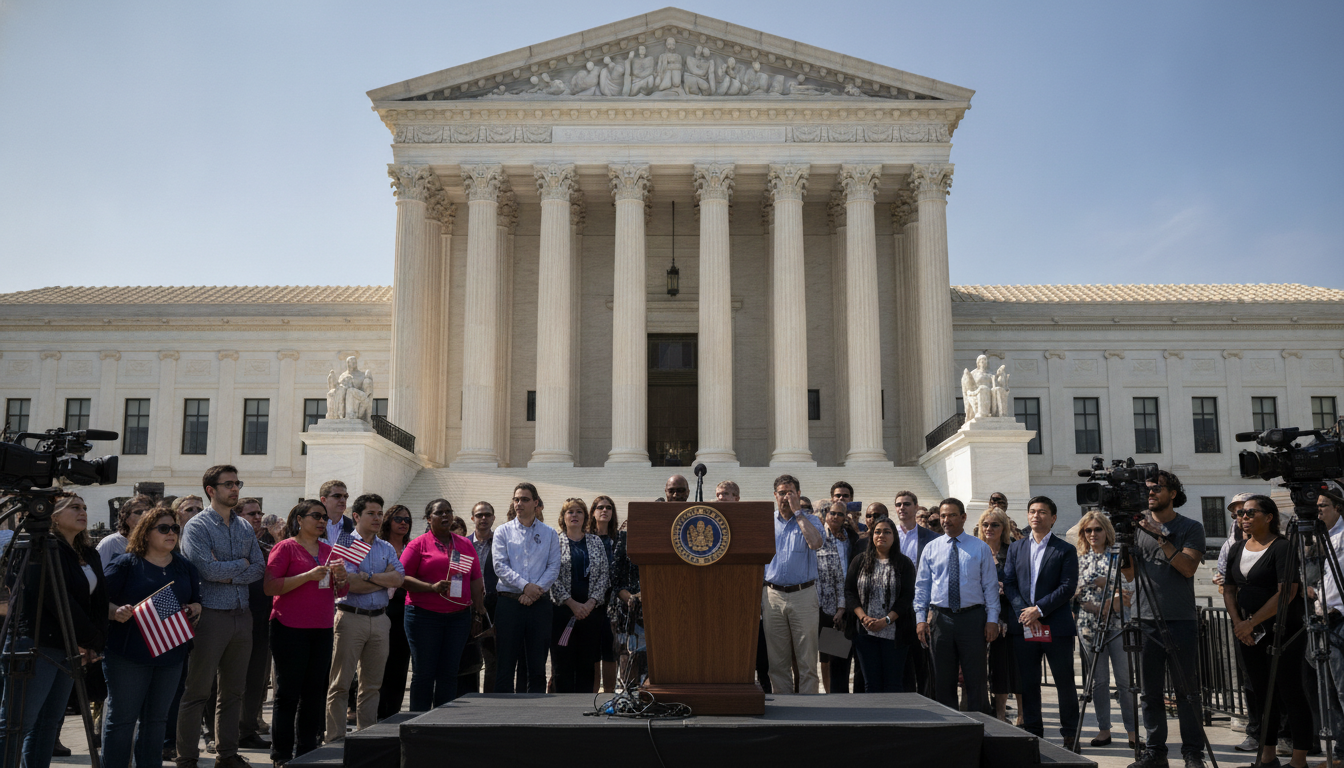
Supreme Court Blocks Trump Decree, Reaffirms Birthright Citizenship Under the 14th Amendment
U.S. Supreme Court strikes down President Trump’s decree limiting birthright citizenship, reaffirming the 14th Amendment and protecting citizenship for children born in the United States.
The U.S. Supreme Court on the final day of its term invalidated a presidential decree that sought to restrict birthright citizenship, holding that children born on U.S. soil retain automatic citizenship under the 14th Amendment. The decision, which addressed both the validity of the executive order and the constitutional meaning of the amendment, represents a high-stakes rebuke of a signature immigration policy advanced by President Donald Trump. The term “birthright citizenship” appears at the center of the ruling and will remain a focal point in debates over immigration and nationality law.
Ruling details and vote counts
The court issued separate holdings on related questions, with the decree itself struck down by a six-to-three vote while the interpretation of the 14th Amendment’s citizenship clause was endorsed by a five-to-four majority. Three conservative justices joined the court’s more liberal members on the initial ruling against the decree, though one of them relied on different statutory grounds rather than the Constitution. The split outcomes reflect complex legal lines the justices drew between statutory authority, executive power and constitutional text.
Text and precedent: the 14th Amendment affirmed
At issue was the language of the 14th Amendment adopted in 1868, which declares that all persons born or naturalized in the United States and “subject to the jurisdiction thereof” are citizens. The majority reaffirmed the long-standing, consensus interpretation that children born on U.S. territory qualify for citizenship regardless of their parents’ immigration status, invoking historical precedent and the amendment’s plain meaning. That reaffirmation aligns the high court with prior decisions that have long anchored American citizenship law in place-of-birth principles.
Dissenting opinions and alternate legal reasoning
The court’s dissenters mounted a forceful challenge. Justice Samuel Alito authored a lengthy dissent, arguing the majority had erred and warning that its reasoning would erode the value of citizenship, a view laid out in an opinion exceeding ninety pages. Another conservative jurist, Justice Brett Kavanaugh, diverged from both camps by concluding the decree violated a federal statute, leaving open the possibility that Congress could alter the statutory landscape even if the Constitution was not read to permit the executive action.
Legal arguments presented at oral argument
During the unprecedented presence of President Trump at oral arguments, Solicitor General John Sauer urged the court to read the 14th Amendment against the backdrop of its post–Civil War origins, saying the clause primarily targeted the status of formerly enslaved people and their immediate descendants. The administration also raised concerns about “birth tourism” and argued that a broad reading of the amendment had encouraged practices they characterized as exploiting American law. The justices probed those historical and practical assertions closely during the hearings.
Who stands to be affected by the decision
Legal analysts estimate that roughly 150,000 children each year obtain U.S. citizenship by virtue of being born on American soil, a figure that highlights the real-world stakes of the court’s ruling. For families with mixed or uncertain immigration status, the decision provides immediate clarity and protection for children born in the United States. Immigration advocates said the ruling removes a major legal uncertainty and safeguards benefits and civil rights that follow from citizenship from the moment of birth.
Political fallout and Washington reaction
The decision is likely to intensify political debate. The White House may pursue legislative or regulatory avenues in response, and the court’s mixed votes suggest potential avenues for future litigation or statutory amendment. Earlier in the same term the court had issued rulings favorable to the administration on other immigration issues, and those outcomes together frame a broader, ongoing legal contest over how far executive authority extends on immigration enforcement and policy.
Global context for birthright citizenship laws
Internationally, the United States is not unique in granting citizenship to those born within its borders, though practices vary. Analyses by demographic research organizations indicate that about thirty countries, mostly in the Americas, maintain broad birthright rules similar to U.S. practice, while others recognize more limited versions of jus soli. Observers say the American debate over birthright citizenship resonates abroad as nations weigh mobility, sovereignty and demographic change.
The court’s rulings resolve a major legal confrontation over the scope of executive power and the meaning of the 14th Amendment, but they do not end the political fight over immigration policy. With Congress, the White House and state governments likely to reassess options, the decision sets the legal baseline for children born on U.S. soil and ensures that birthright citizenship remains enshrined in constitutional doctrine for the time being.
