
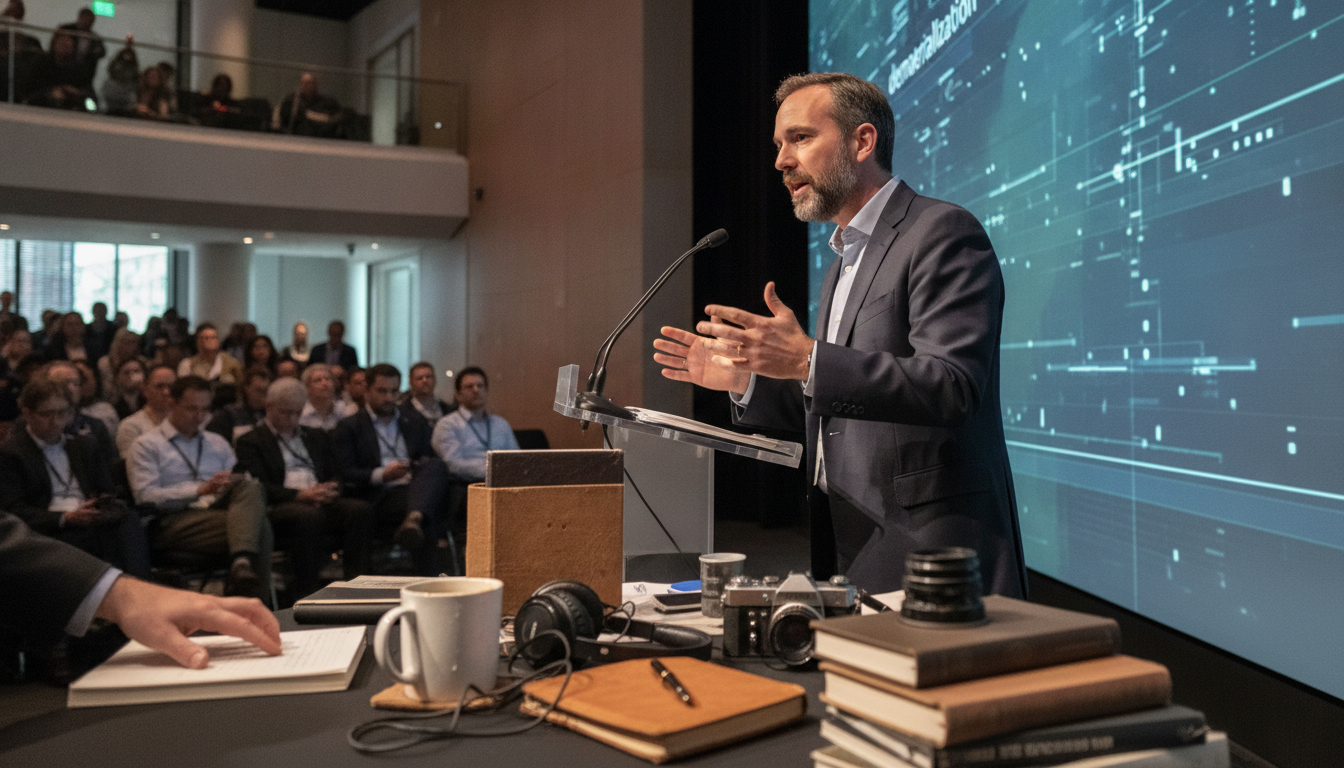
Ian Bogost’s The Small Stuff argues “dematerialization” is erasing everyday sensory life
Ian Bogost’s forthcoming book The Small Stuff examines how “dematerialization” driven by convenience tech has dulled everyday sensory experiences and offers practical antidotes.
Ian Bogost’s new book The Small Stuff contends that modern convenience technologies have pushed society toward what he calls “dematerialization,” a process that separates people from the sensory texture of daily life. Bogost uses examples from the decline of manual car controls to automated restroom fixtures to show how seemingly small design choices add up to a broader loss of embodied experience. The book blends cultural critique with actionable ideas aimed at restoring tangible moments of gratification without rejecting technological progress.
Bogost frames dematerialization as a sensory problem
Ian Bogost defines dematerialization as a widening disconnect between people and the physical sensations that used to structure ordinary life. He argues that a range of forces — not only Silicon Valley products but also bureaucracy, regulation and economic incentives — have smoothed away the chores and rituals that once engaged our bodies. For Bogost, the issue is less about nostalgia and more about recognizing a trade-off: many innovations improve efficiency but also strip meaningful sensory contact from day-to-day living.
Bogost stresses that dematerialization is identifiable in places where automation replaces direct human action, and it often becomes most visible when systems fail. Those moments of breakdown reveal what has been lost and point to what might be regained.
Everyday examples: cars, restrooms and kitchen tools
The book draws a line from the cultural attachment to stick-shift cars to current trends in electric vehicles, which remove manual transmissions altogether. That tangible example helped Bogost see a pattern across disparate objects: doors, faucets, appliances and even music players have been reshaped to reduce the role of bodily engagement. He recounts the familiar irritation of automated airport sinks and toilets as emblematic of a larger transformation.
By cataloguing items such as toasters, slushies and telephones, Bogost shows how ordinary artifacts host layers of meaning that are lost when design prioritizes invisibility. Those small losses may seem trivial alone, but he argues they accumulate into a diminished sense of being alive in the world.
Trade-offs between convenience and experience
Bogost does not dismiss the material benefits of modern services: ride-hailing, streaming and delivery have solved real problems and improved many lives. His critique is instead about the scale and unexamined acceptance of convenience as the overriding design imperative. He warns that focusing solely on outcomes — the quick result — has led designers and companies to downplay the experience of doing things, which is central to human meaning.
Rather than advocate an outright rejection of ease, Bogost urges a recalibration: recognize where automation helps and where leaving a task tactile matters. That balance, he suggests, is a design choice rather than a foregone economic necessity.
Guidance for designers and product teams
For entrepreneurs and UX practitioners, Bogost recommends re-centering embodied experience during product development. He traces an earlier era of computing when human factors were integral to design and contrasts it with a later shift toward invisible, outcome-driven services. The remedy, he proposes, is to intentionally design for sensory engagement—crafting interactions that let people feel themselves acting rather than erasing the act entirely.
Practical examples include preserving the ritual of making a cup of coffee, designing interfaces that reward small gestures, or intentionally introducing meaningful haptic feedback. These approaches seek to retain benefits of technology while keeping people present in their bodies.
Nostalgia, friction and the limits of reclaiming the past
Bogost cautions against simple nostalgia or fetishizing analog artifacts as a cure. He acknowledges the appeal of vintage objects—the heft of a handset or the tactile click of a dial—but insists the goal is not to turn back the clock. Instead, nostalgia can serve as an orientation: reminding us why certain sensory experiences mattered and suggesting modern ways to recover their essence.
He also challenges the current call to “reintroduce friction” wholesale. Bogost differentiates between needless obstacles and substantive sensations: the objective should be to preserve meaningful effort and perceptible action, not to create arbitrary barriers that impede function or accessibility.
Small-scale solutions and larger civic responsibilities
While Bogost says systemic reforms like addressing inequality are valuable, he emphasizes that ordinary people need not wait for sweeping political change to reclaim sensory life. He encourages small-scale practices—paying attention to everyday routines, seeking tactile pleasures, and nudging organizations to design more gratifying experiences. At the same time, he urges leaders in industry and government to consider how institutional choices shape the sensory environment for large populations.
Bogost wants both cultural attention and practical work: designers can adjust interfaces, employers can rethink remote- and office-work rituals, and civic actors can preserve access to material experiences in public spaces.
Bogost’s The Small Stuff reframes familiar critiques of tech by focusing on the cumulative effect of countless small design choices. He offers a middle path that neither romanticizes the past nor rejects modern conveniences, proposing instead that attention to the “small stuff” can restore texture and meaning to everyday life.
