
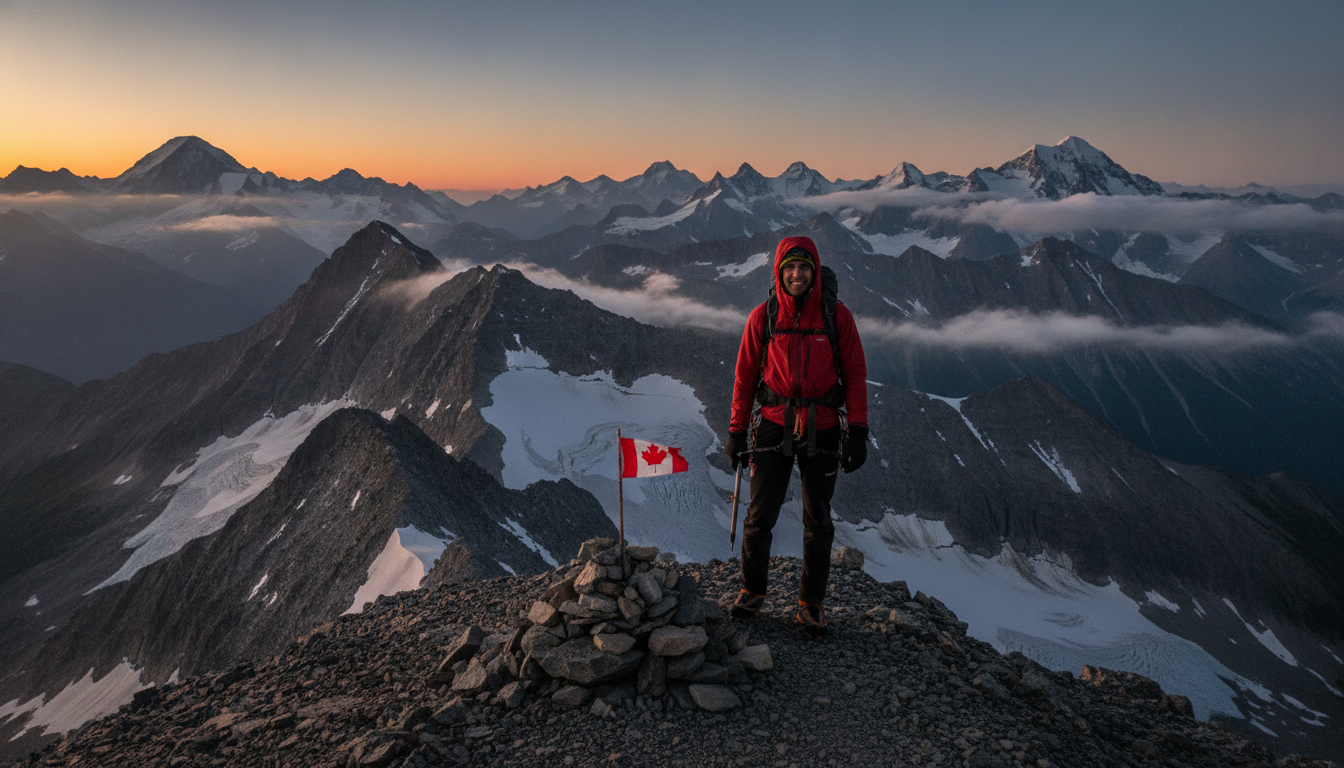
Canmore alpinist Haldan Borglum becomes youngest and fastest to complete all 58 11,000ers in Canadian Rockies
Canmore alpinist Haldan Borglum, 26, became the youngest and fastest to summit all 58 11,000ers in the Canadian Rockies, finishing the list on June 14, 2026 in two years and six days.
Haldan Borglum completed the full inventory of 58 peaks above 11,000 feet in the Canadian Rockies on the morning of June 14, 2026, setting records as both the youngest confirmed finisher and the quickest to finish the list. The achievement caps a campaign that began in early June 2024 and was completed in two years and six days, far faster than the prior fastest time of about five-and-a-half years. Borglum, a Canmore resident and former World Cup biathlete, credited his elite endurance and a flexible schedule for the accelerated pace. The feat places him among only a few dozen documented finishers of the 11,000ers list.
Record confirmed on June 14, 2026
On June 14, 2026 Borglum stood atop the final summits that completed the 58-peak roster, marking the end of a focused and strenuous effort across two summers and intervening seasons. The previous benchmark for the fastest completion stood at roughly five-and-a-half years, making Borglum’s two-year campaign notable within the mountaineering community. At 26 years old, he also becomes the youngest confirmed person to complete all 58 11,000ers. The Alpine Club of Canada acknowledged the accomplishment and highlighted the commitment and skill required for such a project.
Athletic background sped the campaign
Borglum’s history as a World Cup biathlete provided both physiological advantage and technical discipline that transferred directly to fast, high-effort alpine days. He retired from competitive biathlon earlier in 2026, then leveraged the endurance, pacing skills and mental resilience developed on the race circuit for sustained mountaineering pushes. Many peaks that other climbers approach as multi-day objectives were completed by Borglum in single pushes under 24 hours, and he frequently combined multiple summits during a single trip. That capacity for sustained effort helped compress what typically takes years into a concentrated two-year schedule.
Logistics and technical difficulty across the 11,000ers
The 58 11,000ers vary widely in approach, exposure and technical demands, ranging from straightforward day-trips to remote, technical climbs that require ropework, rappelling and advanced route-finding. Borglum trained for avalanche awareness and mixed alpine techniques while building climbing competency with partners and mentors in the Canmore area. Some peaks demanded complex logistics — including long approaches, canoe crossings and multi-day backcountry travel — which increased the operational challenge beyond pure climbing difficulty. The combination of terrain types meant planning, weather windows and equipment choices played a major role in whether a summit attempt succeeded.
Final pairs reached solo after failed approaches
Borglum’s last two summits, Mount Clemenceau and Tusk Peak, rank among the most remote and infrequently attempted on the list, and getting there tested both logistics and resolve. After two failed attempts caused by vehicle failure and unsafe lake conditions, Borglum and partners scouted an alternate approach for a third try. When deteriorating conditions and wet gear forced his partners to turn back, Borglum pressed on alone and completed both peaks solo, citing prior solo experience and confidence in his skills as decisive factors. He described a mix of exhaustion and elation at the finish, spending extended time on the final summit to mark the milestone.
Community response and verification
The Alpine Club of Canada offered formal congratulations and noted the difficulty of the terrain that comprises the 11,000ers, while online compendia that track confirmed completions list Borglum among roughly two dozen documented finishers. Although the ACC does not itself certify record times, the mountaineering community has recognized both his age and overall schedule as record-setting based on available confirmed finish lists. Peers and local climbing partners paid tribute to Borglum’s planning, technical skill and willingness to accept significant risk on remote objectives.
Plans for recovery and future objectives
Following the final ascent, Borglum said he planned a period of rest and rehabilitation before returning to technical mountaineering, with intentions to focus on ice climbing during the coming winter and an extended trip to Peru the following summer. He emphasized that mountains have become central to his life in Canmore and that he intends to continue developing his skills rather than immediately chasing another list. The completion of the 58 11,000ers leaves him with heightened experience in remote approaches, glacier travel and alpine decision-making, skills he plans to deepen in the seasons ahead.
Borglum described the completion as a deeply personal achievement rather than a pursuit of records, saying the sense of finishing the 58 11,000ers felt surreal and gratifying after years of incremental progress and careful planning.
