
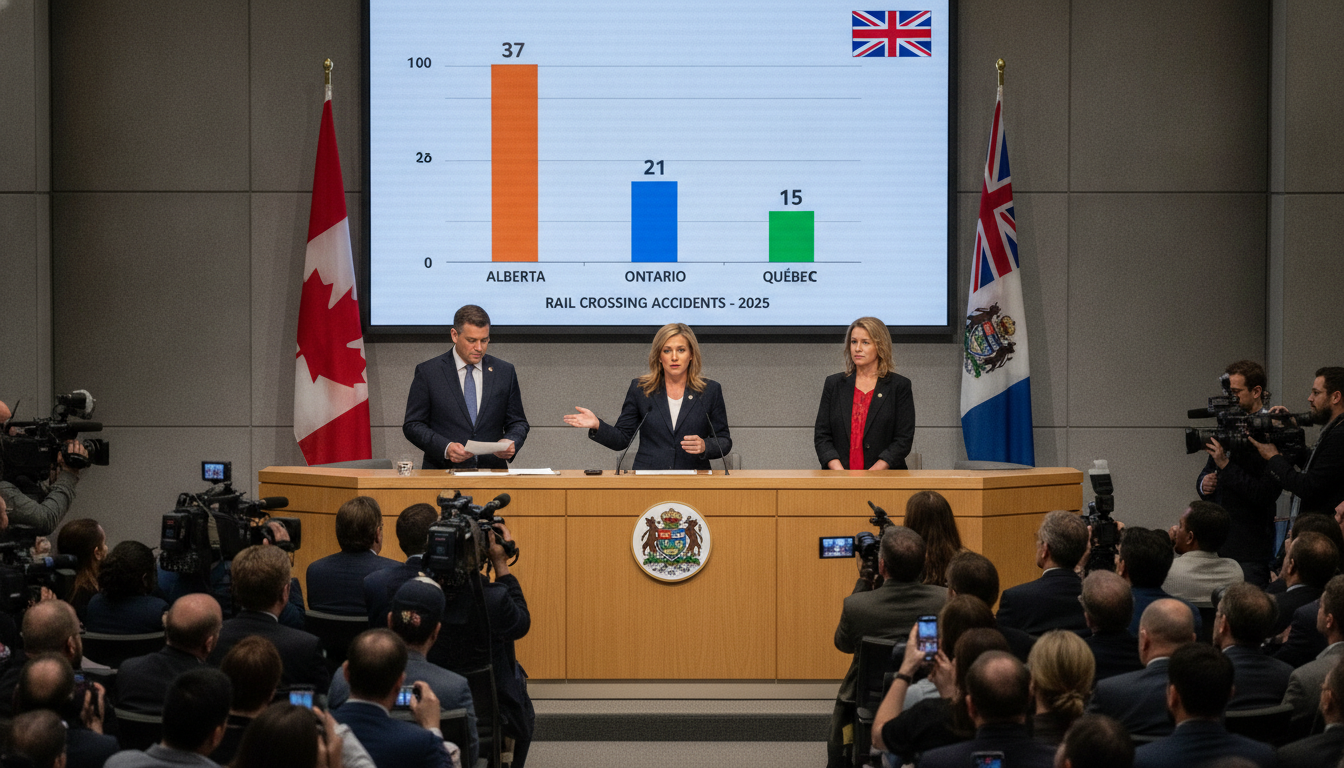
Alberta rail crossing accidents reach 37 in 2025, two fatalities reported
Alberta logged 37 rail crossing accidents in 2025, a rate that equates to about one incident every 10 days and resulted in two deaths, provincial figures show. The increase places Alberta ahead of Ontario and Quebec when measured against the number of crossings. The rise in Alberta rail crossing accidents has prompted renewed attention to crossing safety and infrastructure across the province.
Alberta records 37 crossing accidents in 2025
Alberta’s roughly 2,900 public and private rail crossings were the sites of 37 reported accidents in 2025. That tally works out to an incident roughly every 10 days over the year. Officials and safety observers say the figure underscores persistent risks where roadways intersect rail lines.
Fatalities and human impact: two deaths reported
Two people died in Alberta rail crossing accidents during 2025, according to the data. Each fatality represents a community loss and highlights the life-or-death stakes of crossing safety. Local authorities note that collisions at crossings can involve motorists, pedestrians, or railway workers and often produce long-lasting trauma for families and first responders.
Per-crossing rate higher than Ontario and Quebec
When compared with other provinces, Alberta’s per-crossing accident rate in 2025 was higher. Ontario recorded 33 accidents across roughly 4,500 crossings, and Quebec had 29 incidents on about 6,800 crossings. Calculated per 1,000 crossings, Alberta’s rate exceeds those of Ontario and Quebec, indicating a disproportionate number of incidents relative to the size of its crossing network.
Common risk factors cited in crossing incidents
Analysts point to several recurring risk factors in rail crossing accidents, including limited sightlines, inadequate signage or barriers, human error, and vehicle-train speed differentials. Weather and seasonal road conditions can also reduce visibility and braking performance, increasing collision risk. Where crossings are private or rural, fewer safety upgrades and less regular maintenance can compound hazards.
Infrastructure, enforcement and technology responses
Responding to higher accident rates, jurisdictions typically consider a mix of measures: upgrading passive crossings to active warning systems, installing gates, improving road alignment and sightlines, and increasing enforcement of traffic laws at high-risk sites. Emerging technologies such as automated detection and connected-vehicle alerts are being piloted in some areas, though deployment varies by funding and jurisdictional responsibility. Decisions about which crossings to upgrade often balance traffic volume, accident history, and cost.
Roles and responsibilities of railways and governments
Railway companies, municipal and provincial governments share duties for crossing safety, but responsibilities differ depending on whether a crossing is public or private. Maintenance, signage, and capital improvements often involve coordination among multiple stakeholders. Safety advocates stress that clear assignment of responsibility and timely investment are critical to reducing Alberta rail crossing accidents.
Alberta’s 2025 figures provide a snapshot that officials say should inform planning for upgrades, enforcement and public awareness campaigns. Tracking changes year to year will be essential to evaluate the effectiveness of any new measures and to prioritize the crossings that present the greatest risk.
