
Battle of Ortona: Canada’s Deadliest Fight in the Italian Campaign
A decisive engagement of the Italian campaign, the Battle of Ortona saw Canadian soldiers endure some of their heaviest losses in December 1943, when more than 500 Canadians died fighting German paratroopers in the town. The Battle of Ortona left a profound mark on veterans, civilians and the course of the campaign, and the human stories that emerged include two people who would marry after the war. This account revisits the ferocious urban fighting, the toll on those involved, and how Ortona has been remembered in Canada and Italy.
Ortona in December 1943
The fighting in Ortona took place in late December 1943 amid a bitter winter and a grinding Allied push up the Italian peninsula. Canadian forces advanced along the Adriatic coast against well-prepared German positions, encountering fierce resistance from paratroopers who used the town’s narrow streets and stone buildings to stage stubborn defenses. Street-by-street combat transformed Ortona into a close-quarters battlefield where conventional advances proved costly and slow.
The city’s compact layout magnified the danger for attacking troops as houses became strongpoints and every doorway or alley could conceal defenders. For Canadians, the winter battle proved especially brutal; entrenched German units inflicted heavy casualties while limiting the opportunities for maneuver. The result was one of the bloodiest single engagements faced by Canadian forces during the entire Italian campaign.
Urban tactics and Canadian fighting methods
The urban nature of the battle forced Canadian units to adopt tactics suited to house-to-house fighting, often relying on small-unit leadership, coordinated supporting fire and careful clearing of buildings. Soldiers improvised methods to move through rubble and intact homes, creating passages and using close infantry coordination to reduce exposure to hidden defenders. The intensity of the fighting demanded rapid decisions at platoon and section level and exposed the limits of daylight advances in close terrain.
Artillery and armour support played constrained but critical roles when they could be brought to bear, and engineers worked under fire to breach barricades and create routes. The combination of improvised infantry methods and supporting arms gradually eroded German resistance, but only at significant human cost and after several days of continuous contact.
Casualties, civilian suffering and the toll
Within Ortona itself, more than 500 Canadian soldiers were killed during the confrontation with German paratroopers, a figure that underscores the ferocity of the engagement. Beyond the military losses, the city’s civilian population experienced severe disruption, displacement and physical damage to homes and infrastructure. Buildings across Ortona sustained heavy damage as block-to-block fighting and explosive breaching created a landscape of shattered streets.
Military records and veterans’ recollections emphasize the psychological strain on those who fought and the communities that survived the battle. For families in Canada, the casualty reports returned home as stark reminders of the war’s costs, and for the survivors the memories of December 1943 remained vivid for decades.
Personal stories and wartime aftermath
Amid the statistics and operational accounts, personal stories emerged that capture the human dimensions of Ortona’s fighting. One account notes that two people who endured the battle would later marry after the war, a reminder of the private lives and futures that persisted beyond the fighting. Such stories reflect how wartime experiences could bind people together, produce lasting relationships and shape postwar family life.
Veterans frequently described Ortona as a defining episode in their military service, one that shaped camaraderie and loss in equal measure. These personal narratives have contributed to a broader public understanding of the battle in Canada and helped sustain commemorations and public memory.
Commemoration and continuing legacy
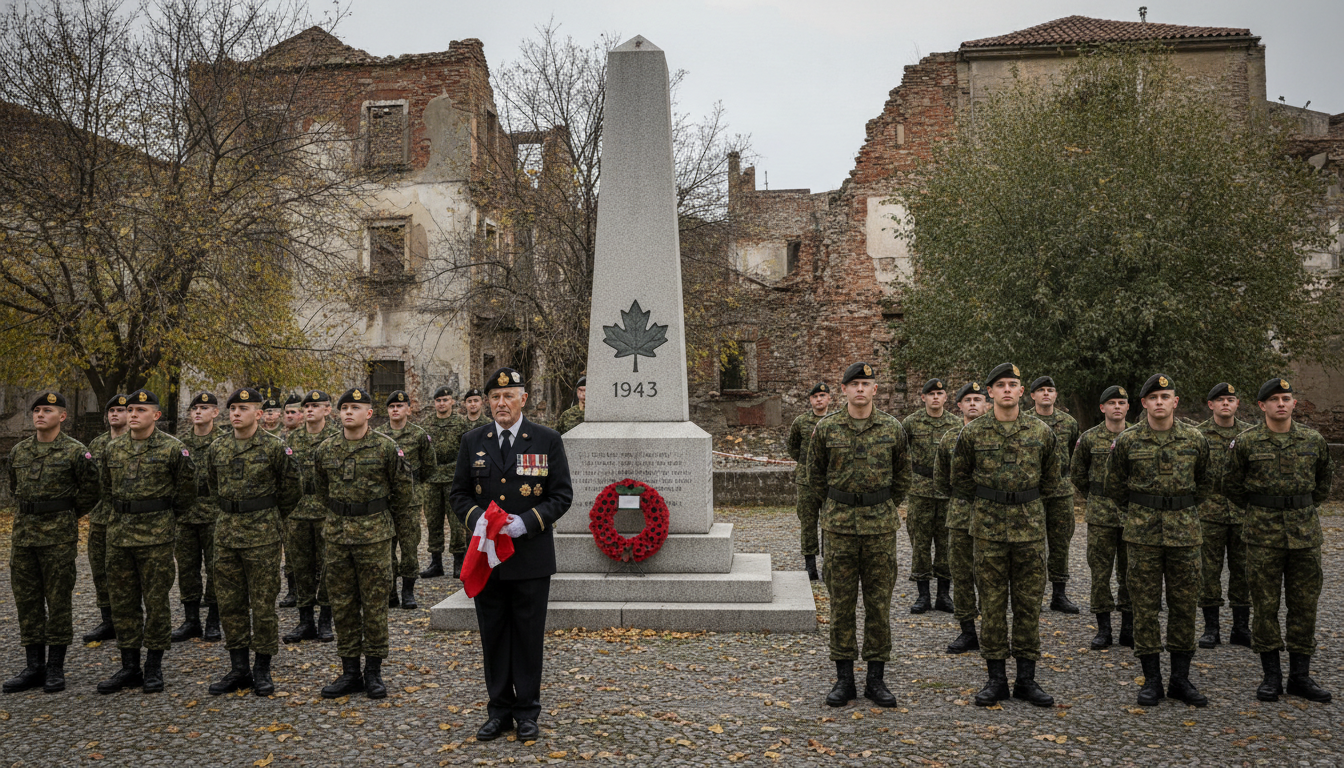
Ortona’s place in Canadian military history has been preserved through remembrance activities, museum exhibits and educational efforts that highlight the battle’s significance in the Italian campaign. Memorials and ceremonies on both sides of the Atlantic mark the sacrifices made there and provide occasions for families and veterans to recall those who served. The battle remains a subject of study for military historians seeking lessons about urban combat, leadership under fire and the limits of traditional tactics in built-up terrain.
For contemporary Canadian audiences, Ortona is often presented alongside other major wartime engagements as part of a broader narrative about Canada’s contribution to Allied victory in Europe. The enduring attention reflects both the scale of the losses and the poignant personal stories that emerged from the fighting.
The memory of Ortona continues to inform how Canadians remember the Second World War and its human consequences.
