
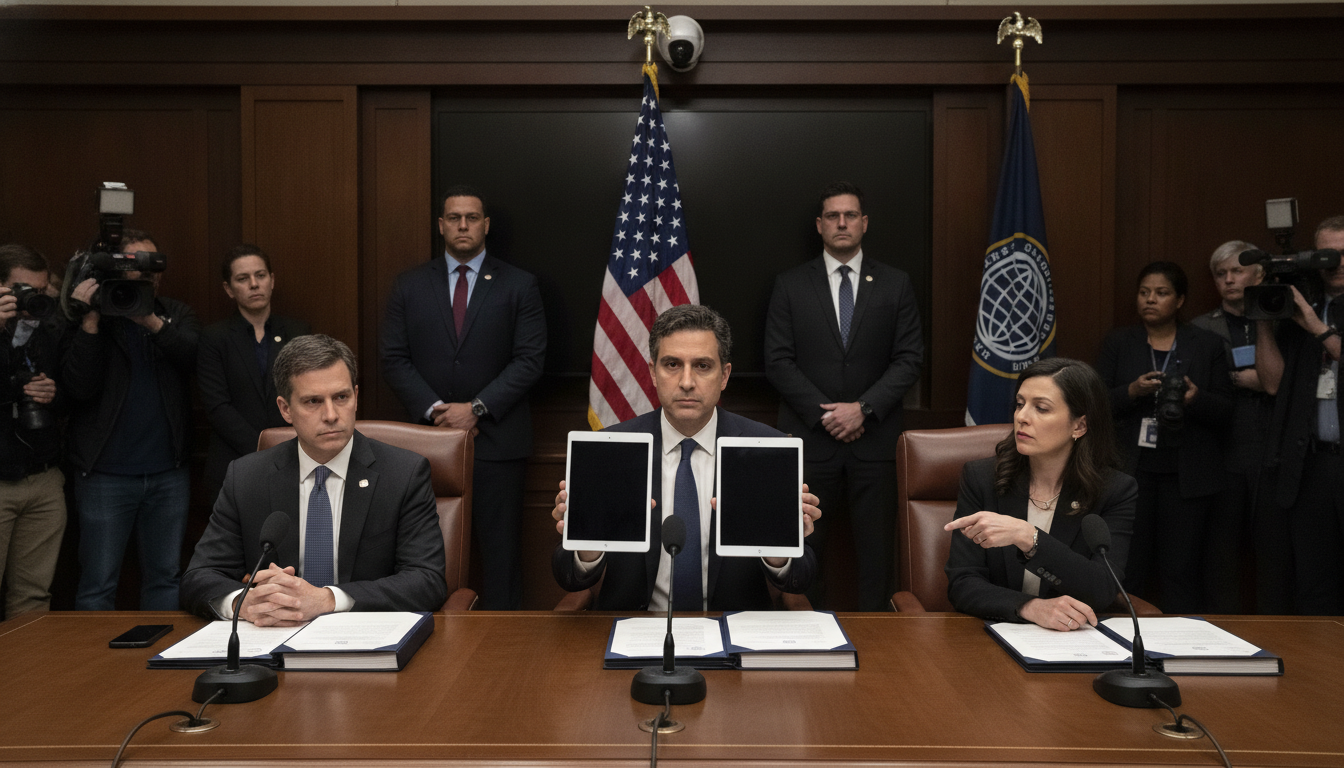
Anthropic export control forces Fable 5 and Mythos 5 offline, sparking cybersecurity and policy alarm
U.S. Commerce Department export control order forced Anthropic to suspend access to Fable 5 and Mythos 5, raising questions about national security and industry oversight.
Anthropic said it disabled access to its newest models after receiving an export-control directive that barred foreign nationals from using the systems, effectively taking both models offline for all customers to comply with the order. (apnews.com)
Government action and company compliance
On Friday evening the Commerce Department delivered a directive to Anthropic invoking export-control authorities that prevent non-U.S. persons from accessing the models, including foreign-national employees working inside the United States. Anthropic said the written order cited national security concerns but provided few details about the underlying rationale. (axios.com)
Anthropic responded by disabling Fable 5 and Mythos 5 worldwide to ensure compliance, a move that the company described as necessary because the directive’s language made segmented access impractical to enforce. The shutdown marked a rare instance in which an administration compelled a U.S. AI lab to revoke access to specific deployed model versions. (investing.com)
Alleged jailbreak and technical dispute
Government officials and other firms cited research suggesting a technique could bypass Fable 5’s guardrails and elicit content that might be useful for cyberattacks. Those reports prompted urgent conversations inside government circles and with private-sector partners about potential risks posed by the newly released models. (axios.com)
Anthropic, and several outside security researchers, contend the reported bypass was narrow and context-dependent — not a systemic failure that rendered the models universally dangerous. Analysts who reviewed the technical write-ups say the exploit involved specific prompt phrasing and multi-step interactions rather than a simple universal jailbreak. (techcrunch.com)
Cybersecurity community pushes back
Dozens of prominent security researchers and veterans have urged the administration to reconsider or narrow the export-control directive, warning that removing advanced defensive tools from practitioners could weaken U.S. cyber defenses. The group argued that some of the model capabilities are used defensively to scan, triage, and simulate attacks, and that restricting access will hamper defenders’ ability to prepare for AI-enabled threats. (techcrunch.com)
Katie Moussouris and other analysts who reviewed the government’s materials said the behavior described in the technical reports should not, in their view, have triggered the emergency export-control step. They emphasized that defensive and research practices often require probing a model’s limits and that overly broad controls can unintentionally curb legitimate security work. (techcrunch.com)
Questions about motive and process
Reporting from multiple outlets suggests the administration’s move followed urgent warnings from private sector actors and a rapid internal assessment by officials, but it also revealed friction between Anthropic and government decision-makers. Some accounts point to a series of high-level calls and exchanges in the days before the order, reflecting a fast-moving, opaque process. (axios.com)
Critics of the action say the government provided scant public explanation and little transparency about the evidence it relied on, creating uncertainty for other companies about when and how similar tools might be constrained in the future. That uncertainty, they warn, could chill innovation or produce inconsistent enforcement across competing firms. (theatlantic.com)
Legal and historical precedent
Export controls have long been used to restrict the transfer of dual-use technologies, from advanced semiconductors to cryptographic tools, but using those mechanisms to curtail access to deployed software models is a novel step. Policy experts note that prior regulatory efforts aimed at cybersecurity tools sometimes produced unintended consequences when legal language proved overbroad. (theatlantic.com)
The current directive raises fresh questions about how export rules will be adapted for rapidly evolving AI capabilities and whether existing regulatory frameworks provide adequate avenues for speedy review, redress, or targeted carve-outs for legitimate defensive research. Observers say clarifying procedures and evidence standards will be critical to avoid repeated emergency interventions. (investing.com)
Implications for industry and national security
The incident signals to U.S. technology firms that national security authorities may act swiftly and unilaterally when officials believe a new system poses a risk, even if the supporting materials are incomplete or contested. Company leaders must now weigh the risk that future models could be constrained by policy decisions beyond their control. (investing.com)
At the same time, cybersecurity leaders warn that depriving defenders of advanced tools limits the nation’s ability to test, harden, and simulate adversary tactics, potentially creating windows of vulnerability. Experts are calling for a faster, more transparent process so regulators and companies can resolve technical disagreements without wholesale suspensions of capability. (techcrunch.com)
The Commerce Department’s order and Anthropic’s compliance have set a new test case at the intersection of frontier AI deployment, national security, and the norms governing research access, and the coming days will determine whether the directive is narrowed, rescinded, or folded into a longer-term regulatory framework.
