
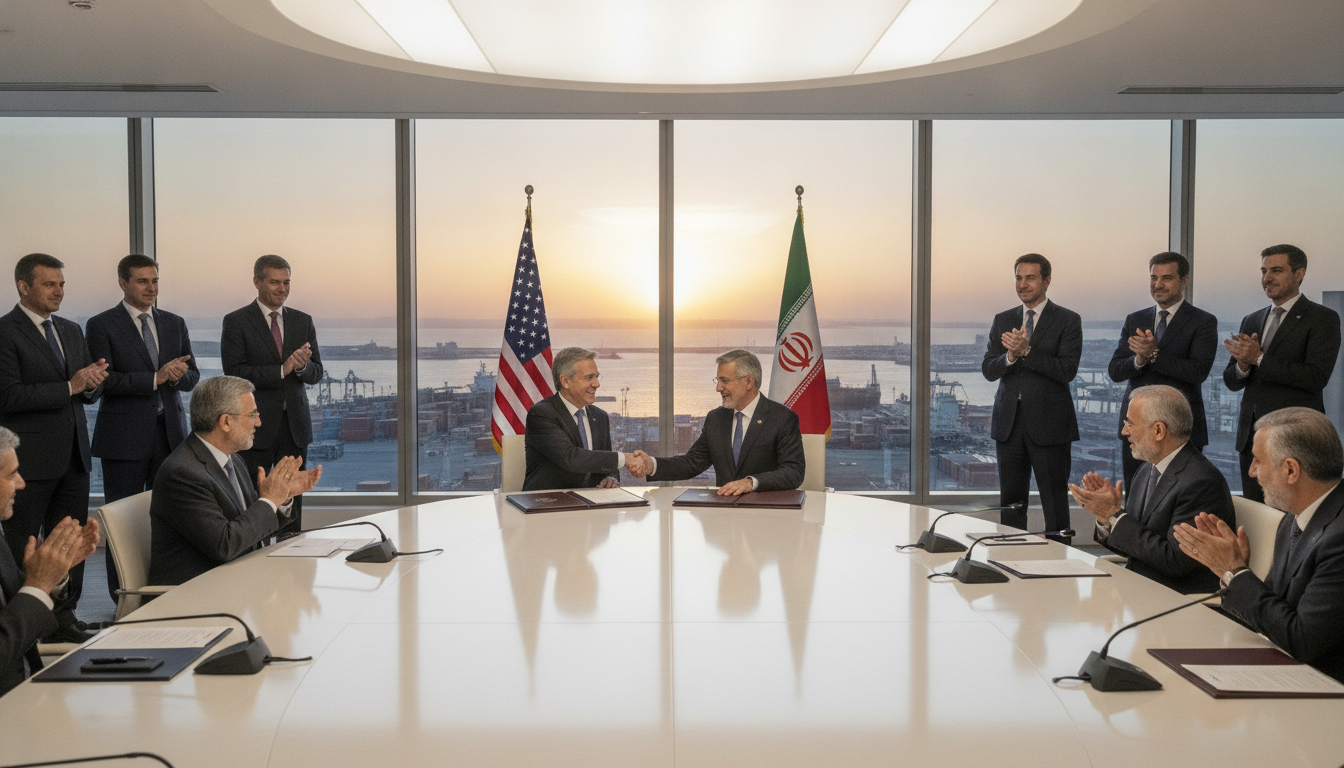
Iran-US ceasefire deal to reopen Strait of Hormuz leaves Tehran wary
Iran-US ceasefire memorandum aims to end months of fighting and reopen the Strait of Hormuz; Tehran doubts relief as sanctions and frozen assets persist.
The Iran-US ceasefire announced this weekend signals an end to almost four months of direct hostilities, but many in Tehran say the memorandum offers only a fragile pause rather than a lasting solution. The agreement, set to be formalized later this week, includes the reopening of the Strait of Hormuz and a US commitment to lift a naval blockade on Iranian ports. Despite that, core disputes over sanctions, frozen assets and Iran’s nuclear programme remain unresolved and are likely to be negotiated at a later date.
Terms of the memorandum and outstanding issues
The preliminary accord reportedly halts offensive operations on multiple fronts and foresees immediate changes to naval deployments affecting southern Iranian ports. Officials from both capitals have framed the understanding as a de-escalatory step while leaving detailed legal text unpublished. Key matters — including the status of Tehran’s nuclear activities, the lifting of US and UN sanctions, and the release of billions in frozen funds — were postponed, prompting warnings that the ceasefire may be temporary.
Strait of Hormuz and the naval blockade
Central to the deal is the Strait of Hormuz, a strategic chokepoint that Iran had largely controlled during the conflict and that global markets watch closely. The memorandum envisions reopening the waterway to commercial traffic without tolls, addressing international insistence on freedom of navigation. In exchange, Washington agreed to remove its naval blockade of Iran’s southern ports, a move that could quickly change the flow of goods into and out of the country.
Economic signals and market reactions in Tehran
Markets in Tehran responded to the announcement with cautious optimism, as currency and stock prices showed immediate improvement. The rial strengthened after hitting historic lows in recent weeks, and Tehran’s equities climbed, reflecting investor hopes for eased trade restrictions. Analysts warn, however, that any lasting economic recovery will depend on the pace and scope of sanctions relief and whether frozen foreign assets are returned in full.
Public sentiment and political fault lines
On the streets of Tehran, reaction was mixed and often skeptical. Many residents expressed relief at a reduction in violence but doubted the government could secure tangible improvements to daily life without comprehensive sanctions relief. Hardline political factions have publicly criticised negotiators for perceived concessions, and pro-state rallies have at times demanded stronger responses to recent attacks against Iranian leaders, underscoring domestic pressure on Tehran’s policymakers.
Regional reactions and Israel’s stance
The agreement has not been welcomed uniformly across the region, with Israel among the most vocal opponents. Officials in Jerusalem have reiterated that they will retain military options and maintain positions in neighboring theatres should Tehran or its proxies act against Israeli interests. The memorandum also reportedly includes a clause to halt Iranian operations in Lebanon, a development that Israel and its allies are watching closely for signs of durable restraint.
The memorandum marks a tactical cessation of hostilities and offers immediate relief to vulnerable supply routes, but it leaves the most contentious and long-term questions unresolved. Whether the Iran-US ceasefire develops into a broader political settlement will depend on follow-up negotiations, the willingness of both capitals to compromise on sanctions and security, and how domestic actors in Tehran and the region react in the coming weeks.
