
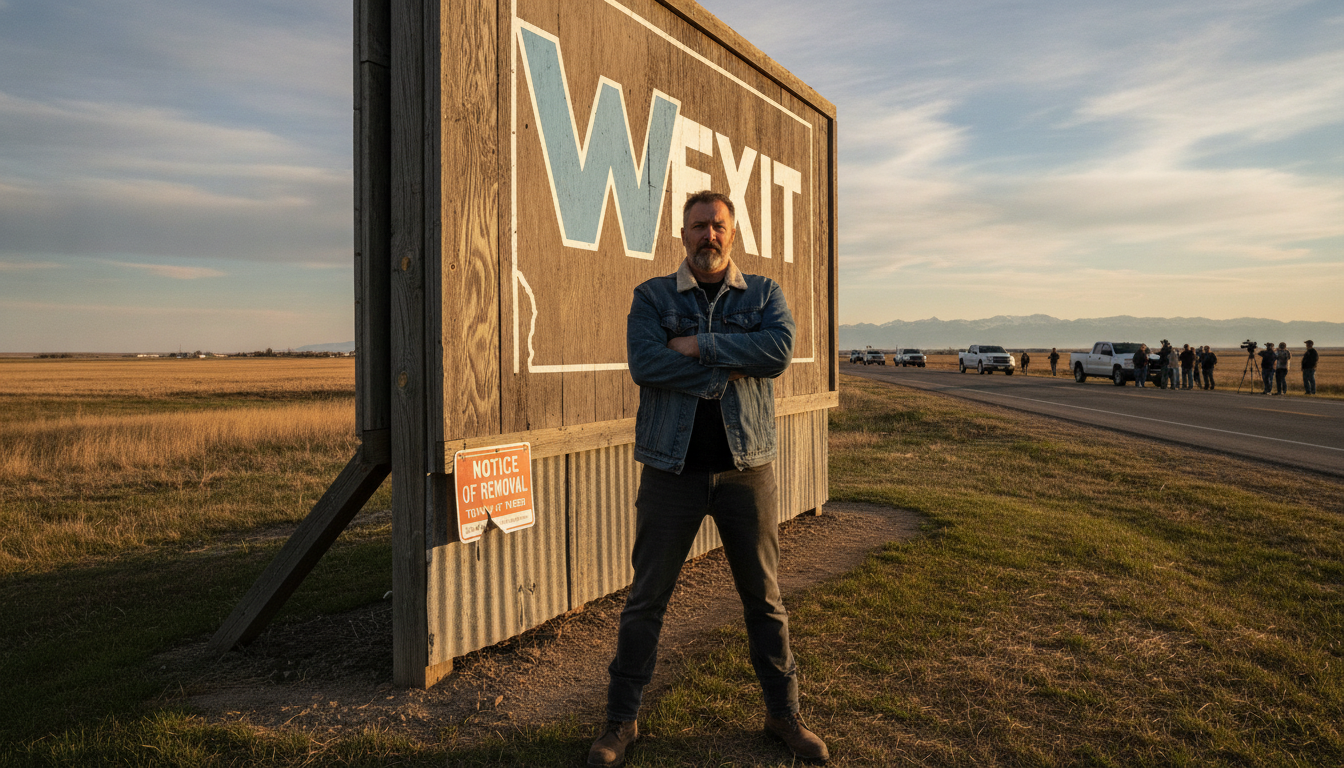
Alberta separatist billboard dispute intensifies as Taber orders removal
A paid Alberta separatist billboard remains on display in Taber despite a town directive, sparking a dispute over political advertising ahead of the Oct. 19 referendum on whether Alberta should pursue separation. The Alberta separatist billboard, a three-metre-tall electronic sign urging "Choose Alberta," is at the centre of a fight between advertiser Cory Morgan and municipal officials who have called for its removal.
Lead sign stays after town letter
The electronic billboard, measuring about three metres in height and six metres across, continues to display the pro-separation message on town land in Taber. Advertiser Cory Morgan says he paid roughly $1,100 for the digital slot through the end of the month and refuses to take the message down after receiving a municipal letter demanding its removal.
Town chief administrative officer Derrin Thibault sent a formal notice to the private billboard operator on June 3, saying the display constituted a nuisance and exceeded the permitted use of the licensed area. The town also posted on social media the same day that the message did not represent the municipality or the broader community.
Town of Taber frames action as licensing and nuisance issue
Municipal officials frame their intervention as an enforcement of licensing rules rather than a political judgment. The June 3 letter cited concerns from multiple residents and asserted that a politically charged advertisement on the municipal digital sign was inconsistent with the terms under which the space is licensed.
Taber’s position, as expressed in public statements, is that the board was intended for certain types of messaging and that the current content has generated repeated complaints. Town staff have not released a formal legal filing, and a municipal spokesperson did not immediately respond to requests for additional comment.
Advertiser stresses free-speech principle and paid placement
Cory Morgan, who identifies with the Alberta independence movement, says his decision to keep the billboard up is rooted in principle as much as publicity. He told reporters he chose Taber because an available advertising slot matched his budget and that he sees the municipality’s demand for removal as a troubling precedent for third‑party political advertisers.
Morgan said he has followed the billboard operator’s terms for purchasing ad time and argues that the town’s attempt to silence the message risks allowing municipal governments to override paid political speech. He emphasized that his dispute is with the town administration and not the people of Taber, whom he described as “fantastic” and welcoming.
Additional signs and local reaction
Since the town’s letter, Morgan said he has purchased two smaller signs in Taber and that a third sign was installed on Sunday. He reported receiving financial contributions from supporters of Alberta’s independence movement and described plans to put up more advertisements ahead of the referendum campaign period.
Reactions among residents and nearby community members have been mixed. Morgan said he has heard from both separatist supporters and federalists hurt by the campaign. Municipal officials have said they received multiple complaints; residents who oppose the message have expressed concern about the politicization of a sign on town land.
Context: referendum, provincial politics and public debate
The dispute unfolds against the backdrop of a province-wide debate and a scheduled Oct. 19 referendum on whether Alberta should remain part of Canada or begin the process leading to a binding separation vote. The referendum was ordered by Premier Danielle Smith, who has defended the vote as a response to years of petitions and public pressure.
Critics, including the opposition New Democratic Party, argue the premier is managing a political tightrope—appeasing separatist elements in her party while courting centrist voters who oppose separation. Polling through recent months has indicated a strong majority of Albertans favour staying in Canada, though sentiment varies across regions and demographics.
Legal and municipal rules under scrutiny
The clash highlights gaps and grey areas in rules that govern advertising on municipal land and digital billboards. Towns typically license advertising space with specified permitted uses, but the boundaries between commercial, community, and political messaging can be ambiguous. Municipal lawyers rarely face cases precisely like this, and precedents vary by jurisdiction.
Legal experts say questions that could be tested include the terms of the town’s license with the billboard operator, whether the town publicly offered the space for political advertising, and whether municipal efforts to remove a paid advertisement run afoul of constitutional protections for political expression. None of those issues have been adjudicated in this dispute to date.
Political messaging, municipal mandate and the line between policy and administration
Taber officials have framed the issue as an administrative matter, urging a focus on municipal duties such as road maintenance, waste collection and animal control. The town’s public statements have stressed that the sign’s message does not reflect the municipality’s views.
Supporters of the billboard argue municipal bodies should not police political content on private advertisements, while officials counter that the town has a responsibility to enforce licensing conditions on property it controls. The dispute underscores the friction that can arise when political debates spill into spaces managed by local governments.
Campaign logistics and the search for ad space
Morgan said locating billboard space has been difficult outside of Taber, citing refusals from other municipalities and advertising operators. He attributed some of that resistance to local opposition and the contentious nature of the separation debate.
Advertising industry sources note that digital signage inventory is limited in many smaller Alberta towns, and operators often prioritize municipal agreements or community partners. Political campaigns and third‑party advertisers can face logistical hurdles securing placements that meet both budgetary constraints and geographic strategy.
Broader implications for third‑party political advertising
Observers say the Taber incident could prompt closer scrutiny of municipal advertising policies across Alberta as the referendum campaign progresses. If other towns follow Taber’s lead in contesting pro‑separation messages, advertisers may pursue legal challenges; conversely, municipalities could refine licensing language to better define acceptable content.
The situation raises a broader question about how public space is used in heated political campaigns and the balance between local regulation and freedom of expression. That debate is likely to intensify as campaign activity picks up ahead of the October vote.
Responses from political leaders and parties
Senior provincial figures have not uniformly weighed in on the Taber dispute, though the separation referendum itself has drawn criticism and support across party lines. Premier Danielle Smith has defended the decision to hold a referendum as an exercise responding to citizen petitions, while opposition politicians have criticized her handling of the issue.
The New Democratic Party has described the referendum as politically risky and suggested the premier is trying to appease different factions at once. Polling data referenced by commentators suggests a majority of Albertans oppose separation, a factor that shapes messaging strategies on both sides of the debate.
What’s next in the Taber dispute
At present, the billboard remains on display, and Morgan has signalled he will continue to post advertisements in Taber. Municipal officials said they expected the sign to be removed under the terms of their letter; it is unclear whether the town will pursue further administrative enforcement or legal action.
The dispute may progress toward a formal legal challenge, or it may be resolved through negotiation between the town, the billboard operator and the advertiser. Either outcome could set a practical precedent for how other Alberta municipalities handle politically charged advertisements during the referendum campaign.
Final paragraph: The Taber billboard standoff is a localized flashpoint in a much larger provincial debate over Alberta’s future, testing the boundaries of municipal authority, advertising practice and political speech. It is likely to remain a topic of contention as campaign activity ramps up in the months ahead and as communities across Alberta confront similar choices about the use of shared public spaces.
