
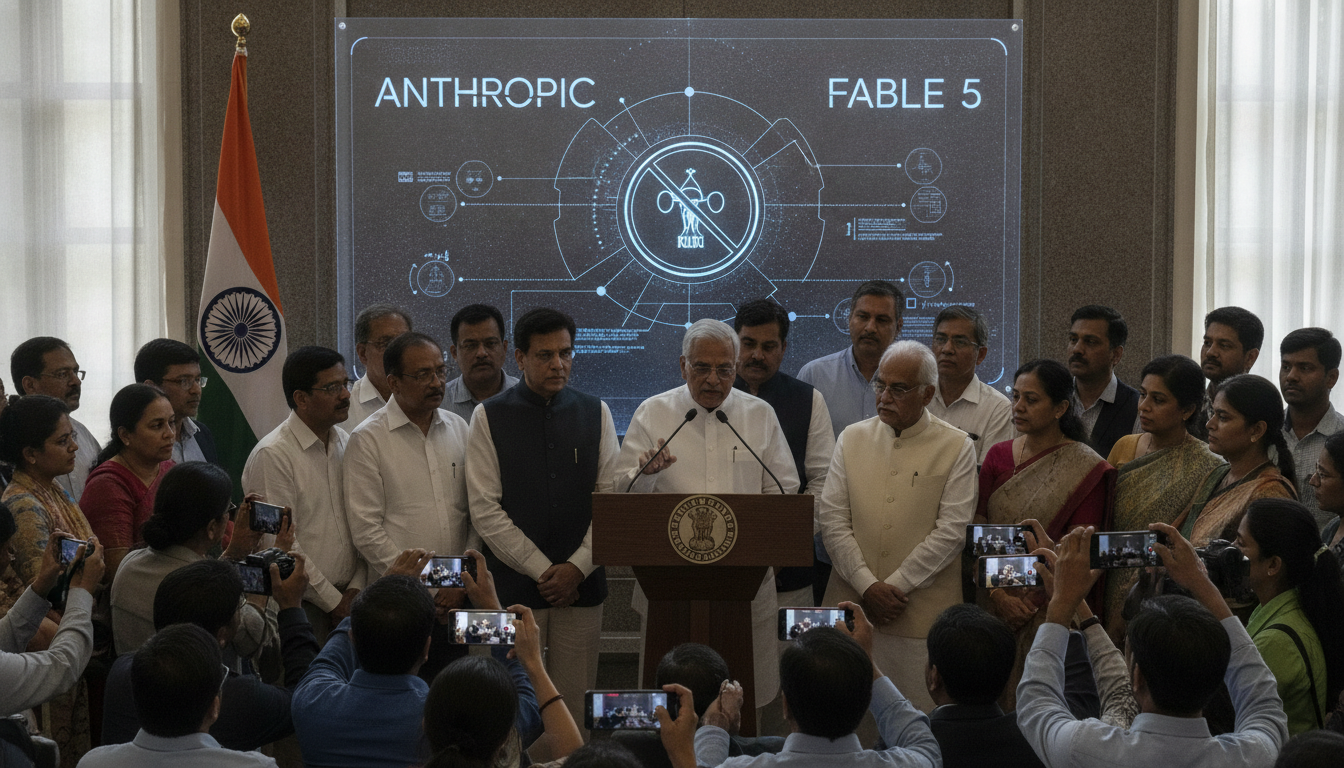
Anthropic suspension of Fable 5 and Mythos 5 fuels debate over India’s AI independence
Anthropic suspension of Fable 5 and Mythos 5 after a U.S. government directive on June 12, 2026 has reignited debate in India about reliance on foreign AI models and the need for domestic capabilities.
Anthropic’s suspension on June 12, 2026 of access to its newest models for foreign nationals, including employees, has unsettled Indian tech leaders and investors who view access to frontier AI as core to competitiveness. The move followed a U.S. government directive that the company says it is contesting, and it came days after Anthropic announced a major partnership to scale enterprise AI in India. The disruption has prompted calls for faster development of homegrown models, greater investment in open-source alternatives, and renewed attention to national AI policy.
U.S. Directive Halts Fable 5 and Mythos 5 for Foreign Nationals
The company said it received a directive to suspend access to its Fable 5 and Mythos 5 models for non-U.S. citizens, a restriction that reportedly affects both customers and foreign national employees. Anthropic has disputed the government’s characterization of the risks that prompted the order, while other reports have suggested the concerns were first raised privately to regulators. The incident has raised questions about how government export and security measures can suddenly reshape commercial AI availability.
Indian Partnerships Suddenly Vulnerable
Anthropic’s recent partnership with a major Indian IT services firm to expand enterprise AI adoption highlighted how closely India’s commercial AI plans are tied to U.S.-based model providers. Companies such as Anthropic and other frontier model developers had been expanding local hiring, opening offices and signing enterprise deals in India, treating the country as a top market outside the United States. The suspension underlines a vulnerability for Indian firms and public-sector buyers that had been integrating the latest models into products and services.
Founders and Investors Push for Sovereign AI
Founders and investors in India responded quickly, with many characterizing the episode as a wake-up call on technological dependence. Venture and startup leaders urged portfolio companies to diversify away from single-provider reliance and to increase adoption of open-source models and locally developed systems. Prominent industry voices called for a far more ambitious national AI strategy and a substantial expansion of funding for compute, cloud infrastructure, and semiconductor capacity to support indigenous model development.
Startups Warn of Operational and Competitive Risks
Startups with distributed teams flagged immediate operational risks, noting that unequal access to frontier models could create competitive advantages for companies whose workforces are entirely within jurisdictions allowed access. Founders of early-stage companies pointed to potential talent and coordination frictions if critical AI tools become subject to geopolitical restrictions. Recent corporate moves that shift work closer to customers and smaller AI-native team structures have already amplified concerns about how global talent flows and AI efficiencies will reshape outsourcing models.
Momentum for Open-Source and Domestic Models
The suspension has given fresh momentum to Indian efforts focused on open-source and domestic foundational models, as well as specialized applications built atop existing systems. A small but growing set of local labs and startups are pursuing foundational research, open releases and lower-cost alternatives focused on regional markets. At the same time, many firms in India continue to build verticalized AI products that rely on larger foundation models, leaving policymakers and companies to weigh whether to accelerate investments that would reduce dependency on foreign providers.
Policy Debate Intensifies Over Strategic Autonomy
Policy experts say the incident will sharpen debates inside government about strategic autonomy and the extent to which critical digital infrastructure should be domestically controlled. Some suggest the episode could provoke a nationalist backlash and push New Delhi to scale national programs and incentives for compute, talent development, and private investment in deep tech. Proposals under discussion range from large capital funds and credit guarantees to targeted support for data centers and semiconductor supply chains, though industry voices caution that capital alone will not address talent and execution gaps.
The Anthropic suspension on June 12, 2026 has crystallized a broader dilemma for India: whether to accelerate a costly and complex drive toward indigenous frontier models, double down on open-source collaboration, or deepen pragmatic partnerships while accepting geopolitical risks. Whatever path policymakers and industry choose, the episode has already reframed conversations about how control of foundational AI systems intersects with national competitiveness, security and economic strategy.
