
Alberta commissions University of Calgary for an Alberta secession analysis ahead of Oct. 19 referendum
Alberta hires the University of Calgary to produce an Alberta secession analysis of economic, transition and fiscal impacts, due late summer ahead of the Oct. 19 referendum.
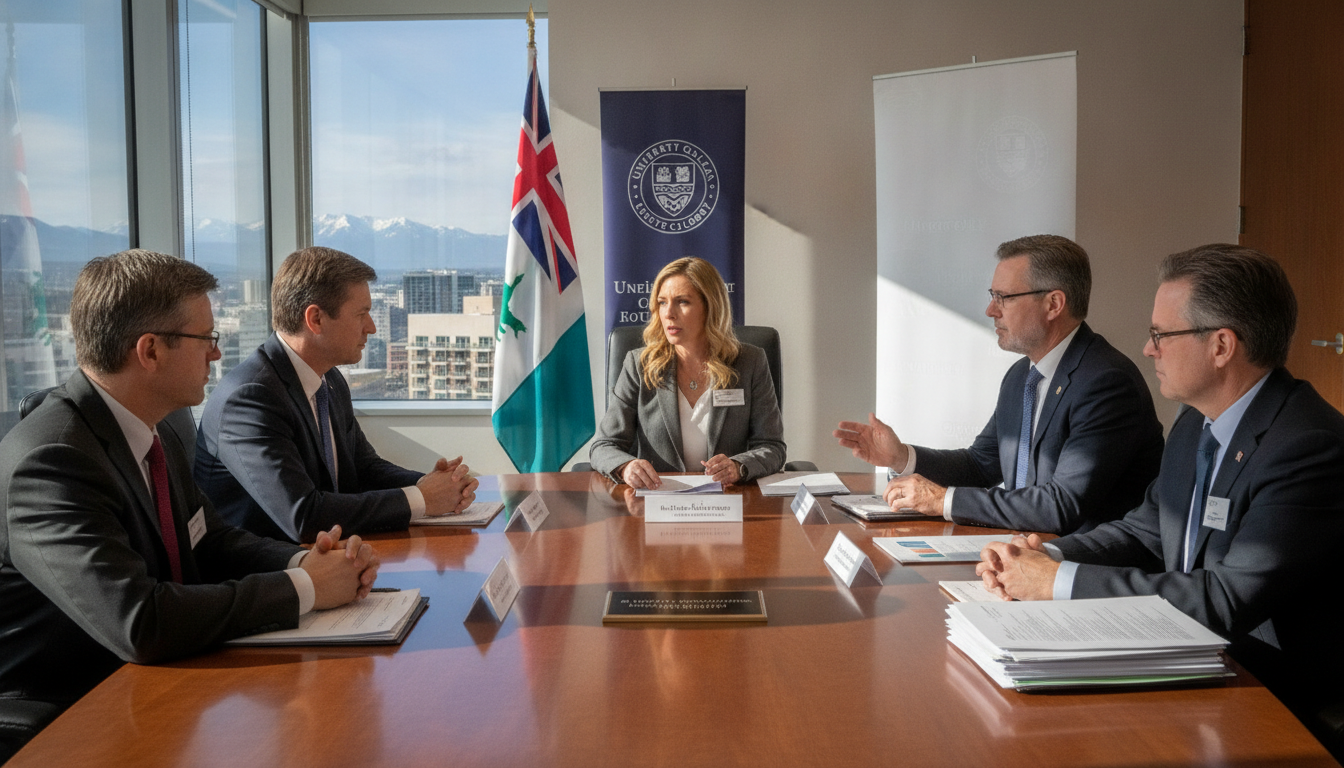
The Alberta government has chosen the University of Calgary’s School of Public Policy to produce an Alberta secession analysis that will examine the economic consequences if the province pursues separation from Canada. The commission, announced in a provincial news release, comes as the government prepares voters for an Oct. 19 referendum that asks whether to stay in Canada or proceed to a binding vote on secession. Finance Minister Jason Nixon said the province wants “objective, evidence-based analysis” to inform Albertans before they cast ballots.
Provincial announcement and mandate
The government’s release specified that the report will focus on transition costs, broader economic impacts, and potential savings and risks tied to separation. Officials said the analysis is expected to be published in late summer and will serve as an evidence base for public debate in the months leading to Oct. 19. The announcement framed the study as an effort to provide clear, credible information rather than as advocacy for any particular outcome.
Scope and timeline of the University study
The School of Public Policy will assess immediate and longer-term fiscal implications, trade and investment risks, and the logistical costs of creating new institutions or replacing federal services. The province asked the university to quantify transition expenses alongside potential economic benefits or efficiencies that proponents of separation have argued could follow. The timeline given by the government places the report’s publication in late summer, leaving several weeks for public review before the October referendum.
Advisory panel to guide and review work
In parallel, the government named an advisory panel to provide input to both the university and the government during the research phase. The panel will also review the university’s findings and deliver an independent written assessment once the report is completed. The province described the dual-track approach as a way to combine academic analysis with practical advice from experienced public and private sector figures.
Panel composition and backgrounds
The advisory panel includes prominent figures drawn from academia, provincial politics and industry. Economist Jack Mintz, who has advised the United Conservative government on policy issues and chaired a previous economic recovery council, is a member of the panel. Also listed are former Alberta finance and energy minister Ted Morton, Cenovus Energy board chair Alex Pourbaix, Business Council of Alberta president Adam Legge, and former Saskatchewan finance minister Janice MacKinnon.
What the study will examine economically
Officials said the study will examine transitional costs such as establishing border controls, replacing federal programs, and addressing debt and currency questions, as well as trade and investment impacts. Analysts will be asked to estimate potential changes in public revenues and expenditures, the effect on interprovincial commerce, and risks to sectors such as energy and finance. The university’s work is expected to model scenarios rather than deliver a single forecast, reflecting a range of assumptions about policy choices and market reactions.
Role of the independent assessment
The advisory panel’s independent written assessment will accompany the university report to provide context and critique from experienced policy practitioners. The province stated that the assessment will help interpret technical findings for the public and offer practical considerations for any transition planning. Government officials said the combined outputs will be made available before voters make their decision in October.
The decision to commission an Alberta secession analysis has already drawn attention across political and business communities, touching on constitutional, legal and economic questions that extend beyond the scope of a single report. As the Oct. 19 referendum approaches, the university’s work and the panel’s assessment are likely to become focal points in a wider public conversation about the province’s fiscal future and its relationship with the rest of Canada.
