
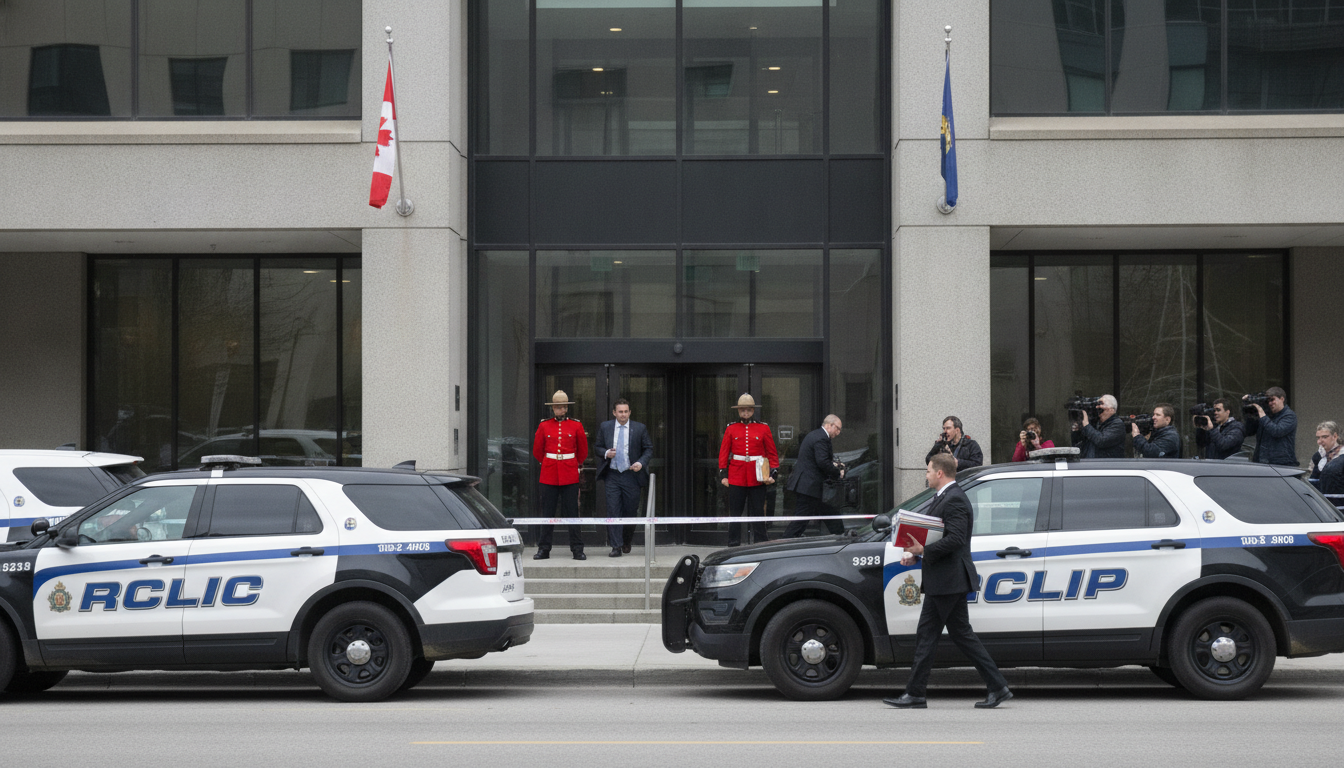
Calgary City Hall corruption probe widens after Bankview vote and search warrants
RCMP seek extended access to phones as Calgary City Hall corruption probe examines alleged vote-buying tied to a July 16, 2025 Bankview zoning decision.
The RCMP and Calgary Police Service are investigating allegations that money and improper campaign donations were offered in exchange for a council vote, part of a widening Calgary City Hall corruption probe revealed in recent court documents.
Those documents, filed as part of an application to extend search warrants, show officers executed warrants at the homes of former mayor Jyoti Gondek, former councillor Sean Chu, and current Ward 10 councillor Andre Chabot.
Police say the inquiry focuses on suspected municipal corruption, obstruction and fabrication of evidence, though no charges have been laid and the allegations remain unproven in court.
Search warrants and the warrant-extension application
The court filing to extend warrants seeks continued retention of devices and records seized during earlier police action, including a request to keep the former mayor’s phone for additional months.
An affidavit by Detective Matt White, a Calgary Police Service investigator seconded to the RCMP unit handling the case, outlines the reasons police want more time to review encrypted or locked material.
Police do not allege that the investigation is complete; the extension application indicates investigators believe phones and other electronic evidence may contain conversations or records relevant to whether donations or other benefits influenced council decisions.
Investigators say they initiated their probe after information surfaced about a proposed land-use change for downtown’s Bankview area that was before council on July 16, 2025.
How the Bankview vote unfolded at council
The zoning application sought to create a Direct Control District for several properties in Bankview and initially produced a 6-6 tie among councillors when it came before the chamber.
Former mayor Gondek was not present for that initial vote, according to the court documents, and Ward 4 councillor Sean Chu voted in opposition at that time.
Later in the same meeting, Chu moved to reopen the matter, saying he had “voted wrong” during the earlier ballot. After a motion to reconsider, the proposal passed by an 8-5 margin with Gondek present and voting in favour.
Police underscore that the reconsideration and the change in Chu’s vote occurred roughly four months before the municipal election in the fall of 2025, a timing prosecutors say appears relevant to assessing motive and influence.
Allegations involving CivicWorks and campaign donations
Court documents identify a Calgary-based operator of a developer-services company, CivicWorks, as a central figure in the allegations. Police say the individual, identified in the affidavit as David White, was accused of offering campaign donations that exceeded permitted limits to encourage councillors to table a reconsideration motion.
According to the affidavit, officers seized White’s phone on Sept. 16, 2025, and report the device “yielded evidence of the offences” under investigation. White’s lawyer has declined to comment publicly on those assertions.
Investigators also state they found evidence suggesting former mayor Gondek provided guidance to White on a tactic to approach another councillor to secure a reconsideration, a development that prompted police interest in her communications.
Evidence handling and returned devices
While police seized multiple phones during the search-warrant operation, the court filing and subsequent reporting indicate some devices were later returned to their owners.
White’s phone and, the reporting indicates, councillor Andre Chabot’s phones were returned after initial forensic review, but investigators continue to seek access to Gondek’s phone. Police say they have been unable to unlock that device because they do not possess the passcode.
Gondek’s legal counsel, Rebecca Snukal, challenges the extension request and describes the investigators’ application as speculative. Snukal has argued in filings that her client’s vote would have been numerically unnecessary to the outcome, a point she says is relevant to whether alleged counselling on tactics amounts to improper influence.
The return of some phones and the retention request for others has underscored for investigators the technical and legal hurdles involved in modern electronic evidence collection.
Responses from councillors, lawyers and City Hall
City officials have been circumspect in public comments while the probe continues, with the current mayor, Jeromy Farkas, noting the situation raises “important questions” about influence at City Hall.
Farkas told reporters he and other councillors plan a motion to explore a municipal lobbyist registry, intended to increase transparency about who is seeking to influence council decision-making and on whose behalf meetings occur.
Not all councillors agreed that a registry would address the immediate concerns raised by the RCMP investigation. Ward 2 Coun. Jennifer Wyness, who served on the prior council, called a registry a “headline grabber” and urged colleagues not to pre-empt the outcome of the police inquiry with policy fixes.
Counsellors and lawyers for individuals named in the filings have been mostly defensive. Allan Fay, who represents David White, said his client would not comment. Counsel for Sean Chu did not respond to requests for comment, and Snukal is preparing to seek cross-examination of police at a hearing scheduled later this month.
Calls for a lobbyist registry and governance changes
The mayor’s proposal for a municipal lobbyist registry reflects growing attention at City Hall to transparency and accountability mechanisms. Farkas has argued Calgarians deserve clarity about who is meeting with decision-makers and the interests they represent.
Proponents say a registry could log paid lobbying activity and create public records of contacts and topics discussed, helping reporters and citizens track influence on land-use decisions and other municipal matters.
Opponents and sceptics caution that a registry would not necessarily prevent covert influence, and that it could become politically contentious if introduced while an active criminal investigation remains unresolved. They also note councillors already disclose certain meetings, and that registries require resources and clear rules to be effective.
City administration and council staff will be asked to prepare options and legal analyses if councillors formally move to pursue a registry, which could include thresholds for registration, disclosure timelines and enforcement mechanisms.
Legal next steps and potential outcomes
The immediate legal step in the file is a judicial consideration of the RCMP’s request to extend the period during which investigators may keep and examine seized materials, including the former mayor’s phone.
If the judge grants the extension, police would retain custody of devices while forensic and investigative teams attempt to recover encrypted or locked content, seek court orders for access, or pursue other lawful means to examine data.
Should evidence develop that meets prosecutorial thresholds for criminal charges, the file could proceed to charges related to municipal corruption, exceeding donation limits, obstruction or fabricating evidence. The RCMP has not announced any charges and maintains that allegations are under active investigation.
If no charges are laid, the public and council may still pursue administrative or policy changes, and affected individuals could seek return of property and potentially challenge investigative steps through the courts.
Public trust and the municipal election context
The case has reignited debate about the conduct of elected officials and the role of developers and third parties in municipal governance. The timing of the alleged events — the Bankview reconsideration vote in July 2025 and the 2025 fall election months later — has drawn particular scrutiny.
Observers note that even unproven allegations can erode public trust and complicate council operations, prompting some councillors to call for preventative reforms while others urge patience until investigators complete their work.
For residents of Calgary, the probe has introduced questions about who influences land-use decisions near established communities like Bankview and how safeguards can be strengthened without undermining due process for those under investigation.
The RCMP’s continued interest in electronic communications reflects broader trends in investigations where digital records can be central to establishing intent and coordination.
Investigators emphasize that technical obstacles such as encryption, account access and device passcodes can prolong examinations, and that judicial oversight governs how long evidence can be retained while inquiries proceed.
As the matter moves through the court and council processes, Calgarians and municipal stakeholders will be watching both the legal outcomes and any policy responses council chooses to pursue.
The extension hearing and any rulings on the warrants will likely determine how much additional evidence investigators can lawfully obtain and whether that evidence suffices to support criminal charges or other actions.
Until then, the RCMP has affirmed the matter remains an active investigation, and officials have urged caution in drawing conclusions while legal processes continue.
The coming weeks will include a judicial hearing on the warrant extension and potential cross-examination of investigative witnesses, after which the scope of retained evidence and next investigative steps should become clearer.
Public debate at City Hall about transparency measures such as a lobbyist registry is expected to proceed in parallel, with councillors weighing proposals that would change how external influence is recorded and reported.
Whatever the legal outcome, the episode has prompted renewed scrutiny of municipal decision-making and the safeguards that govern interactions between developers, consultants and elected officials.
Calgary’s municipal leaders face a choice about whether to enact structural reforms now or to await the conclusion of the RCMP probe before implementing changes to disclosure and lobbying rules.
The judicial hearing and subsequent decisions by council will shape not only the legal resolution of the allegations but also the policy landscape for lobbying and transparency in Calgary’s civic governance.
Investigators and legal teams preparing for the next court steps say they will present evidence according to judicial timelines and remain subject to the protections and standards of the criminal process.
For residents concerned about governance and influence at City Hall, the case underscores the importance of accessible records and robust rules governing interactions between private interests and public decision-makers.
The judicial review of the warrant-extension request and any policy measures council adopts in response will together determine how Calgary addresses questions raised by this investigation.
The RCMP and Calgary Police Service continue to investigate, and a hearing on the extension of search warrants is scheduled for later this month.
Calgarians will be watching both the judicial process and council deliberations as the city confronts the legal and governance issues arising from the Bankview vote and related allegations.
The outcome of the investigation, any subsequent charges, and council’s policy choices will collectively influence public confidence in local government and the transparency of municipal decision-making in Calgary.
