
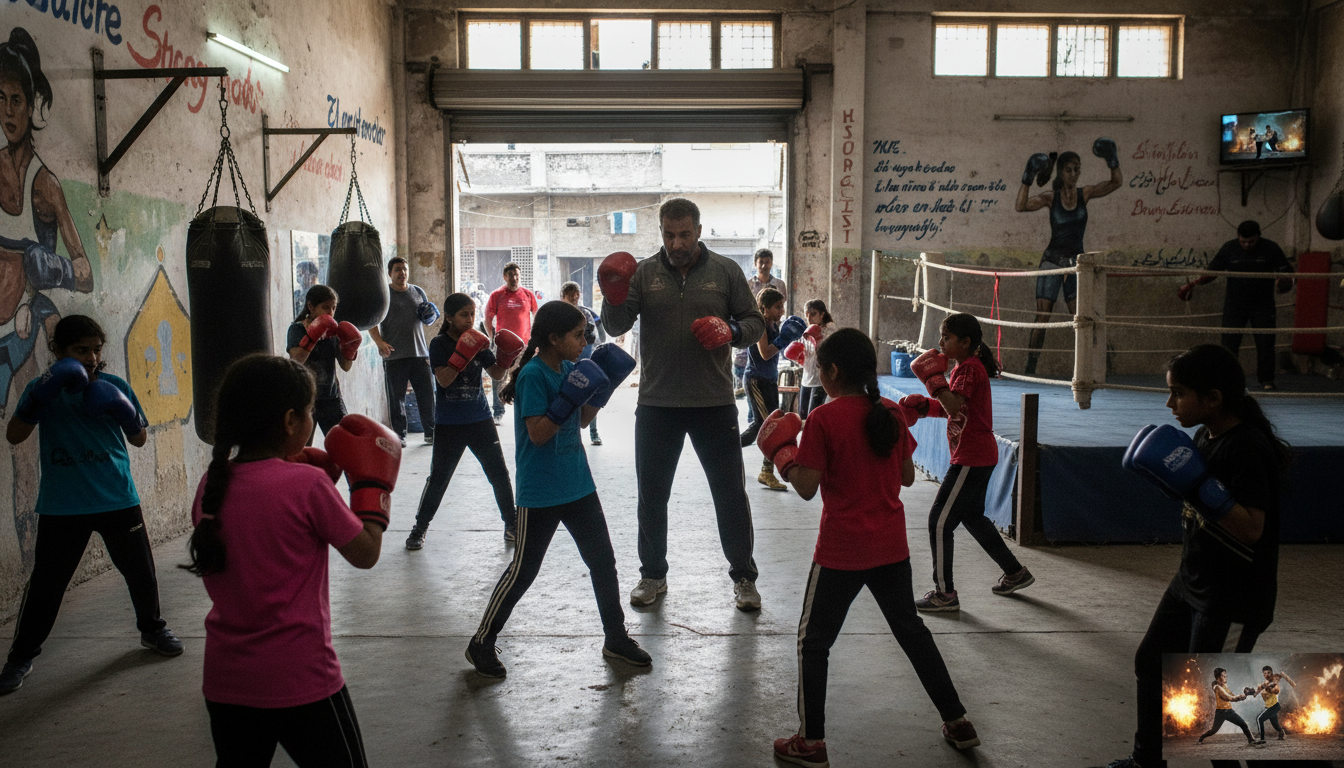
Lyari girls boxing: Karachi coach trains female fighters to challenge stigma, produce champions
Karachi coach Younus Qambrani trains girls in Lyari through boxing, producing champions while fighting stigma and seeking funding for a portable ring now.
Lyari girls boxing has become a grassroots movement in Karachi as coach Younus Qambrani runs daily sessions for girls at his Pak Shaheen boxing club, combining sport and self-defence training. The programme has produced district and regional competitors and helped reshape public perceptions of the neighbourhood. Qambrani’s effort comes amid wider debate over Lyari’s image after recent Bollywood films portrayed the area primarily as a zone of violence.
Coach Younus Qambrani opens boxing to girls
Qambrani, now in his 60s, founded Pak Shaheen in 1992 and formally opened the gym’s doors to girls in 2013, starting with his daughter and a handful of neighbours. He teaches basic technique, footwork and defensive drills with a focus on discipline and safety, using simple equipment and improvised tuition where necessary. The sessions emphasize that boxing is both a sport and a practical means of protection, a philosophy Qambrani describes as preparing students “for peace by being prepared for war.”
Qambrani’s approach relies on community trust and persistence rather than large budgets, and he uses local networks to identify promising young athletes. Girls aged eight to 16 now train almost daily and travel to city tournaments every few months, gaining ringside experience that was rare for women from Lyari a decade ago. The training has fostered a small but steady pipeline of female boxers who compete at district and national events.
Security operations curbed open gang warfare
Lyari’s reputation for gang violence peaked in the 2000s and early 2010s when rival criminal syndicates dominated parts of the neighbourhood, leading to large-scale confrontations and significant civilian casualties. In 2012, coordinated police action and paramilitary deployments known locally as Operation Lyari broke the influence of the main gang hierarchies and reduced visible armed clashes. That security shift allowed civic life and sports activities to re-emerge more visibly, though pockets of crime and social challenges remain.
Lyari’s sporting heritage and cultural mix
Long before recent headlines, Lyari was Karachi’s oldest recorded settlement and a multicultural working‑class hub shaped by maritime labour migration and colonial-era port development. The neighbourhood’s residents include Baloch, Sindhi, Marathi, Gujarati and Afro-Baloch communities, and that diversity helped produce rich musical, culinary and sporting traditions. Football and boxing have deep roots in Lyari; generations of local athletes have kept community clubs and informal tournaments alive even through difficult decades.
Scholars and local advocates point out that Lyari’s identity has always been broader than depictions focused solely on violence, encompassing labour movements, cultural memory tied to East Africa and the Gulf, and a thriving street-level arts scene. These roots have provided a resilient social fabric that coaches like Qambrani draw upon when recruiting and mentoring young athletes. Community sport has acted as both a safety valve and a platform for social mobility.
Local athletes reach national and international rings
Pak Shaheen and other Lyari clubs have produced competitors who have reached regional stages, including entries at the South Asian Games and district championships in Karachi. Notably, Aliya Soomro, who began training at Qambrani’s club, captured international attention after winning a WBA Asia title with a first-round knockout. Such results have given younger boxers local role models and helped normalize women’s participation in combat sports.
Participation in government-supported training camps and district tournaments has expanded since the mid-2010s, and municipal and provincial associations have started to include women’s categories more regularly. Coaches say that competitive success strengthens calls for greater investment in facilities and equipment, as athletes need regular sparring, medical support and safe venues to progress.
Critics say Dhurandhar simplifies Lyari’s story
Recent Bollywood films set in Lyari have drawn criticism from academics and residents who argue that cinematic portrayals reduce the neighbourhood to a backdrop of crime and hypermasculinity. Critics say films such as Dhurandhar and its sequel foreground gang narratives while eliding Lyari’s cultural depth, sporting history and civic life. Social anthropologists contend that this one-dimensional framing reinforces stereotypes and obscures how communities have rebuilt social institutions and youth programmes.
Local voices say the films’ dramatization matters because mass media shapes external perceptions, which in turn affect investment, tourism and even policy attention. Community leaders and historians urge a more nuanced portrayal that recognizes Lyari’s long-standing contributions to Karachi’s labour movements, sport and popular culture.
Club expansion plans hinge on funding for portable ring
Despite the progress, Qambrani says resources are his biggest obstacle: he aims to buy a folding portable boxing ring to take training into schoolyards and reach girls who cannot travel to the club. The portable ring would allow coaches to run safer sparring sessions at temporary community sites and expand outreach across Lyari’s densely populated lanes. Currently he scours local suppliers and appeals to charities and sports associations for support, but finds few ready to fund the modest purchase.
Qambrani’s plans also include coaching certifications for women and partnerships with local schools to create regular training slots for girls. He argues that small capital investments would yield outsized social returns—reduced vulnerability for girls, new pathways into sport, and an altered narrative about Lyari in national conversation.
The rise of Lyari girls boxing underlines how community sport can challenge stereotypes and open opportunities even where public resources are limited. The programme’s athletes and their coach are now asking for modest financial backing to expand training, increase safety, and ensure that boxing remains a viable route to confidence and competition for the neighbourhood’s young women.
