
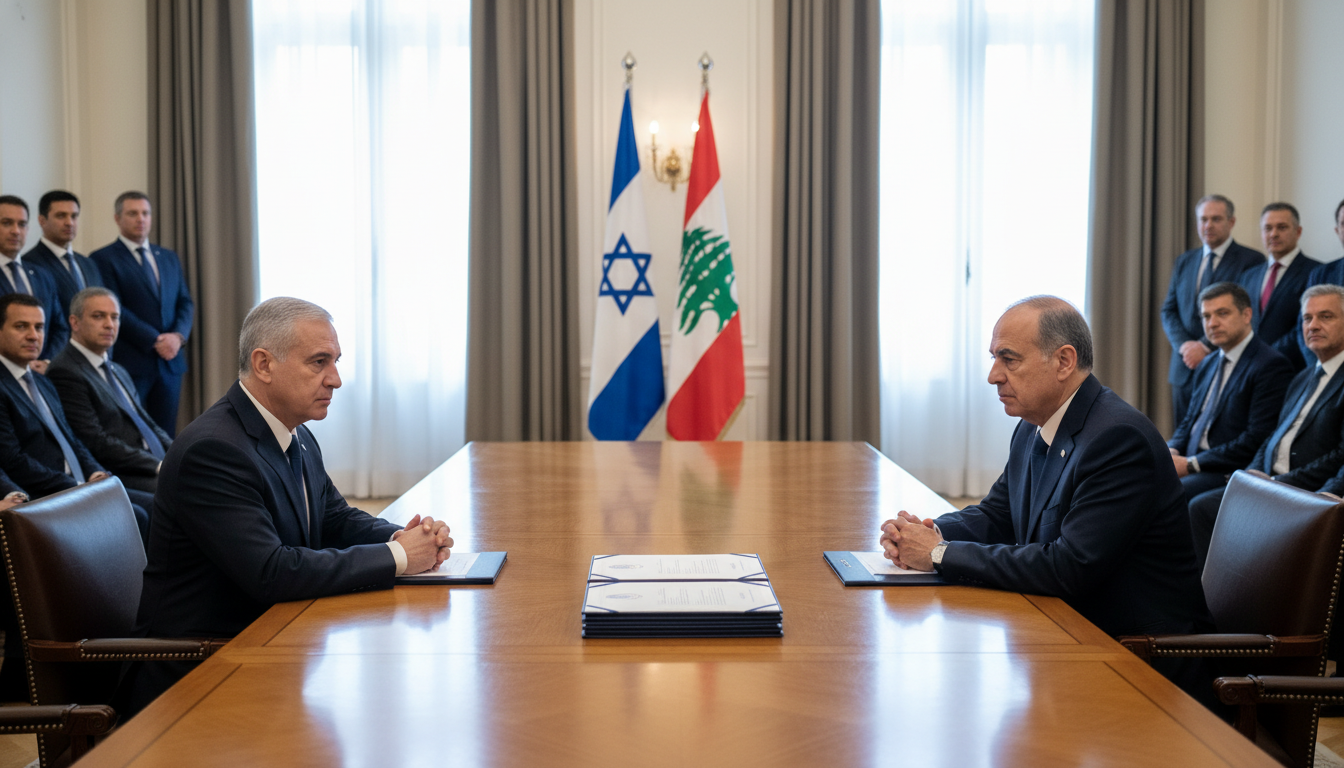
Israel and Lebanon Agree to Renew Cease-Fire After U.S.-Mediated Talks
Israel and Lebanon cease-fire renewed after U.S.-mediated talks in Washington; agreement hinges on Hezbollah pulling back from the South Litani sector.
The governments of Israel and Lebanon announced on June 4, 2026, that they have agreed to renew a cease-fire following intensive U.S.-mediated negotiations in Washington, D.C. The deal, officials said, is expressly conditional on the complete cessation of hostilities by Hezbollah and the removal of its operatives from the South Litani sector. The agreement aims to halt cross-border exchanges and reduce the immediate risk of a wider confrontation in the region.
Agreement reached in Washington
The cease-fire was brokered during talks hosted by U.S. mediators who convened representatives from both capitals in an effort to de-escalate recent border clashes. Delegations said the renewed lull would stand only if the armed group Hezbollah complies with the terms laid out at the negotiating table. U.S. officials described the arrangement as a temporary measure intended to create space for continued diplomacy and monitoring.
The negotiators emphasized that the pact reflects a fragile consensus rather than a final settlement, with further consultations expected in the coming days. Both sides signaled a willingness to maintain communication channels established during the Washington meetings to address any violations swiftly.
Cease-fire conditional on Hezbollah withdrawal
Central to the agreement is a requirement that Hezbollah halt all fire into Israel and withdraw its fighters from the South Litani area in southern Lebanon. Lebanese and Israeli officials made clear that the cessation is contingent on those steps being implemented on the ground. Observers noted that enforcing such terms will require robust verification mechanisms and cooperation from local actors.
Hezbollah, which is backed by Iran, was explicitly referenced as the key variable determining whether the truce will hold. The Lebanese state’s control over armed groups in the south remains tenuous, raising questions about how quickly the stipulations can be translated into action.
Security arrangements and monitoring plans
The parties discussed measures aimed at preventing immediate flare-ups, including patrols, information-sharing, and potential observer roles by third parties. U.S. mediators pressed for arrangements that would allow rapid reporting and response to allegations of violations. Military planners from both sides reportedly explored buffer arrangements along sensitive frontier areas to reduce the chance of accidental clashes.
International monitors could be deployed to verify compliance, officials said, though details on mandate and personnel were left for subsequent negotiations. Any monitoring architecture will need the consent of Beirut and coordination with the United Nations Interim Force in Lebanon if it is to operate effectively.
Regional implications and diplomatic signaling
The truce carries significance beyond the immediate border, sending a signal to regional patrons and partners that diplomacy can temporarily check escalation. Washington framed its role as helping to stabilize the frontier and prevent the conflict from drawing in additional regional actors. Analysts warned, however, that the arrangement does not remove the underlying tensions that have driven confrontations for years.
Iran’s support for Hezbollah complicates enforcement, and the agreement’s success will partly depend on how external backers respond to calls for de-escalation. Regional capitals will be watching closely for signs that the cease-fire either consolidates or unravels.
Humanitarian and civilian concerns along the border
Civilians on both sides of the Israel-Lebanon frontier reported displacement and damage during recent exchanges, underscoring the human cost that the cease-fire seeks to address. Humanitarian groups have urged rapid restoration of services and safe access for aid into affected communities. Officials in both countries said they would prioritize deconfliction measures to reduce civilian harm while the truce is in effect.
Local authorities also face immediate needs for clearing unexploded ordnance and repairing infrastructure damaged in recent incidents, tasks that will require funding and coordination across lines of control. The truce could ease those operations if it holds long enough to permit safe movement.
Next steps and risks to the cease-fire
Both governments indicated they would monitor compliance closely and reconvene if violations occur, with the United States offering to remain engaged as a mediator. The durability of the renewed cease-fire will depend on Hezbollah’s actions and on whether local commanders can be persuaded to adhere to the terms. Any breakdown could prompt rapid escalation and complicate international diplomatic efforts.
For now, officials say the pause offers a window for stabilizing the border and exploring longer-term arrangements, but they caution that the situation remains precarious and subject to rapid change.
The renewed cease-fire marks a cautious step toward reducing immediate hostilities along the Israel-Lebanon frontier, but its fate will be determined by implementation on the ground and by the behavior of armed actors whose cooperation is not guaranteed.
