
Canada requests CUSMA review, seeks 16‑year renewal ahead of July 1 deadline
Canada asks U.S. and Mexico to start a CUSMA review aiming for a 16‑year renewal; LeBlanc meets U.S. trade representative as July 1, 2026 deadline approaches.
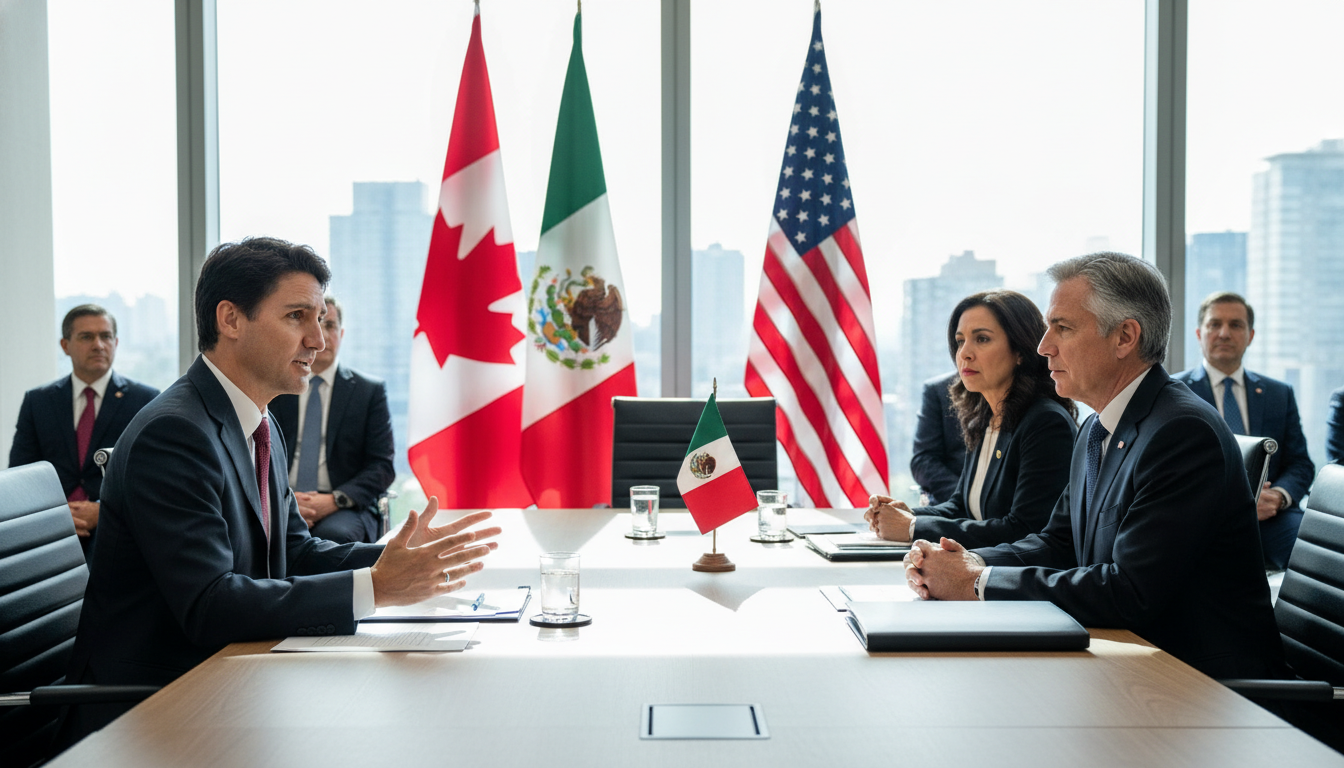
Canada has formally notified the United States and Mexico that it wishes to begin a CUSMA review, recommending a 16‑year renewal of the trilateral trade pact and signalling Ottawa’s intent to seek improvements. The CUSMA review was outlined in a letter sent on June 1, 2026 by Dominic LeBlanc to the U.S. Trade Representative and Mexico’s economy minister. With a July 1, 2026 decision point approaching, the three countries face the choice to open revision talks, withdraw, or defer action until next year.
Formal notice and Ottawa’s rationale
In his June 1 letter, Minister Dominic LeBlanc told his counterparts that Canada is prepared to start the formal review process of CUSMA to determine whether the agreement can be strengthened. Ottawa framed the initiative as an opportunity to assess the pact’s performance and to identify targeted updates that reflect evolving economic conditions. The letter cited the agreement’s role in supporting growth and competitiveness across North America while urging partners to consider renewal for 16 years.
LeBlanc’s communication followed internal consultations and reflects a strategic decision by Canada to engage now rather than risk ceding the agenda to other members. Ottawa said the review should focus on measures that enhance the region’s ability to compete globally, drawing on shared resources and skilled labour within the trilateral economic space.
Mexico has already opened talks with the U.S.
Mexico has begun a first round of discussions with the United States, according to officials, leaving Canada temporarily outside those bilateral talks even as Ottawa pursues a trilateral review. The timing matters because the CUSMA decision window narrows on July 1, 2026, when member governments must choose whether to initiate revision, withdraw, or take no action until the following year. That procedural framework gives each country a discrete set of options and a short timeline for formal responses.
Observers noted that Mexico’s early move could shape the scope and sequencing of any future trilateral negotiations. Canada’s formal notice ensures Ottawa will be at the table if and when broader consultations begin, but Canadian officials will still need to coordinate positions with domestic stakeholders and regional partners.
LeBlanc heads to Washington for talks with USTR Jamieson Greer
Dominic LeBlanc travelled to Washington on June 2, 2026 for a scheduled meeting with U.S. Trade Representative Jamieson Greer, marking the first in-person session between the two officials since March. The meeting follows an hour‑long videoconference last week and is intended to clarify Ottawa’s priorities as the review window approaches. Canadian officials said the discussions will cover procedural next steps and potential subject areas for an updated agreement.
Officials declined to disclose detailed negotiating positions ahead of the Washington meeting, underscoring that early exchanges are likely to focus on process. Still, the encounter gives Canada a chance to press for consultation on issues cited in its June 1 letter and to gauge U.S. and Mexican appetite for a multiyear renewal.
Ottawa proposes a 16‑year renewal term
Canada’s recommendation that any renewed CUSMA be extended for 16 years is a central element of the notice it delivered to partners. Ottawa argues that a longer agreed term would provide stability for cross‑border investment and supply chains while preserving periodic opportunities for targeted reviews. The suggested duration aligns with the government’s view that sustained certainty will help North American industries plan capital and workforce investments.
The choice of a 16‑year term also means the agreement would remain in force well beyond near‑term political cycles across the three countries. That prospect is likely to be attractive to exporters and manufacturers who rely on regulatory consistency, but it may prompt calls from some stakeholders for stronger update mechanisms within the pact.
Political context and a distracting social media comment
The CUSMA review announcement comes against a politically charged backdrop, with former U.S. president Donald Trump posting a social media comment referencing the idea of Canada as the “51st State.” The post, shared on Monday alongside an article about Canada’s technical recession, read in part “51st State!” and was widely noted in diplomatic and media circles. Canadian officials described the remark as unrelated to the formal review process but acknowledged it added an element of political noise ahead of sensitive trade discussions.
Sources said Ottawa is concentrating on formal diplomacy and technical negotiating work despite partisan commentary on social platforms. Government spokespeople emphasized that trade decisions will be made through the established channels and based on economic analysis rather than political rhetoric.
What businesses and stakeholders should expect next
If Canada, the United States and Mexico agree to proceed, formal negotiations could begin with a focus on areas such as supply chains, digital trade, labour mobility and regulatory alignment, but the precise agenda will depend on trilateral agreement. Businesses and industry groups are likely to press for clarity on timelines and for continued engagement throughout any review to ensure sectoral concerns are addressed. The July 1, 2026 decision point will determine whether talks start now or whether participants delay until the next review opportunity.
In the short term, Ottawa’s notice signals that Canada intends to play an active role in shaping the future of North American trade. Companies and provincial governments will watch the Washington meetings and subsequent exchanges closely as negotiators outline their priorities and next steps.
Canada’s formal notification initiates a diplomatic and technical sequence that will unfold over the coming weeks and months, with potential implications for exporters, manufacturers and cross‑border investment. The July 1, 2026 deadline now frames a limited window for choices that could lock in a long‑term pact or postpone decisions for another year.
