
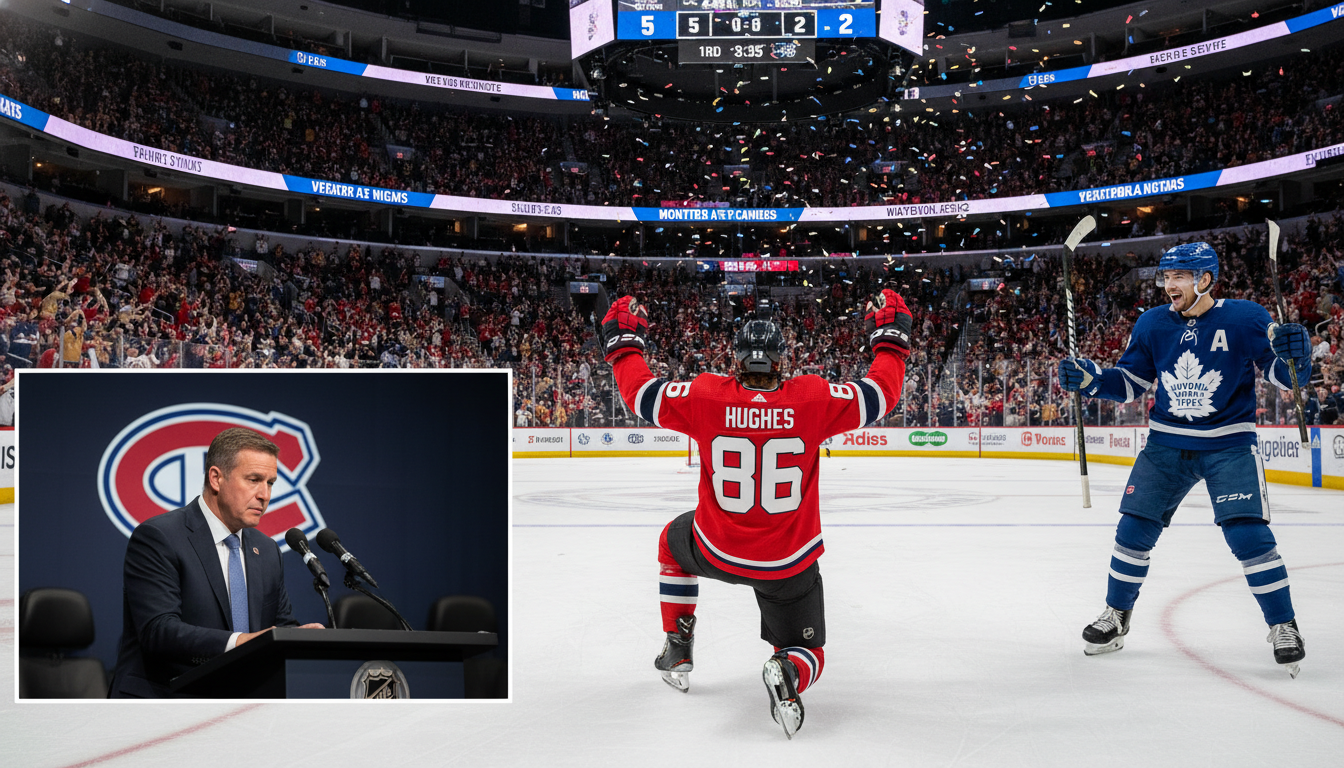
Canadiens Depth Questioned After Vegas Model and Performances by Hughes, Marner
Canadiens depth concerns are growing after recent NHL playoff dynamics and standout performances by players like Hughes and Marner highlighted how depth can decide postseason series.
Playoff Results Put Canadiens Depth Under Scrutiny
The Canadiens’ roster construction was sharply illuminated by recent postseason play, where supporting lines and secondary scoring proved decisive. Teams that advanced relied less on one or two stars and more on balanced contributions from middle-six forwards and depth defensemen. That shift left the Canadiens exposed when injuries or matchup disadvantages removed top-end production.
Coaches and front offices repeatedly leaned on role players to tilt games, and the Canadiens’ lack of consistent third- and fourth-line scoring became a recurring weakness. Analysts noted that when opponents tightened coverage on the top line, Montreal struggled to generate the secondary scoring needed to sustain pressure.
Vegas Model Emphasizes Depth and Versatility
The roster approach deployed successfully by the Golden Knights and observed around Las Vegas emphasizes depth, versatility and the ability to roll four competitive lines. That model prioritizes players who can play multiple situations, chip in offensively and remain defensively responsible. Teams built in that fashion weather injuries better and maintain a higher floor through long playoff runs.
Recent matchups and series where role players made the difference drove home how valuable that construction is. The contrast between teams with reliable depth and those that lack it was evident in possession metrics, special teams execution, and the ability to protect leads late in games.
Individual Performances Highlight Structural Gaps
Performances by highly skilled players such as Hughes and Marner underscored how star talent can be amplified or muted depending on roster support. In games where those players received substantial help from secondary scorers, their teams dominated; where depth was absent, opponents could concentrate resources on shutting down top options.
For the Canadiens, the challenge has been turning elite individual performances into consistent team outcomes. Montreal’s top talents can still drive play, but opponents increasingly exploit predictable lines and exploit mismatches when depth pieces fail to answer.
Cap Constraints and Contract Decisions Limit Options
Salary-cap mechanics have constrained Montreal’s ability to add depth through free agency or retained contracts, forcing the organization into tougher choices at key positions. With limited cap space, management has had to prioritize long-term core deals over short-term depth acquisitions, a trade-off that shows up most painfully in playoff hockey.
Draft-and-develop strategies have helped replenish the farm system but rarely deliver NHL-ready depth on the timetable teams often need. The Canadiens face a balancing act between locking in cornerstone players and maintaining payroll flexibility to sign versatile role players who can contribute immediately.
Prospects and Trades as Pathways to Depth
The prospect pipeline offers one route to shore up the middle ranks without heavy cap hits, but it requires patience and realistic expectations. Players emerging from junior and the AHL can provide energy and depth, yet few arrive fully formed as reliable playoff contributors. Strategic trades, especially for cost-controlled veterans or reclamation projects, present another avenue to add quality depth.
Front-office evaluations will likely prioritize players who can play penalty kill minutes, win puck battles and chip in modest but timely offense. Those attributes are often more valuable than chasing headline-grabbing scorers who may not fit the team’s structural needs.
Coaching and Deployment Must Maximize Available Depth
Coaching choices about line combinations, zone starts and special teams deployment can magnify or reduce the impact of available depth. Effective coaches find ways to create competitive matchups, shelter inexperienced players and extract production from role players through clearly defined responsibilities. For the Canadiens, rethinking deployment and situational usage could unlock better performance from the roster’s lower tiers.
Clear communication about roles and consistent minutes for depth players help build confidence and allow those players to contribute in crunch moments. Tactical adjustments, such as mixing offensive-minded forwards with shutdown pairs, can also improve team balance.
The Canadiens face a clear roster imperative: to move from a top-heavy lineup toward a more rounded, depth-driven roster capable of enduring the attrition of an NHL season and the intensity of playoff hockey. Strengthening the middle-six, adding a reliable third-pairing defenseman and securing a backup goaltender with playoff experience should be priorities.
Long-term solutions will combine smart cap management, targeted trades and patient development of prospects to create a sustainable depth chart. Short-term gains may come from veteran signings who bring playoff experience and positional versatility without breaking the bank.
Revamping the roster construction to mirror successful depth-first models elsewhere in the league will not erase all risk, but it can meaningfully increase the Canadiens’ competitiveness in tight series and provide insurance against injuries and slumps.
