
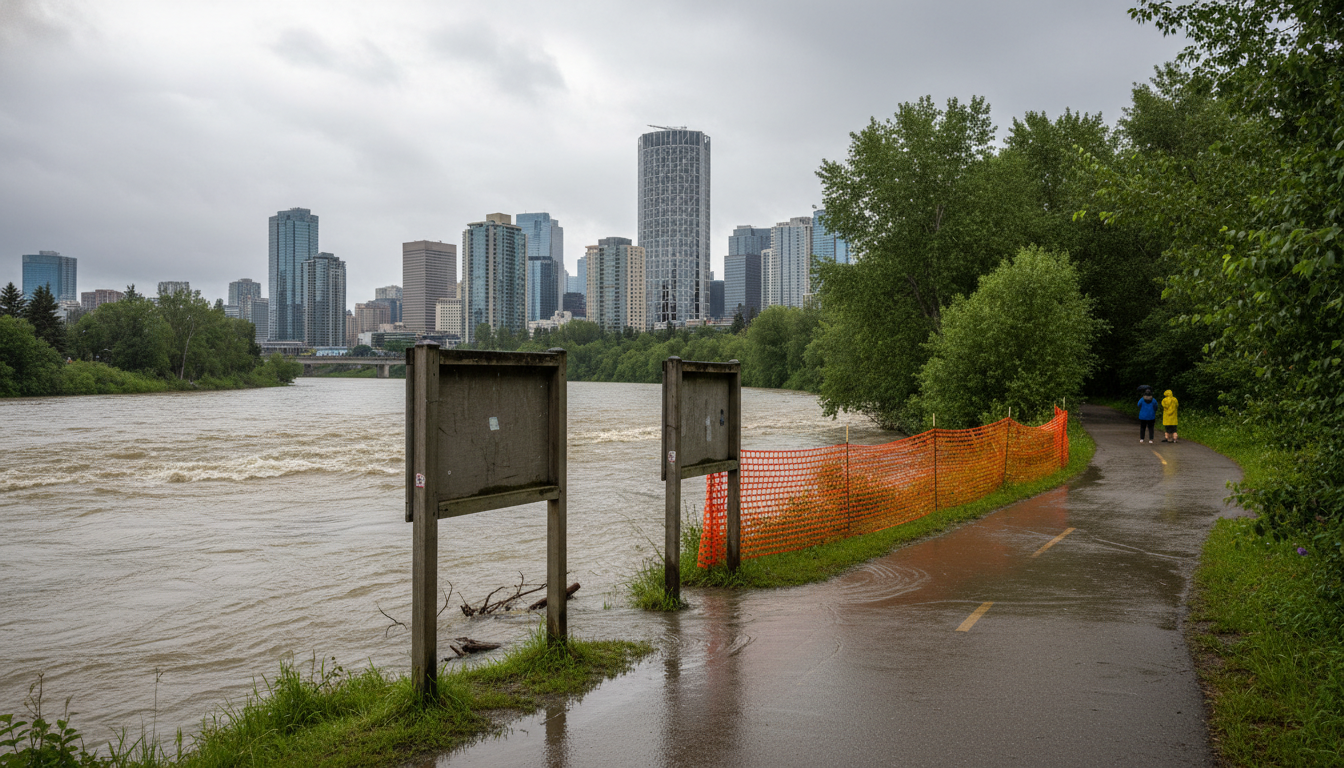
Bow River water levels to rise as snowmelt and heavy rain prompt flood watches across Bow Valley and Calgary
Bow River water levels expected to rise on May 29, 2026 as melting snowpack and forecasted heavy rain trigger flood watches from Banff and Canmore to Calgary; officials urge caution.
The Bow River water levels are forecast to increase Friday, May 29, 2026, prompting municipal and provincial agencies to issue flood watches and high streamflow advisories for the Bow Valley and downstream communities. Local officials reported stable conditions overnight, but warned that incoming rain and continued snowmelt could elevate flows through the weekend. Residents and visitors are being told to avoid low-lying pathways and river access points until flows subside. Authorities said debris in the river and reports of trail inundation are already being observed in several valley locations.
Flood watches and streamflow advisories in effect
A flood watch remains in place for sections of the Bow River and the Pipestone River near Lake Louise, with a separate high streamflow advisory extending from upstream of the town of Banff to Ghost Reservoir. Officials advised that low-lying areas adjacent to the rivers are at greatest risk of inundation. Emergency-management teams are monitoring river gauges and will update advisories as the situation evolves. An expected additional rise of roughly 30 centimetres in water levels during Friday was cited as a concern for trail access and groundwater in valley communities.
Local trail impacts and nuisance flooding
Banff town officials said many primary trails remain open, but several low-lying routes are experiencing nuisance flooding that has made sections impassable. Town of Banff communications director Jason Darrah noted cooler overnight temperatures briefly moderated flows, but added that several side trails and low spots are wet and should be avoided. In Canmore and Exshaw, officials warned of potential groundwater issues where rising river levels intersect with subsurface water tables. Park staff have placed temporary signage and closed a small number of trail segments to reduce public risk.
Forecasted rain and timing of risk
Environment Canada forecast significant rainfall beginning Saturday night, May 30, 2026, and continuing through Sunday, May 31, with totals of 50 to 90 mm expected across parts of Alberta. Meteorologists cautioned that localized amounts could exceed 100 mm in heavier cells, and that precipitation may persist into early next week before tapering by Wednesday, June 3, 2026. Where heavier rain falls on already-warmed snowpack, rapid runoff could amplify river response and increase the likelihood of higher flows and debris transport. Officials emphasized that the precise impact depends on where the heaviest rain falls within the watershed.
Calgary preparations and public safety measures
The City of Calgary warned that melting snow combined with weekend rainfall could raise river flows inside the city this weekend and into early next week. Municipal services said high streamflow advisories, a boating advisory and closures of low-lying pathway underpasses are expected to begin over the weekend. City crews have been preparing by inspecting flood-prone infrastructure, clearing storm drains where possible and staging equipment in vulnerable areas. Residents were asked to steer clear of riverbanks, avoid boating on affected waterways and follow official signage and closures.
Advice for residents, visitors and recreational users
Officials urged everyone in the Bow Valley and downstream communities to exercise caution around rivers and low-lying pathways, and to avoid water-based recreation on the Bow River while advisories remain in place. Those living or staying in low-lying properties were advised to move valuables to higher ground and to secure outdoor items that could be swept away by rising water. Motorists should never attempt to drive through flooded roadways, and visitors should respect trail closures and temporary fencing. Emergency-management agencies recommended that households sign up for local alerts and check municipal social channels for real-time updates.
Monitoring and next steps for authorities
Provincial and municipal teams are continuing to monitor river gauge readings, snowpack melt rates and forecast model updates through the weekend. Parks Canada, Environment Canada and local governments said they will issue further bulletins should conditions change or if evacuation notices become necessary. Debris accumulation and fast-moving water remain the key hazards cited by hydrologists assessing the Bow River system. Officials reiterated that cooler overnight temperatures can temporarily reduce flows, but prolonged warm weather and rainfall will be the deciding factors for whether advisories are escalated.
Community members and visitors are advised to stay informed through official municipal and Environment Canada channels and to treat rivers and riverbanks as hazardous until flows return to normal.
