
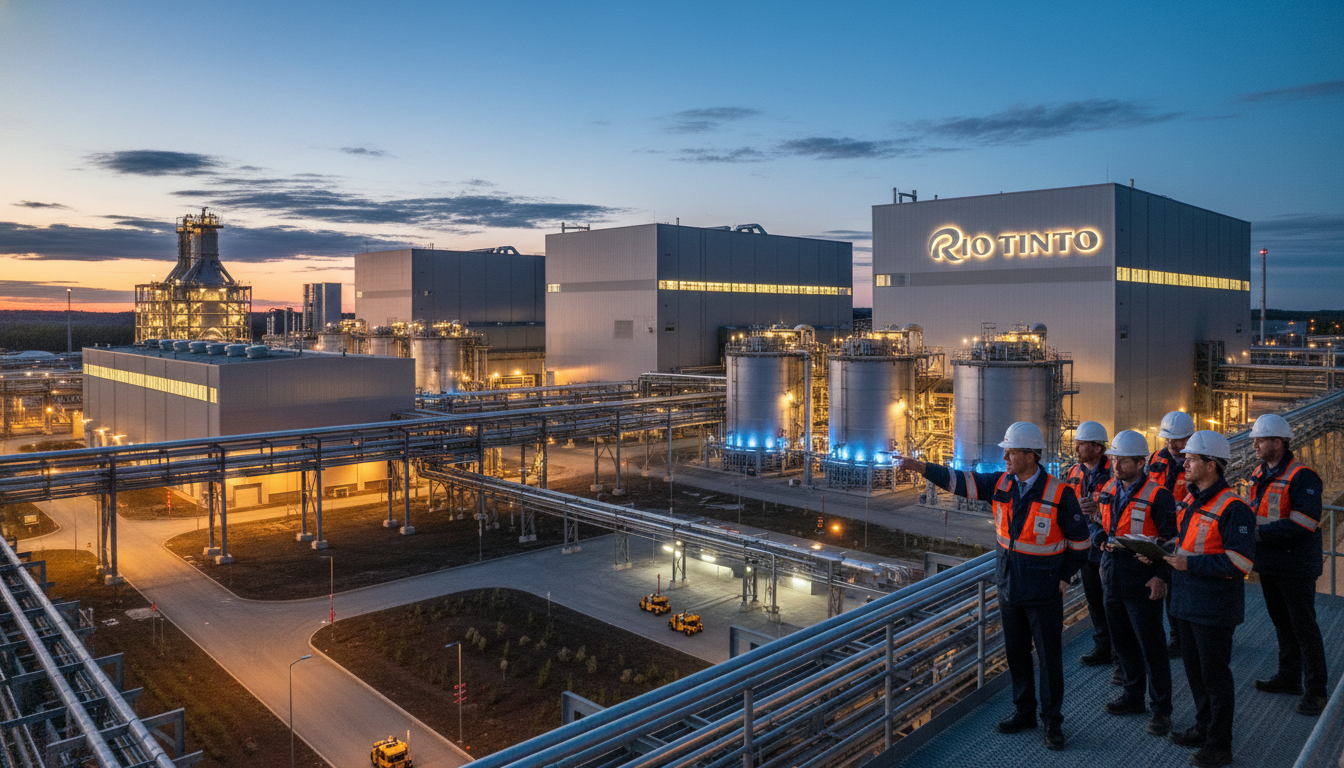
Rio Tinto begins commissioning Arvida AP60 expansion as $2B project goes live
Rio Tinto begins commissioning the Arvida AP60 expansion, a $2‑billion project adding 50,000 tonnes of low‑carbon aluminium to spur exports and support jobs.
Rio Tinto announced the start of commissioning for the Arvida AP60 expansion Friday, marking the first step in bringing new low‑carbon aluminium capacity online at its Saguenay facility. The Arvida AP60 expansion will add 50,000 tonnes of annual aluminium output and is part of a $2‑billion investment in the complex. Federal and provincial ministers attended the announcement alongside Rio Tinto executives, who said the technology will cut emissions compared with older processes.
Officials at the announcement
The public launch on Friday included Quebec premier Christine Fréchette, federal Industry Minister Mélanie Joly and three regional Members of the National Assembly. Rio Tinto’s aluminium chief Jérôme Pécresse joined the ministers for the event and fielded questions from reporters about timing and environmental performance. The gathering underscored the project’s political as well as industrial significance for the Saguenay–Lac‑Saint‑Jean region.
Production capacity and timeline
According to Rio Tinto, the expansion will raise Arvida’s total AP60 output to about 220,000 tonnes when fully operational. The company says one electrolysis pot was energised on March 2, 2026, and it expects 96 new pots to be ready for use by the end of this year. Rio Tinto projects the overall expansion work will be completed in June 2026, with the new infrastructure supporting roughly 100 permanent positions in the area.
Carbon reductions tied to AP60 and hydro power
Rio Tinto and government statements emphasised the AP60 electrolysis technology’s lower greenhouse‑gas intensity when paired with hydroelectricity. Company materials cited the combination as producing up to six times fewer GHG emissions per tonne than the industry average, and roughly half the emissions of the older Arvida technology. Executives and officials framed the Arvida AP60 expansion as a strategic step toward greener, exportable aluminium products in a decarbonising global market.
Economic and labour impacts during and after construction
The company reported the construction peak created more than 1,500 jobs and that suppliers and contractors received over $1 billion in contracts during the build. Rio Tinto said the project’s long‑term footprint will include around a hundred permanent jobs, alongside indirect economic activity in the region. Local officials and industry representatives noted the investment will help offset headwinds that the Quebec aluminium sector has faced from trade measures and shifting global demand.
Government funding and earlier commitments
The Arvida AP60 expansion was first announced in June 2023, and Quebec previously committed $150 million in support for the project. At Friday’s announcement Ottawa confirmed a $100‑million envelope aimed at accelerating the development of Elysis technology, a complementary low‑emission aluminium process. Quebec had also announced a separate $140‑million contribution to Elysis in 2024, creating a combined public investment aimed at commercialising next‑generation production methods.
Elysis pilots and future deployment
Rio Tinto said it is developing seven Elysis pilot pots, which are scheduled to enter service in 2027, and described the federal funding as meant to help scale and export the technology. Company leadership expressed hopes that Elysis could be rolled out internationally by the end of the decade, positioning Canadian projects as early adopters of zero‑emission aluminium processes. Federal and provincial ministers framed the investment as both an industrial strategy and an opportunity to generate export revenue tied to green products.
Local leaders at the event argued that low‑carbon aluminium will be a competitive asset for Quebec as markets put a premium on emissions performance. Premier Fréchette said the investment offered a renewed outlook for the region, and announced that hospital projects in Jonquière and Chicoutimi would move into implementation following the visit. Rio Tinto and government officials said they expect the combined industrial and policy measures to sustain the region’s aluminium sector into the coming decades.
