
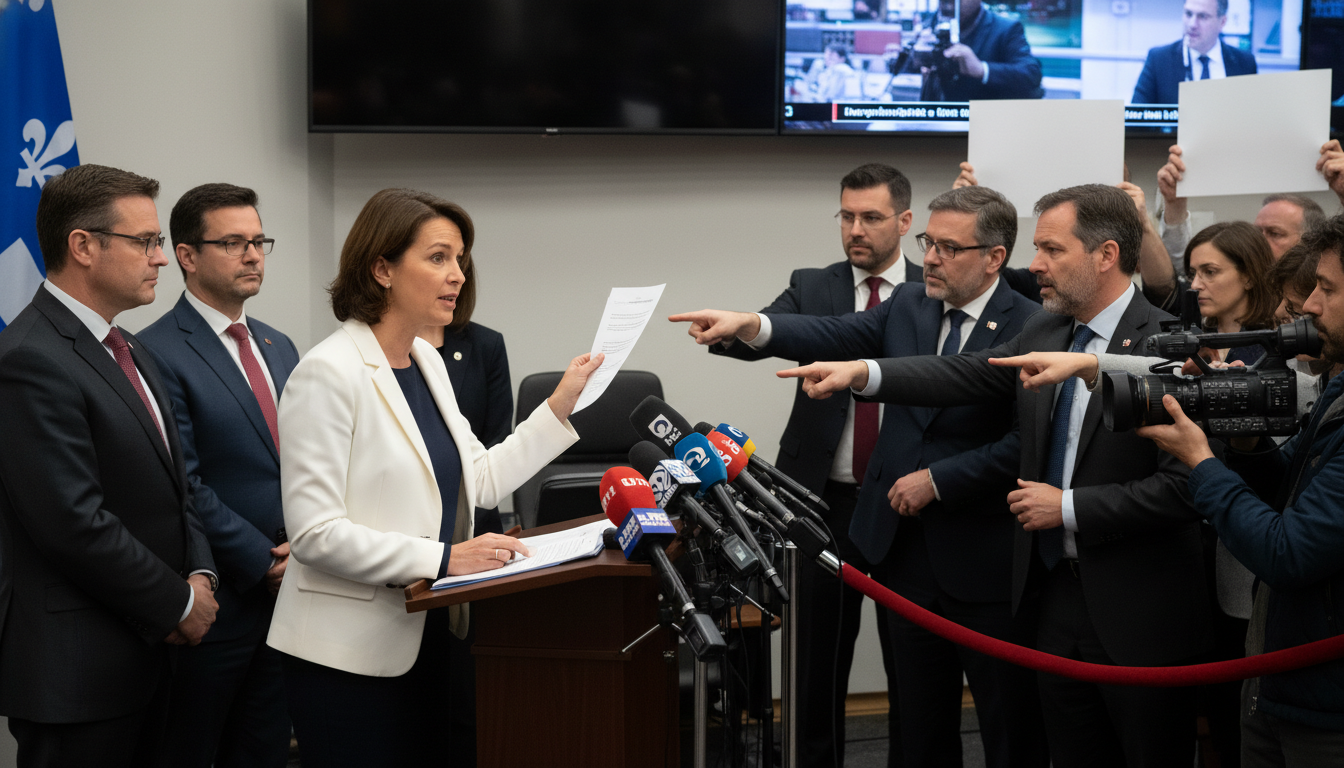
Quebec cost-of-living measures draw sharp criticism from opposition over budget and timing
Quebec’s cost-of-living measures, announced by Premier Christine Fréchette on May 25, 2026, have been met with fierce opposition, who say the package risks breaching the government’s fiscal limits ahead of the next election. The announcements, including detaxing select everyday goods and cutting vehicle registration fees, are intended to ease household pressures but have reignited debate over the province’s budgetary capacity.
Opposition leaders call payouts electoral manoeuvres
The Parti Québécois, Quebec Solidaire and the Quebec Liberal Party gave the measures a chilly reception on Tuesday. PQ leader Paul St‑Pierre Plamondon accused the government of repeating a past playbook of using public funds to win votes, while QS spokeswoman Ruba Ghazal labelled some items “electoral treats” and said the aid was insufficient for low-income households.
Liberal finance critic Frédéric Beauchemin said the government was spending money it did not have and warned the measures risked increasing debt for future generations. All three parties said the timing — and the scale of promises made since mid‑April — pointed to political calculations rather than a balanced fiscal strategy.
Details of the package unveiled in Sherbrooke
Fréchette presented the measures at a supermarket in Sherbrooke on May 25, 2026, framing them as immediate relief for rising living costs. The package includes the detaxation of several consumer products, a reduction in licence-plate fees and targeted financial support for households eligible for the solidarity tax credit.
The government estimates detaxing additional everyday goods will cost about $111 million per year, bringing the total cost of measures announced by the premier since mid‑April to roughly $336 million. Officials say two punctual measures — the lowered registration fee and the targeted solidarity-credit assistance — will be financed using newly available revenues since the last budget.
Finance minister’s memo warned of budget envelope breach
A leaked email from Finance Minister Eric Girard warned that the combined cost of recent promises was on track to exceed a previously set envelope of $250 million established earlier this month. The disclosure, which provincial officials say is now the subject of a formal investigation, has sharpened opposition criticism and raised questions about internal coordination.
Girard has publicly said there is fiscal room to act and suggested Quebec’s public accounts, to be released in about one month and expected in late June 2026, will show a smaller‑than‑anticipated deficit for 2025‑26. Still, the email leak has become a focal point for parties sceptical of the government’s accounting and strategy.
Government defends funding and fiscal outlook
In response to criticism, the premier’s office and the finance ministry argued the measures are affordable and targeted, noting they will be paid for with new revenues that have emerged since the last provincial budget. The cabinet stated that the two one‑time measures were structured so they would not undermine long‑term fiscal planning.
Officials also pointed to projections that the 2025‑26 deficit will be lower than earlier estimates, a claim Girard reiterated in a recent interview. Nevertheless, opposition parties remain unconvinced and insist the province should prioritise deficit reduction over short‑term relief ahead of an election cycle.
Political stakes ahead of the next provincial vote
Opponents framed the announcements as strategic, arguing the Coalition Avenir Québec is attempting to shore up electoral support with visible cash measures. Critics say the pattern echoes past campaigns and risks prioritizing immediate popularity over sustainable policy.
The governing party’s supporters counter that quick relief is necessary as many families face higher everyday costs, and that delaying action would deepen financial strain for vulnerable households. The debate is likely to intensify as parties prepare for a campaign environment in which cost-of-living policies will be central.
Questions remain as public accounts and investigation proceed
With public accounts due in roughly a month and an investigation opened into the leaked Girard email, the province’s fiscal picture and internal decision-making will be scrutinized closely. Opposition leaders say they will press for transparency on how the new measures are funded and whether long-term commitments are being masked as temporary fixes.
Administrative details, including the precise list of detaxed products and the eligibility framework for the additional solidarity-credit aid, will matter to households and to critics assessing the measures’ reach and cost. As Quebec moves toward what many expect to be a politically charged period, both the substance of the cost-of-living package and the process by which it was assembled are likely to shape the next phase of the provincial debate.
The immediate question for voters and policy analysts is whether the relief provided by Fréchette’s announcements will be viewed as timely assistance or as a risky fiscal pivot, and whether the province’s upcoming public accounts will validate the government’s claim of manageable deficits.
