
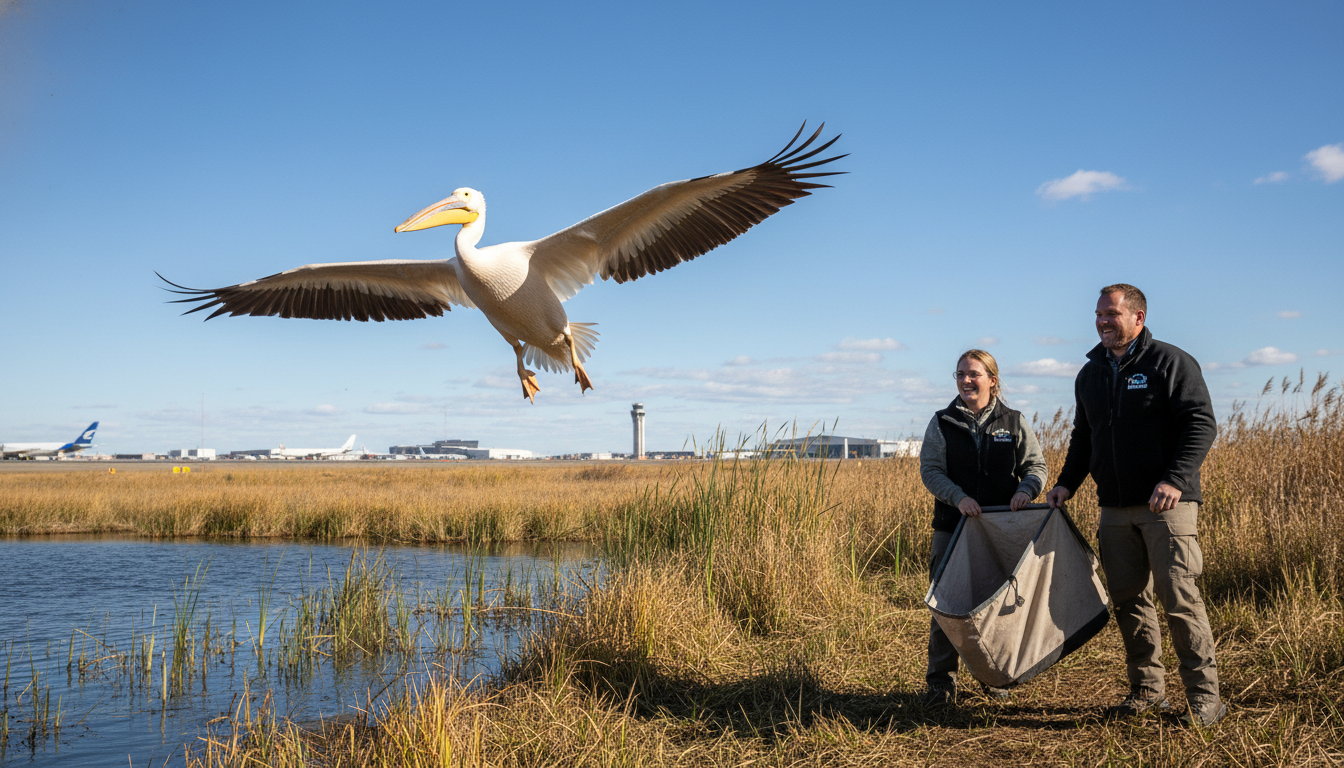
American white pelican released near Calgary after seven months of rehabilitation
Calgary Wildlife released an American white pelican near Calgary after seven months of rehabilitation for injuries, severe lice infestation and flight training
The American white pelican that arrived at Calgary Wildlife last October has been returned to the wild after a seven-month recovery, the city rescue group said. The bird was found weak and dehydrated near the Calgary airport and required intensive care for wounds and a heavy parasite load. Staff worked in isolation wards and dedicated recovery spaces before moving the bird to a flight pen for conditioning. The successful release occurred once staff confirmed pelican flocks had returned to the area.
Pelican rescued near Calgary airport
The bird was admitted to Calgary Wildlife on Oct. 20 after being discovered close to the airport and appearing thin and fragile. Initial examinations found a ruptured air sac, wounds around the left wing, and sores on the feet that limited mobility. Rescuers also identified a severe infestation of blood‑sucking lice located inside the bird’s mouth and throat pouch, which made feeding agonizingly difficult. Those combined injuries and parasites required immediate and sustained veterinary attention.
Treatment in isolation and parasite removal
Veterinary staff placed the pelican in isolation to treat the air sac injury and to eliminate the lice infestation without risking transmission to other patients. The medical team administered wound care, fluids for dehydration and targeted treatments to remove and prevent re‑infestation by parasites. Once the oral and pouch lice were cleared, the pelican was able to feed without pain and began regaining weight. The transition from critical care to a monitored recovery area marked the first visible improvement in its condition.
Recovery, weight gain and habitat adjustments
As the bird improved, staff moved her into a secondary enclosure that replicated natural substrate and allowed for comfortable walking and preening. The addition of sand and shallow water features helped the pelican exercise its feet and practice normal behaviours while under supervision. Nutrition was adjusted to support muscle rebuilding and to prepare the bird for increased activity. These habitat modifications were integral to preparing the pelican for more active rehabilitation steps.
Missed migration window and flight conditioning
Because the bird arrived after regional migration had already occurred, staff recognized she had missed the natural window to join her flock. To compensate, the organization housed the pelican in a flight pen where she could gradually expand her wings, build endurance and practise short flights. Staff monitored wing strength, balance and foraging behaviour to determine readiness for release. The flight‑conditioning phase lasted several weeks and concluded only after signs of adequate strength and coordination were clear.
Release planned to coincide with returning flocks
Calgary Wildlife timed the release to coincide with the return of American white pelicans to the area so the rehabilitated bird could rejoin wild conspecifics. Staff observed local pelican activity and chose a release site near waterways frequented by the species to maximise chances of reintegration. The group transported the bird from the flight pen and released her once field checks confirmed other pelicans were present. The measured approach aimed to give the bird the social cues needed to resume natural migratory and feeding patterns.
Staff and volunteers reflect on the effort
Calgary Wildlife emphasised that successful releases are the result of sustained, often unseen labour by staff and volunteers who handle daily care tasks. Those responsibilities include cleaning enclosures, preparing specialized diets, administering medication and maintaining isolation wards for contagious or vulnerable patients. The organisation noted that such routine work is essential and that each successful rehabilitation provides an important morale boost. Staff described the pelican’s release as a rewarding outcome after months of hands‑on care.
American white pelican behaviour and regional presence
The American white pelican is one of North America’s largest waterbirds, notable for a long bill and an expansive throat pouch used for scooping fish, and a wingspan that can approach nine feet. In Alberta, pelicans are seasonal visitors that congregate at lakes and river systems to feed and roost during migration periods. When individuals arrive injured or exhausted, local rescue centres play a key role in treating injuries and parasites that impede feeding and flight. Rehabilitating and returning such birds helps maintain local populations and supports broader conservation efforts.
The pelican’s successful release underscores the role of local wildlife clinics in responding to migratory species that encounter hazards near urban infrastructure. Staff and volunteers at Calgary Wildlife will continue monitoring regional pelican activity and responding to calls for assistance as migration seasons progress.
