
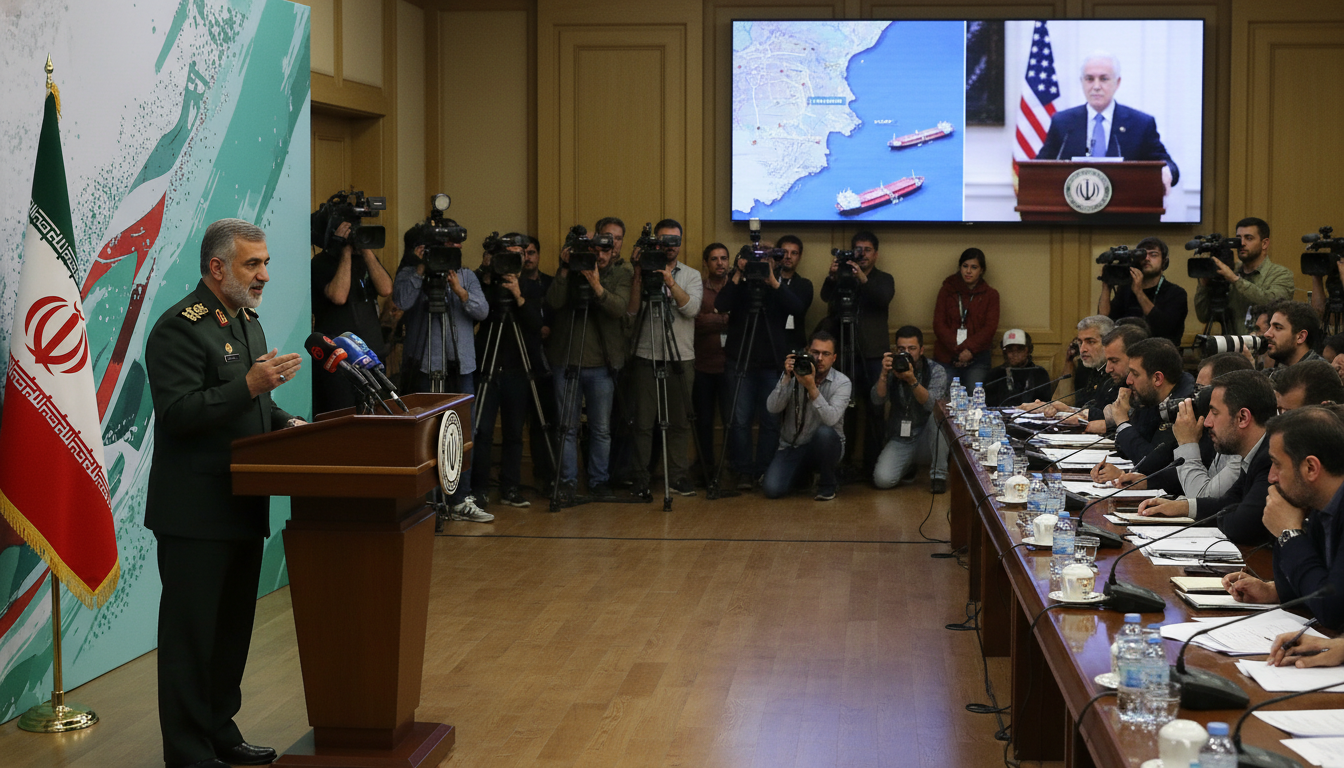
Possible deal with Iran cast by Tehran as strategic victory
Tehran calls a preliminary deal with Iran a victory after talks with Washington; details remain unclear as analysts weigh implications for the Strait of Hormuz.
Tehran frames talks as a triumph
Esmail Baghaei, a spokesman for Iran’s foreign ministry, used historical imagery to portray the reported negotiations as a strategic win for Tehran. He posted a photograph of an ancient relief showing a Roman emperor bowing to a Sassanian king, writing that the image illustrated how Iranian power shattered imperial presumptions.
The social-media message came as U.S. and Iranian officials said a preliminary framework had been largely negotiated but not finalized, a development that Tehran’s leaders immediately cast as vindication of their wartime strategy. Iranian officials and state media emphasised endurance and deterrence in their public narrative.
Preliminary framework announced; Strait of Hormuz referenced
U.S. and Iranian representatives indicated on Saturday that they had largely negotiated a preliminary framework to end hostilities, though they cautioned the proposal was not complete. President Trump posted on social media that the Strait of Hormuz would be reopened as part of the understanding, a central point given the waterway’s role in global oil and gas shipments.
Concrete terms have not been disclosed publicly, leaving significant uncertainty about timelines, verification and the sequence of concessions. That opacity has allowed both sides to shape domestic messaging before details are scrutinized.
Analysts say Iran can portray the result as a win
Regional analysts say Tehran is well positioned to present any diplomatic halt to fighting as a victory, particularly after sustaining heavy military and economic costs. Ellie Geranmayeh of the European Council on Foreign Relations noted Iran’s newfound regional leverage, especially following its demonstrated ability to threaten maritime traffic.
Mohammad Ali Shabani, editor of Amwaj.media, argued that Iran’s leadership has cultivated an underdog narrative that resonates at home and across allied networks. He said the perception of having withstood pressure from two nuclear-armed powers strengthens Iran’s regional standing, regardless of the specific concessions it may have made.
Nuclear and missile curbs remain unclear
Reported elements of the preliminary plan do not appear to include strict limits on Iran’s ballistic missile program or its regional proxy network, and it is uncertain how the agreement would address the country’s stockpile of highly enriched uranium. Officials have signalled that discussion of those technical and time‑bound commitments might be deferred to a later phase of negotiations.
The absence of detailed nuclear commitments leaves open the question of whether the understanding will stem the long-term proliferation risks the United States and its partners have cited. Analysts caution that without verifiable, phased steps, a short-term cessation of hostilities may not translate into durable arms-control outcomes.
Economic strain and possible concessions
Iran’s economy has been severely damaged during the conflict, with critical infrastructure — including petrochemical and steel facilities — suffering bombardment and sanctions having tightened access to foreign assets. Some experts say that even limited sanctions relief or temporary waivers allowing oil sales would be politically valuable to Tehran and could be presented domestically as a major victory.
Farzan Sabet of the Geneva Graduate Institute suggested that unfreezing assets or easing export restrictions, even briefly, would allow Iran to point to immediate economic relief. Those measures could shore up the government’s legitimacy while longer-term reconstruction and recovery remain uncertain.
Strait leverage and regional energy responses
A central strategic outcome of the confrontation has been Tehran’s demonstrated ability to threaten the Strait of Hormuz, a chokepoint for global energy flows. Analysts say that retaining the capacity to disrupt shipping — through drones, rockets or other asymmetric means — is likely to remain a short- to medium-term deterrent for Iran.
At the same time, regional states such as Saudi Arabia, the United Arab Emirates and Qatar are expected to accelerate plans to diversify export routes and bolster pipelines that bypass the strait. Over time, those infrastructure investments could blunt the potency of Iran’s maritime leverage, though they will not remove it immediately.
Skepticism over long-term gains for either side
Not all experts view the reported understanding as a clear-cut victory for Iran or a decisive defeat for the United States. Ali Vaez of the International Crisis Group warned that the situation has evolved into a lose-lose dynamic, with both sides bearing steep political and economic costs. He expressed doubt that negotiators will be able to move smoothly from a preliminary halt in hostilities to a comprehensive, enforceable agreement.
The next phase of negotiations, if it occurs, will determine whether the framework becomes a platform for durable restraint or another temporary pause that leaves the underlying drivers of conflict in place.
The coming days and weeks are likely to reveal which concessions, verifications and timelines the parties accept, and whether the ceasefire language will be translated into enforceable measures that alter Iran’s strategic calculus and regional stability.
