
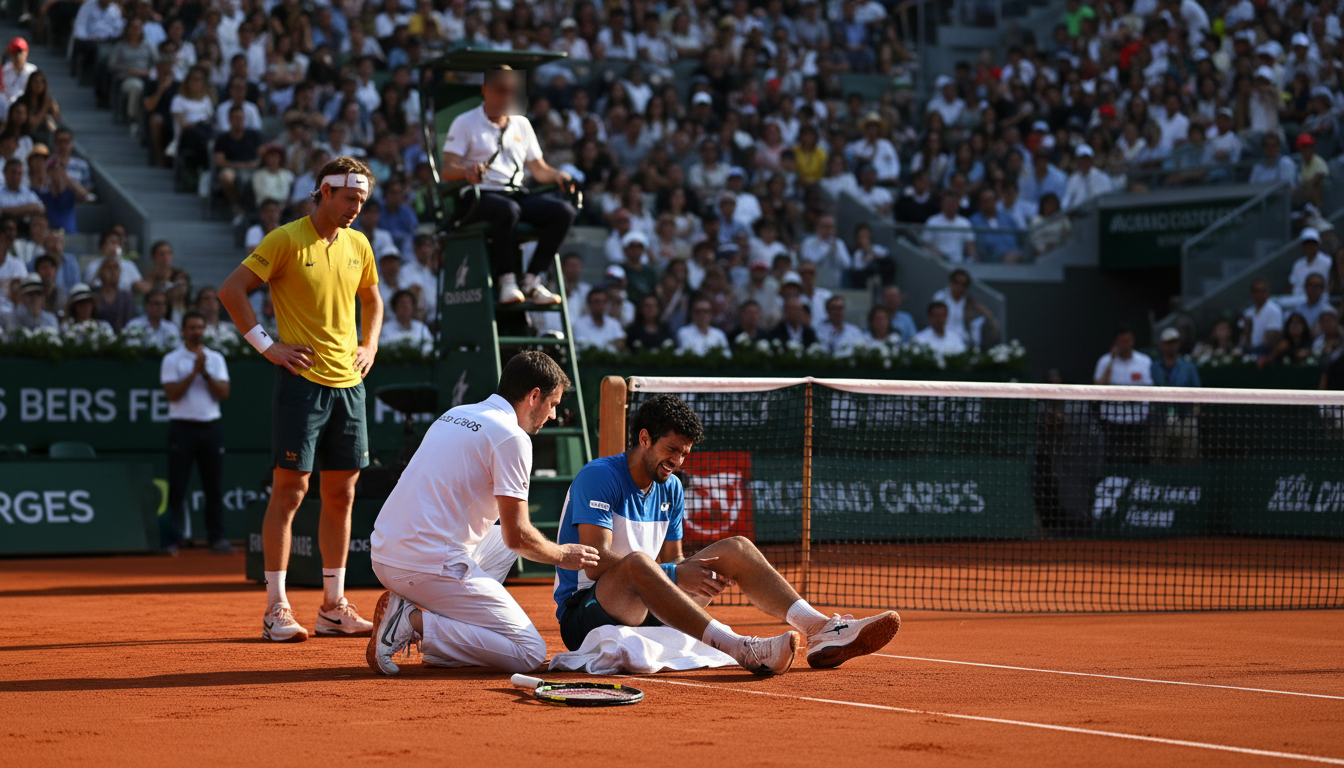
Gabriel Diallo forced to retire from French Open opener against James Duckworth
Canadian Gabriel Diallo was forced to retire in his French Open opening match, trailing James Duckworth 6-3, 4-1, after suffering physical issues that cut his Roland Garros campaign short. Gabriel Diallo’s withdrawal came after a competitive opening set and renewed concerns about a recent back problem and a pre-tournament finger injury. (sportsnet.ca)
Diallo retires trailing 6-3, 4-1 against Duckworth
Diallo, ranked inside the top 50, dropped the first set 6-3 to Australia’s James Duckworth and was trailing 4-1 in the second when he retired on court at Court Philippe-Chatrier. The match lasted just over an hour before the Montreal-born 24-year-old took a medical timeout and subsequently conceded the contest, handing Duckworth passage into round two. (tennis.com.au)
The opening set featured tightly contested service games before Duckworth earned the decisive break to move ahead 4-2, a momentum swing that the Australian maintained through the end of the set. With Duckworth pressing on the clay and Diallo visibly hampered, the Australian extended his advantage to a double break in the second set before the retirement. (abc.net.au)
Pre-tournament ailments and cut to finger compounded struggles
Diallo arrived in Paris carrying a lower back complaint that had affected his preparation in recent weeks, and reports also noted he suffered a cut to his finger from a glass bottle just days before the match. Those two issues combined to limit his movement and court comfort on the slow clay surface, aggravating a situation that had already forced him to withdraw from matches earlier in the clay swing. (sportsnet.ca)
The Canadian team had monitored Diallo’s condition through the lead-up events, where he had made other late withdrawals, and tournament medical staff treated him on-site before the decision to retire. The walkaway underscores the fine margins for players managing niggling injuries at Grand Slam intensity and the difficulty of performing on clay while limited physically. (tenniscanada.com)
Duckworth advances as one of the early winners at Roland Garros
The victory advances Duckworth into the second round at Roland Garros, his match noted among the opening-day results as players begin their Grand Slam campaigns. Duckworth, inside the top 100, converted a strong start into an early lead and will now prepare for his next opponent while taking confidence from closing out a match that was decided in part by his opponent’s physical problems. (abc.net.au)
For Duckworth the win is valuable not only for tournament progression but also for ranking points and match rhythm on clay ahead of the deeper rounds. Grand Slam draws can shift quickly with withdrawals and upsets, and this result guarantees Duckworth’s continued presence in the Parisian clay-court pattern for at least another round. (abc.net.au)
Canadian draw remains busy: Shapovalov, Auger-Aliassime and Mboko in early action
Canada still has multiple singles entries scheduled in the opening rounds, with Denis Shapovalov set to face Jaime Faria and Félix Auger-Aliassime drawn against Daniel Altmaier in the days following Diallo’s exit. The national contingent also includes rising Canadian Victoria Mboko in the women’s draw, and Leylah Fernandez remains on the schedule in a separate section of the women’s field. (atptour.com)
Tournament organizers released the full order of play and draw sheets that confirm those matchups, and Tennis Canada has highlighted the opportunities for its top players in the Paris draw. With several Canadian players projected to meet top seeds in later rounds, early wins will be important for maintaining momentum and keeping national hopes alive. (rolandgarros.com)
Medical outlook and implications for Diallo’s clay-court season
Diallo’s retirement raises immediate questions about his short-term recovery plan and whether he will be able to contest upcoming clay and grass events. His coaching and medical team will now assess the severity of the back complaint and the finger cut, and decisions about further treatment, rest or targeted rehabilitation will shape the remainder of his season. (tenniscanada.com)
Beyond the immediate treatment, the withdrawal may influence Diallo’s scheduling choices as the tour moves forward, with a priority likely to be preserving long-term fitness over chasing ranking points in events where his physical condition is uncertain. For a young player with rising expectations, careful management is often the best route back to consistent performance.
Diallo’s exit delivers a disappointment for Canadian supporters but also a clear reminder of the physical toll of Grand Slam competition and the importance of injury management in a demanding season.
