
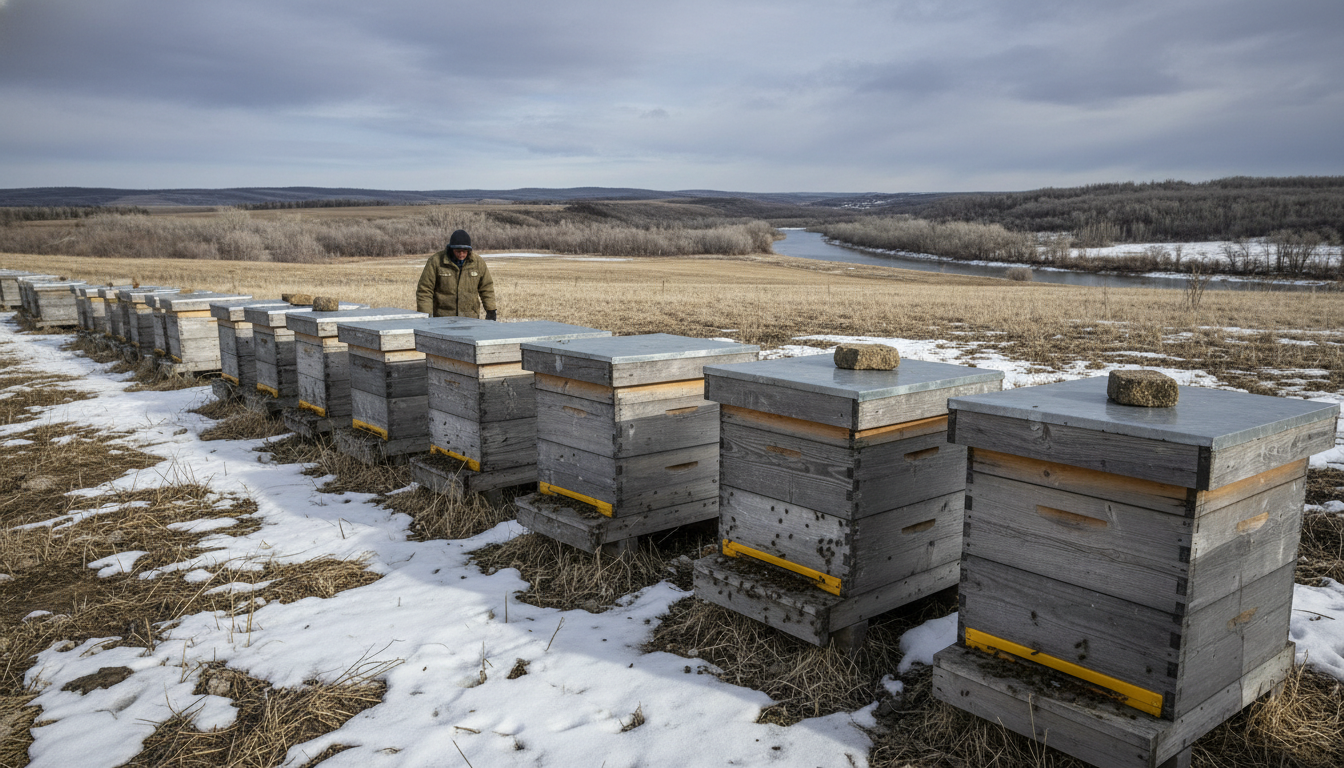
Alberta hive losses reach 41.8% after winter weather extremes, study finds
Study finds Alberta hive losses of 41.8% after record warm January, heavy February snowfall and April storms that severely damaged honeybee colonies and crops.
Alberta hive losses surged after an unusually volatile winter and spring, with the Canadian Association of Professional Apiculturists reporting that 41.8 per cent of province hives died during the 2024–2025 winter. The association linked the high mortality to a sequence of weather extremes — an unusually warm January, heavy snowfall in February and late-season snow replacing April rain — that disrupted colony cycles and food availability. Beekeepers and agricultural stakeholders are now weighing the implications for pollination and honey production across the province.
Winter losses quantified
The Canadian Association of Professional Apiculturists released figures showing 41.8 per cent winter mortality for Alberta hives in 2024–2025, a level that industry groups describe as severe. The report, based on surveys and field assessments, documents colony deaths concentrated in the late winter and early spring months when colonies are vulnerable.
Researchers attribute the losses to a combination of direct weather impacts and secondary stressors that intensified during the period. The data underscore how rapid shifts between warm and cold conditions can undermine a colony’s ability to maintain brood and food stores.
Unusual weather patterns cited
Meteorological anomalies this season began with a record-warm January that stimulated early brood rearing in many colonies, increasing energy demands when forage remained scarce. That premature activity left colonies exposed when a heavy February snowfall and subsequent cold snap cut access to supplemental feeding and reduced stored honey reserves.
April’s unexpected snow events replaced typical spring rains and delayed nectar flows from early blossoms, extending the period of food scarcity. The sequence of warm then cold periods also increased moisture build-up inside some hives, creating conditions that favor disease and reduce winter survival.
Beekeepers report colony stress and starvation
Field reports from beekeepers across southern and central Alberta described rapid colony declines linked to starvation and weakened overwintered queens. Several operators reported finding dead clusters with empty honey frames, indicating that honey stores had been depleted by increased metabolic demands during warm spells and by isolation under heavy snow.
Operators also noted difficulty in conducting early spring checks because of weather constraints, which limited timely interventions such as emergency feeding or re-queening. The combined logistical and biological pressures have forced some producers to consolidate surviving bees into fewer hives to maintain viable colonies for the coming season.
Implications for pollination and crops
The reported hive losses raise concerns for pollination services that underpin Alberta’s broad-acre and horticultural sectors, including canola and fruit growers. Lower colony numbers can increase costs for farmers who rent hives for pollination, and may force operators to shift planting or management plans if pollinator availability tightens.
Agricultural stakeholders warn that sustained reductions in managed colonies could increase reliance on wild pollinators, which are also under stress, or prompt changes in crop rotation and timing. The economic ripple effects could include higher pollination fees and potential yield variability in pollination-dependent crops.
Calls for monitoring and emergency supports
Industry groups and some beekeepers are urging provincial and federal authorities to expand monitoring and offer targeted emergency supports for affected producers. Proposals include funding for supplemental feed, assistance with transporting hives to forage-rich areas, and subsidized queen replacement to rebuild colony numbers more rapidly.
The Canadian Association of Professional Apiculturists has recommended enhanced data collection and more frequent winter and early-spring surveys to detect emerging trends. Greater coordination between meteorologists, researchers and producers would help translate weather forecasts into proactive hive-management actions.
Research priorities and next season preparations
Researchers say priority areas include studying how abrupt temperature swings affect brood cycles and disease dynamics, and evaluating management strategies that improve colony resilience to unpredictable weather. Practical measures under consideration include improved hive ventilation to reduce moisture, diversified forage planning and strategic timing of supplemental feeding.
Beekeepers are also preparing for next season by reassessing wintering protocols, increasing surveillance for parasites and planning for accelerated queen replacements where losses remain high. Collaborative extension programs that share best practices and weather-informed contingency plans are being promoted to reduce similar losses in future years.
The magnitude of the 41.8 per cent loss has prompted a broader conversation about the intersection of weather volatility and pollinator health, with industry leaders calling for sustained research and policy responses to protect Alberta’s apiary sector.
