
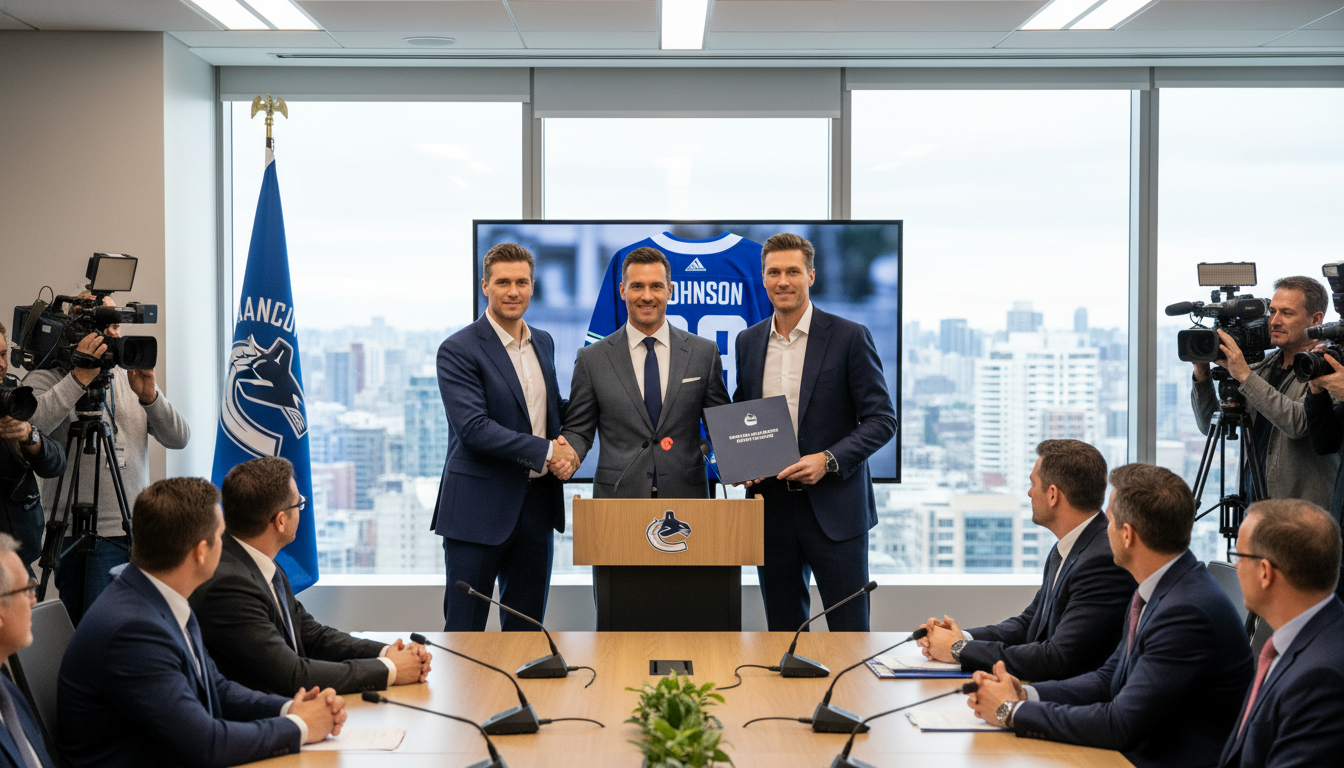
Canucks begin overhaul as Ryan Johnson is named GM with Sedins overseeing rebuild
Vancouver Canucks appoint Ryan Johnson as general manager to lead a rebuild with Henrik and Daniel Sedin; coaching, development and roster moves loom large.
The Vancouver Canucks announced a front-office overhaul that places Ryan Johnson in the general manager’s chair and hands hockey-operations oversight to co-presidents Henrik and Daniel Sedin. The move follows the departure of Jim Rutherford and Patrik Allvin and signals a full-scale rebuild for a franchise coming off one of its worst seasons. The new leadership inherits a roster in transition, a haul of early draft picks and a long list of immediate personnel decisions.
Johnson to report to the Sedins and set priorities
Ryan Johnson will report directly to Henrik and Daniel Sedin and is expected to set the strategic direction for the franchise as it pivots toward development and long-term competitiveness. The arrangement places the Sedins in a powerful advisory and operational role while giving Johnson autonomy to run day-to-day hockey operations. That blended leadership model aims to balance the Sedins’ player-development emphasis with Johnson’s familiarity with the organization.
The incoming regime faces a short timeline to organize scouting, development and coaching staff ahead of the NHL draft and free-agency period. With multiple prospects and early-round selections available, Johnson must prioritize hires that can accelerate prospect growth and improve the club’s analytics and cap management capabilities.
Coaching fate revolves around Adam Foote and development needs
A central early decision for Johnson and the Sedins will be whether to retain Adam Foote as head coach or seek a new voice suited to a rebuild. Foote’s single season in the role coincided with roster instability, significant injuries and a shift to youth, complicating any evaluation of his fit for long-term player development. The organization must weigh Foote’s potential against the need for a coach who can mentor prospects and implement a clear developmental system.
Manny Malhotra, the Canucks’ respected minor-league coach, is viewed outside the organization as a viable successor and could be a priority hire if the club pursues a different direction. Any decision will likely be time-sensitive, as strong coaching candidates are already drawing interest across the NHL and the club cannot afford prolonged uncertainty.
Front office roles and development infrastructure under review
Longstanding assistant general managers Cammi Granato and Emilie Castonguay need clarity on their roles within the new structure, with player development and scouting highlighted as immediate gaps to fill. Castonguay’s cap and contract expertise and Granato’s scouting oversight are assets, but the Sedins and Johnson signaled a need to bolster the organization’s development pipeline and analytics team. Running the Abbotsford farm club and coordinating a cohesive development strategy are now high priorities.
The Canucks also face questions about the amateur scouting department and its leadership as they prepare for a draft where they hold multiple high selections. Strengthening cross-departmental coordination between amateur scouting, pro scouting and development staff will be essential to maximize the franchise’s rare influx of top draft capital.
Draft position gives Canucks rare early-round leverage
Vancouver enters the draft with an unusually strong collection of early selections, holding picks at No. 3, 24, 33 and 41 among 10 total choices in June’s entry draft. That level of access to top prospects is uncommon and provides the organization with multiple avenues to accelerate the rebuild through high-upside selections or trade leverage. The front office can use the volume to target best-player-available strategies or package assets to address immediate needs.
Most scouting work is complete, but Johnson’s arrival could influence draft-day decisions and roster planning, particularly around choices that might intersect with coaching hires. One noted wrinkle is the potential overlap between choosing top prospects and internal coaching candidates who have family ties to those prospects, which the new regime must navigate to avoid conflicts of interest or perception issues.
Key roster and contract decisions to shape the coming seasons
Johnson must make prompt calls on several veteran players whose contracts and trade value will influence the team’s salary-cap flexibility and veteran leadership balance. Decisions on forwards such as Brock Boeser and Jake DeBrusk, and goaltenders including Kevin Lankinen and Thatcher Demko, will hinge on both on-ice projections and market interest. Some players have trade protections that complicate moves but retaining or moving veterans will be a major component of roster construction.
Elias Pettersson’s performance and his eight-year, $92.8-million contract are expected to be a focal point of evaluation, with the front office assessing whether he fits the long-term core or should be traded if acceptable value can be returned. The club must also determine whether to attempt to re-sign depth center Teddy Blueger, who emerged as a key leader, or allow him to test free agency and seek replacements that fit the rebuilding timeline.
Balancing veteran leadership with prospects in Abbotsford
The Canucks’ rebuild will require a mix of veteran presence to guide young players and a clear pathway for prospects to graduate from Abbotsford to Vancouver. Management has stressed the need for character veterans who can teach and stabilize a roster that must avoid another season of poor home performance. Simultaneously, emphasis on player development and ice-time allocation will define how quickly prospects can impact the NHL roster.
With player development identified as the backbone of the rebuild, the front office will pursue hires and structural changes designed to create consistent progression plans for young players. The Sedins have underscored that developing their draft capital and prospects will be “a huge part of this journey,” and their operational role signals a sustained organizational focus on long-term growth.
The new leadership team faces an immediate, high-stakes offseason that will test its ability to hire the right staff, make clear coaching decisions, manage contracts and convert draft capital into NHL contributors. The Vancouver Canucks’ direction over the next few months will set the tone for a multi-year rebuild and determine whether the franchise can regain stability while accelerating the development of its next core.
