
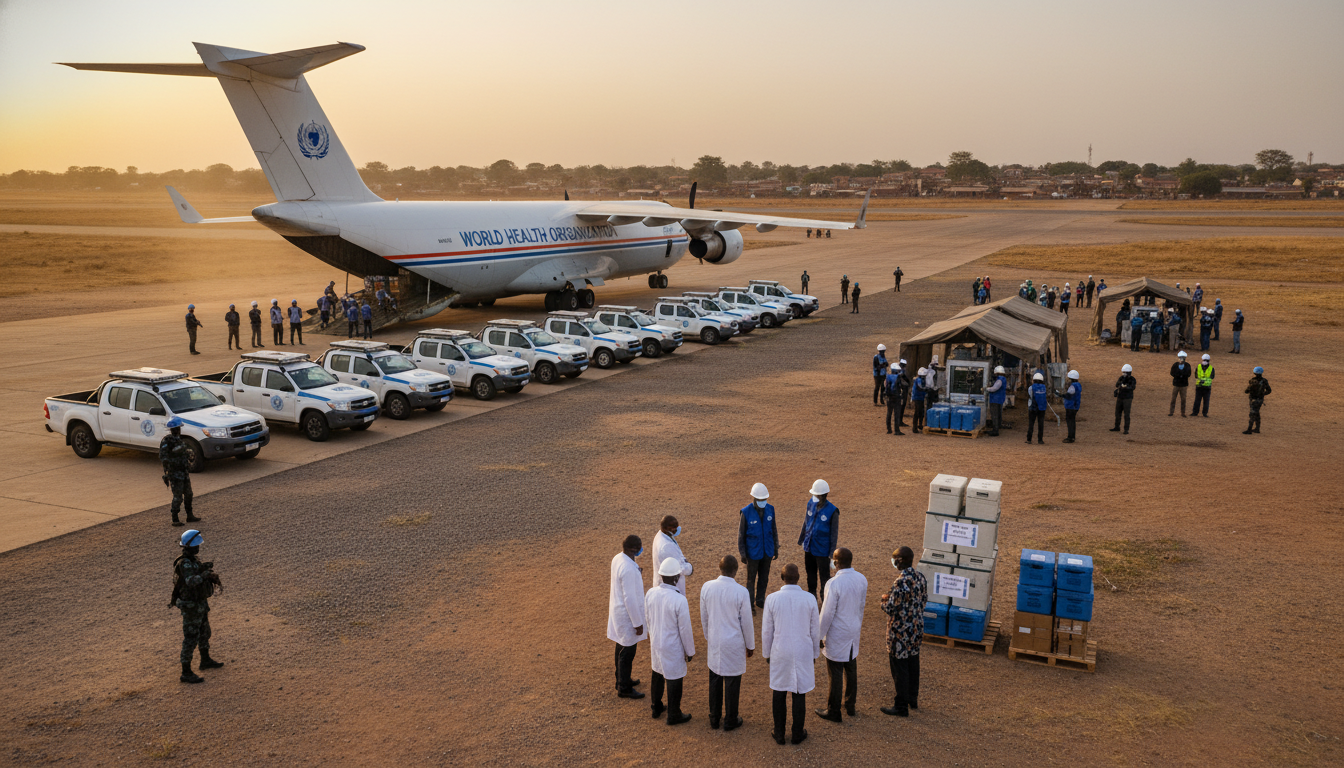
WHO delivers six tonnes of medical supplies to DR Congo amid Ebola outbreak
WHO delivers six tonnes of medical supplies to DR Congo’s Ituri province as surveillance, testing and contact tracing are expanded after an Ebola outbreak.
The World Health Organization on Tuesday delivered six tonnes of medical supplies to parts of the Democratic Republic of Congo, aiming to bolster the local response to an emerging Ebola outbreak. WHO representative Anne Ancia in Ituri province said the shipment includes protective equipment for frontline medical staff and other essential items to support patient care. Authorities are expanding surveillance, testing and contact tracing while investigators work to determine the full extent of the outbreak. The delivery marks an early international response as health teams increase operations in the affected region.
WHO shipment reaches Ituri province
The WHO confirmed the delivery of six tonnes of supplies to Ituri province, a northeastern region of the Democratic Republic of Congo. Officials said the cargo was prioritized for frontline facilities and teams involved in case detection and patient management. Anne Ancia, the WHO representative in Ituri, described the shipment as part of a broader push to shore up local capacity while diagnostics and tracing are scaled up. The arrival of the supplies is intended to reduce immediate shortages and protect health workers handling suspected cases.
Protective gear prioritized for health workers
Included in the consignment is personal protective equipment designed to shield medical personnel from infection during patient care and sample collection. WHO officials emphasized that protecting health workers is a critical step to prevent secondary transmission and to maintain trust in health services. The supplies are being distributed to clinics and treatment centers that are on the front line of the response. Health authorities said that ensuring adequate PPE remains a top operational priority while case numbers and transmission patterns are clarified.
Surveillance and testing are being expanded
In response to uncertainties about the outbreak’s size, authorities have intensified surveillance and laboratory testing across affected districts. Officials report a concerted effort to identify symptomatic individuals, collect samples, and rapidly process tests to confirm or rule out Ebola virus disease. Expanded surveillance aims to catch chains of transmission early, enabling quicker isolation of cases and targeted interventions. WHO and local health partners are also advising clinics on case definitions and referral pathways to speed diagnosis.
Contact tracing teams mobilized in affected communities
Contact tracing operations have been ramped up to identify people who may have been exposed to confirmed or suspected cases. Teams are being deployed to interview contacts, monitor their health status, and ensure they receive appropriate guidance and care if symptoms emerge. Community engagement is being emphasized to encourage cooperation with tracing efforts and to address fears that can hinder reporting. Local authorities are coordinating with WHO to map movements and potential exposure sites as part of a comprehensive containment strategy.
Logistical support and coordination with local authorities
The WHO delivery is part of coordinated logistical support that includes transport, distribution planning and supply management at the regional level. Officials said the agency is working closely with provincial health departments to prioritize facilities and ensure supplies reach remote areas. Coordination also includes training teams on the proper use of equipment and safe waste disposal to minimize infection risks. Donor coordination and the transport of further supplies were described as contingent on the evolving needs assessment in the field.
Uncertainty over outbreak scale prompts regional vigilance
Health officials have acknowledged substantial uncertainty about the precise scale and spread of the outbreak, which has prompted a cautious, multi-pronged response. Authorities are advising neighboring districts to increase readiness, including strengthening triage systems at clinics and maintaining stocks of essential items. Public health messaging is being distributed to inform residents about symptoms, when to seek care, and how to reduce transmission risks at home and in healthcare settings. The WHO has stressed that rapid detection and response are key to preventing a larger epidemic.
The delivery of six tonnes of WHO medical supplies to Ituri province underscores the urgency of the public health response while investigators and health teams work to define the outbreak’s trajectory. With expanded surveillance, testing and contact tracing underway, local and international partners say their immediate goals are to protect healthcare workers, rapidly isolate confirmed cases, and interrupt transmission chains. Officials caution that continued vigilance and community cooperation will be essential in the days ahead as the response scales to meet emerging needs.
